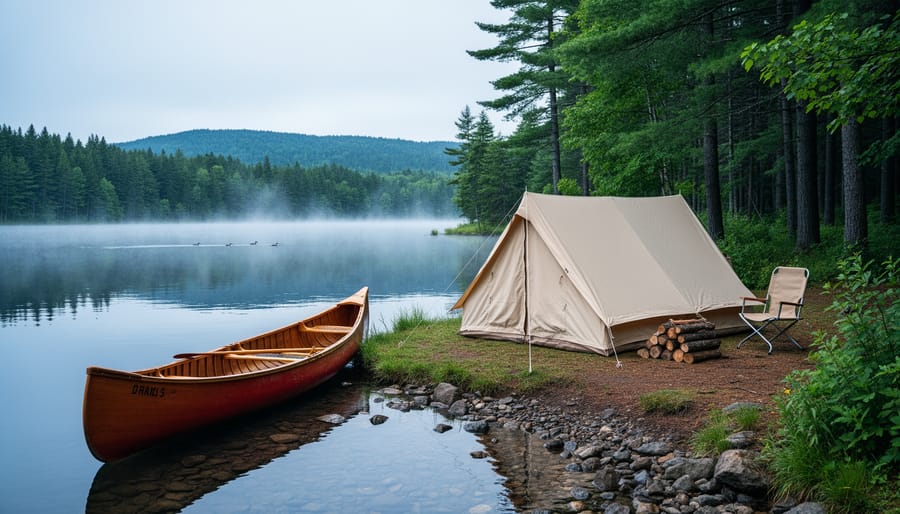
Why Camping Mont Tremblant Is Drawing Adventure Seekers in 2026
Camping at Parc National du Mont-Tremblant delivers a wilderness escape into 1,500 square kilometers of protected boreal forest, glacial lakes, and paddling routes just 30 minutes from the resort village. For the 2026 season running May 17 through October 21, rates start at $110.50 per night for two adults, with premium sites reaching $72.85. This haven of peace offers serious value for adventure seekers who want authentic backcountry access without sacrificing proximity to amenities.
What sets Mont-Tremblant camping apart is the sheer variety of water-based exploration. The park’s network of rivers and pristine lakes creates natural highways for kayakers and canoeists, from gentle morning paddles where you’ll spot loons and beavers to challenging multi-day routes through remote sections. Early-season visitors in mid-May catch spring runoff and migrating waterfowl, while summer and fall bring stable water levels perfect for beginners testing their skills.
The terrain rewards hikers and paddlers equally. Trails wind through old-growth forests where moose browse in wetlands and black bears forage along ridgelines. You’re not just camping near wilderness here; you’re sleeping in the middle of it, with night skies dark enough to see the Milky Way and morning mist rising off glassy lake surfaces.
Whether you’re planning a quick overnight to test your gear or a week-long expedition mixing paddling days with summit hikes, Mont-Tremblant’s protected status means consistent quality. The park maintains facilities without overdeveloping the landscape, so you get reliable access to truly wild places where your biggest navigation challenge might be choosing which lake to explore first.
What Makes Parc National du Mont-Tremblant Special
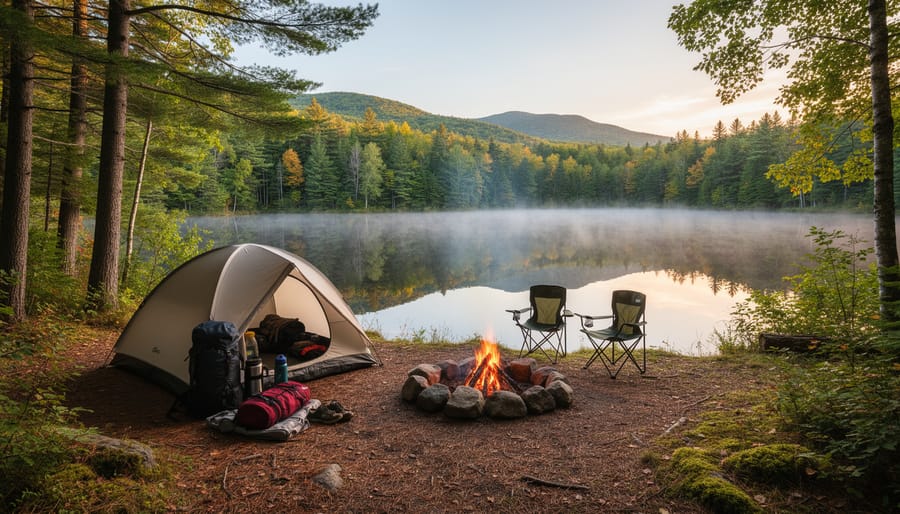
Parc National du Mont-Tremblant stands as Quebec’s oldest provincial park, a protected wilderness spanning 1,500 square kilometres that offers a striking contrast to the bustling resort town nearby. While Mont-Tremblant village draws visitors with its alpine architecture and ski slopes, the national park preserves something rarer: true wilderness where ancient forests meet crystal-clear waterways and silence replaces crowds.
The park’s character as a protected haven of peace with pristine lakes, rivers, and forests creates an environment where nature dictates the rhythm. No motorboats disrupt the calm. Development stops at campsite boundaries. The landscape remains much as it was when the park was established, with dense mixed forests giving way to rocky shorelines and quiet bays ideal for kayaking.
What draws adventure seekers here is this combination of accessibility and authenticity. You can drive from the resort area in less time than it takes to watch a movie, yet find yourself paddling waters where the only sounds are your blade cutting through the surface and loons calling across the lake. The protected status means these experiences remain consistent, the ecosystems intact, the wildlife populations stable.
The park’s network of interconnected waterways creates natural corridors for exploration by kayak or canoe, while trailheads near many campsites offer immediate access to hiking routes through maple and conifer forests. It is wilderness with infrastructure thoughtfully placed to support your adventure without compromising the landscape’s wild character.
Planning Your Camping Adventure: Season and Booking
Understanding 2026 Camping Rates
Parc National du Mont-Tremblant’s 2026 camping rates for two adults start at $110.50 for a single night, with two-night packages ranging from $185.25 to $243.50 depending on site selection and amenities. The maximum nightly campsite fee caps at $72.85.
| Stay Duration | Rate (2 Adults) |
|---|---|
| 1 Night | $110.50 |
| 2 Nights (Standard) | $185.25 |
| 2 Nights (Premium) | $243.50 |
| Maximum Per Night | $72.85 |
Pricing variations reflect several factors. Sites closer to popular lakes command higher rates due to easier kayak access and scenic waterfront positioning. The wide range between the two-night packages indicates different campsite categories, from basic backcountry spots to developed sites with electrical hookups and proximity to facilities. Shoulder season dates near the May 17 opening or October 21 closing sometimes offer better value than peak summer weekends.
The maximum nightly rate applies to premium locations with the most sought-after features: direct lake access, shelter from wind, and maintained facilities nearby. Budget-conscious campers can secure the lower rates by choosing sites further from main access points while still enjoying full park access for paddling and hiking adventures.
Water Sports Opportunities at Mont Tremblant
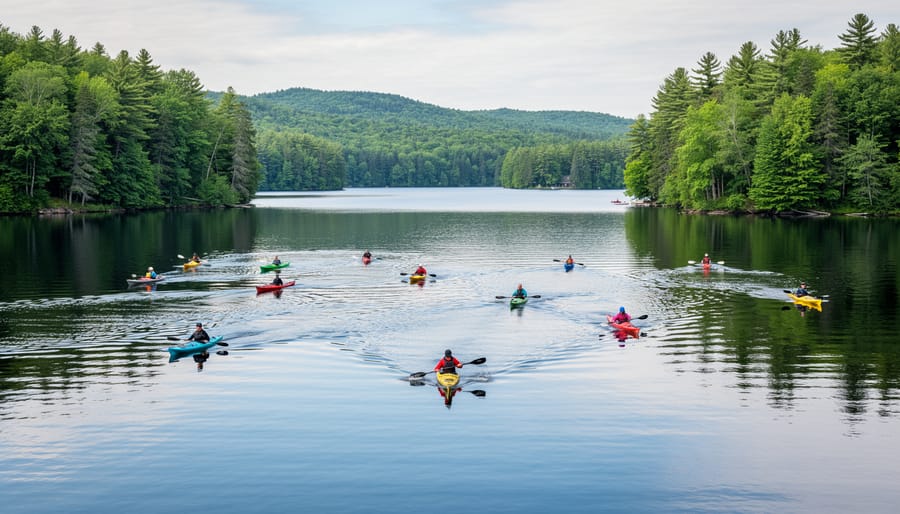
Kayaking Safety in Protected Waters
Paddling in protected waters demands respect for both the environment and your own limits. Start by checking weather conditions before you launch, afternoon winds can turn calm lakes rough quickly, especially on larger bodies of water. Always wear a properly fitted personal flotation device, regardless of your swimming ability or the distance you plan to cover.
For novice kayakers, stick to shoreline routes where you can easily reach land if conditions change. Keep your paddle strokes smooth and controlled, and practice wet exits in shallow water before venturing further out. Experienced paddlers should still pack a whistle, waterproof map, and basic first aid kit, even on familiar routes.
Cold water temperatures persist through late May despite warming air, so dress in layers with synthetic or wool materials that insulate when wet. A wetsuit or drysuit becomes essential if you’re paddling during shoulder seasons. Never paddle alone in remote sections of the park, and file a float plan with someone at your campsite, noting your intended route and return time.
Respect wildlife viewing distances, approaching animals from a kayak feels non-intrusive, but you’re still entering their space. Maintain at least 100 metres from larger mammals and nesting birds. Keep your gear secured with dry bags, as capsizing means losing anything not tethered to your craft.
Hiking Trails and Wildlife Encounters
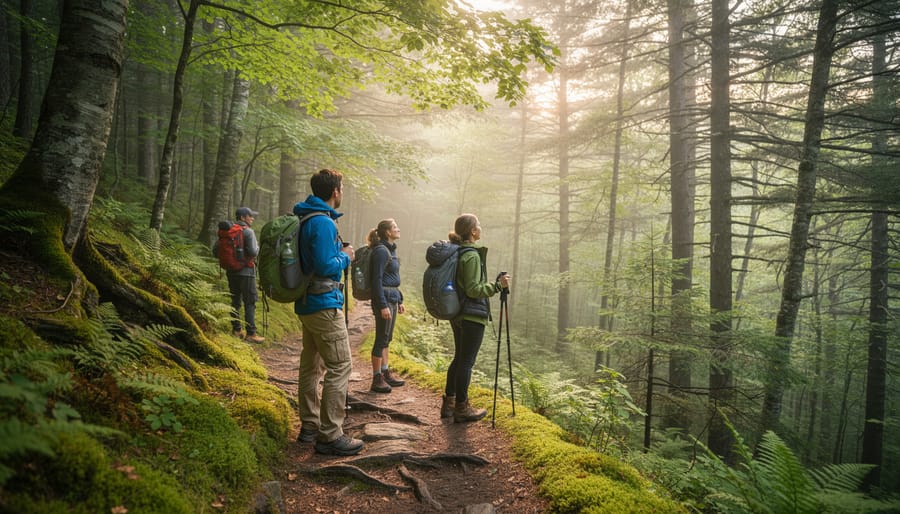
The park’s trail network offers everything from gentle shoreline walks to challenging summit routes through mixed forest and rocky terrain. You’ll navigate dense stands of sugar maple and yellow birch at lower elevations, transitioning to spruce-fir forests as you climb higher, with exposed ridgelines rewarding the effort with sweeping views across the Laurentian wilderness.
White-tailed deer frequently graze near campsites during early morning and dusk hours, while moose prefer wetland edges and lake shallows where you might spot them during paddle-accessible trail connections. Black bears roam throughout the park’s protected forests, and you’ll increase your chances of wildlife encounters by hiking quietly during dawn or late afternoon when animals are most active.
The terrain varies significantly between trail options. Some routes follow old logging roads with gradual grades suitable for families, while others climb steeply over granite outcrops requiring scrambling and solid footing. Trails near Lac Monroe and other major lakes tend toward moderate difficulty, offering wildlife viewing opportunities where forest meets water, prime habitat for beavers, otters, and the occasional lynx.
Birdwatchers should focus on mixed forest edges and wetland borders, where songbird diversity peaks during migration periods. The protected status means minimal human disturbance, allowing animals to maintain natural behaviours you won’t witness in more developed areas. Bring binoculars and move slowly, patience consistently outperforms distance when it comes to meaningful wildlife observation in this Quebec wilderness.
Choosing Your Campsite Experience
Parc National du Mont-Tremblant offers several campground options scattered across its protected wilderness, each providing different proximity to lakes and trail access. La Diable sector, the most developed area, places you within walking distance of multiple paddling launch points and tends to book quickly during peak summer months. If kayaking is your main focus, prioritize sites near Lac Chat or along the Diable River corridor where you can paddle directly from shore.
Consider whether you need vehicle access to your site or prefer a more remote backcountry experience. Ready-to-camp accommodations exist for those who want to skip hauling gear, or you can rent a camping trailer for added comfort without sacrificing the outdoor setting. Walk-in sites reward you with quieter surroundings and better wildlife viewing opportunities, though they require carrying equipment from the parking area.
Study the campground maps before reserving. Some sites sit in dense forest shade, ideal for hot July days but slower to dry after rain. Others offer open clearings with sunset views across the water. Check elevation too: higher sites mean fewer mosquitoes but potentially windier conditions for tent camping. The maximum nightly rate of $72.85 typically applies to premium lakefront locations, while interior sites cost less but still grant access to the same trail networks and waterways.
Essential Gear for Mont Tremblant Camping
Packing for Mont Tremblant requires balancing traditional camping gear with equipment for water-based adventures. The Quebec wilderness demands preparation for variable conditions, especially during the May through October season when temperatures can shift dramatically between day and night.
Start with shelter and sleep systems designed for cool evenings. A three-season tent handles the park’s weather patterns well, while the right sleeping pad provides crucial insulation from the ground when temperatures drop after sunset. Pack a sleeping bag rated for temperatures at least 10 degrees lower than forecast lows to stay comfortable.
For paddling the protected lakes and rivers, bring a waterproof dry bag to protect essentials like phones, keys, and extra clothing. A lightweight paddling jacket blocks wind on the water without adding bulk to your pack. Quick-dry clothing lets you transition smoothly between kayaking sessions and hiking trails without lugging multiple outfits.
Layer your clothing system: moisture-wicking base layers, insulating mid-layers, and a rain shell cover most situations you’ll encounter. The forest canopy provides some shelter, but open lake crossings expose you to weather quickly. Include sun protection too, as water reflects UV rays intensely.
Kitchen gear should be compact and efficient. A portable stove, fuel, cookware, and camping food ideas that require minimal preparation work best after a full day of activity. Bear-safe food storage is mandatory in this protected wilderness.
Don’t forget the small items that matter: headlamp with extra batteries, first aid supplies, navigation tools, and a water filter or purification tablets. The park’s pristine lakes provide abundant water, but proper treatment keeps you healthy throughout your stay.
Camping at Mont Tremblant in 2026 delivers exactly what adventure seekers crave: a genuine wilderness escape paired with thrilling water sports and trails that put you face-to-face with Quebec’s protected landscapes. The season window from May 17 to October 21 gives you months to experience this haven of peace, where pristine lakes and rivers meet dense forests just 30 minutes from the resort.
What sets this destination apart is how it balances accessibility with authenticity. You can paddle protected waters in the morning, hike through untouched terrain by afternoon, and return to your campsite as wildlife emerges at dusk. The protected status of Parc National du Mont-Tremblant means you’re camping in preserved wilderness, not a manicured park.
With 2026 rates starting at $110.50 per night for two adults, the experience remains surprisingly affordable for the quality of adventure you’ll find. Whether you’re an experienced kayaker seeking challenging routes or a first-time camper testing your outdoor skills, Mont Tremblant offers the right mix of challenge and reward. Start planning now to secure your spot during peak season.