Why Camping Plein Bois Is Drawing Adventure Seekers to Quebec’s Wilderness
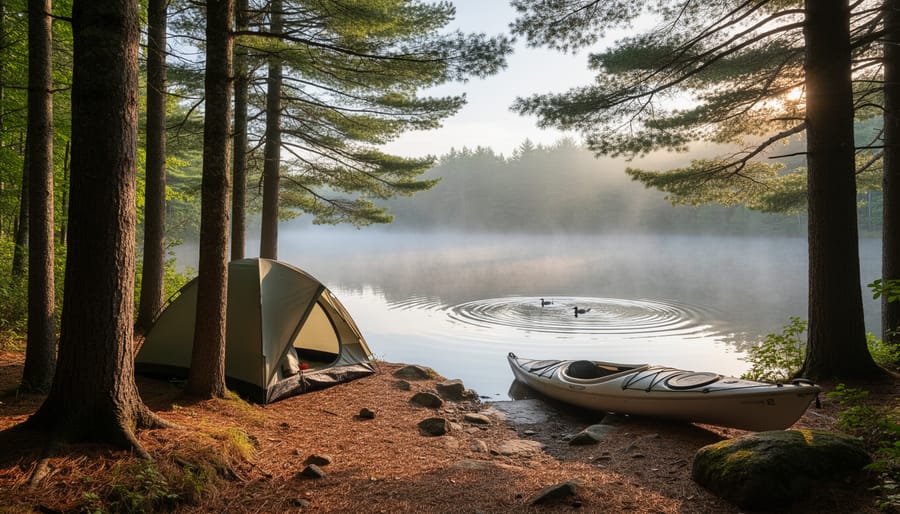
Picture yourself paddling across a mirror-calm lake at dawn, your kayak slicing through morning mist as loons call in the distance, then returning to a woodland campsite where towering pines filter golden afternoon light. Camping Plein Bois delivers this exact experience in Quebec’s Laurentian region, combining immersive forest camping with direct access to some of the province’s most rewarding paddling and hiking terrain.
This established woodland campground exemplifies what adventurers mean when they talk about true plein bois camping: sleeping beneath a canopy of mature forest, waking to birdsong instead of RV generators, and spending days exploring backcountry trails and waterways that feel worlds away from civilization. The concept has gained serious traction among outdoor enthusiasts who want more than a parking spot for their tent.
What sets Camping Plein Bois apart is its genuine wilderness character paired with practical amenities that make multi-day adventures accessible. You’re not roughing it without resources, but you’re definitely not glamping either. The location offers that sweet spot where families can introduce kids to outdoor skills while experienced paddlers and hikers can push into more challenging terrain.
Whether you’re planning your first overnight kayak trip or seeking a base camp for exploring Quebec’s legendary trail systems, understanding what plein bois camping offers will transform how you experience the outdoors. This isn’t about checking into nature for a night. It’s about fully inhabiting wild spaces, learning to read weather patterns, spotting wildlife on their terms, and discovering what you’re capable of when you step beyond day-trip comfort zones.
What Makes Plein Bois Camping Different from Traditional Campgrounds
Traditional campgrounds sprawl across open fields where campers park side-by-side with clear views of their neighbors, but plein bois camping inverts that model entirely. The term translates to “full woodland” camping, and it prioritizes deep forest immersion where mature trees form the canopy overhead and natural undergrowth creates privacy between sites. Instead of maximizing visibility and accessibility, this approach maximizes the feeling of wilderness solitude.
The philosophical difference centers on what outdoor enthusiasts actually seek when they head into nature. Open-field camping optimizes convenience, flat terrain for easy RV parking, wide roads for large vehicles, and minimal tree roots to navigate. Plein bois camping optimizes atmosphere, accepting narrower access roads and uneven ground in exchange for the sound of wind through leaves and dappled sunlight filtering through branches. You wake to birdsong rather than the hum of neighboring generators.
- Forest Canopy Coverage
- The percentage of overhead space filled by mature tree branches, creating shade and the signature woodland feeling. Plein bois sites typically maintain 70-90% canopy coverage compared to 0-30% in traditional open campgrounds.
- Site Density in Woodland Settings
- The number of campsites per acre when working within existing forest structure. Plein bois camping accepts lower density (typically 5-8 sites per acre) to preserve natural spacing between trees, while open-field designs often pack 12-15 sites per acre.
- Natural Privacy Buffers
- The use of existing vegetation, shrubs, saplings, and undergrowth, to visually separate camping sites rather than relying on artificial barriers or open spacing.
Camping Plein Bois demonstrates this philosophy at scale with more than 450 sites spread across a 25-hectare wooded site between Rigaud and St-Lazare. That translates to roughly 60 acres of mature woodland where each site nestles among established trees rather than sitting exposed in a grid. The density allows for substantial capacity while maintaining the core plein bois promise: when you settle into your spot, you’re surrounded by forest, not by a sea of other campers’ awnings.
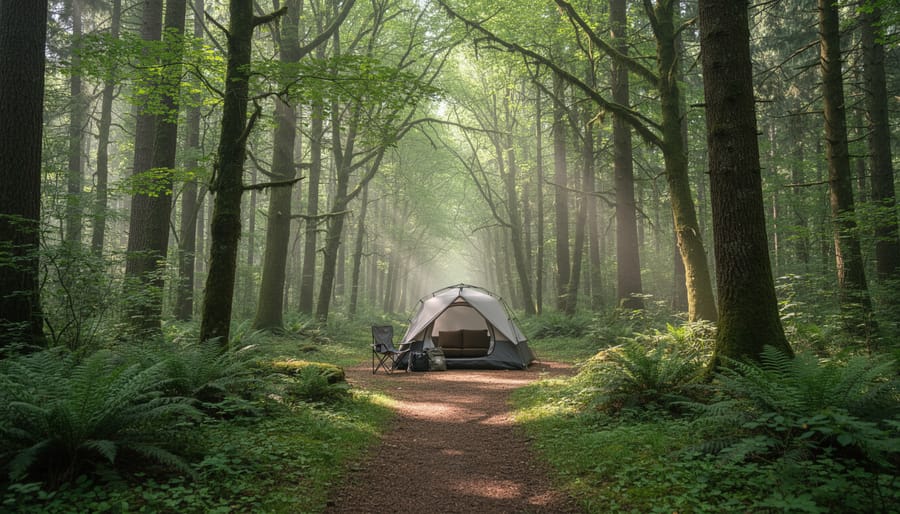
This creates a fundamentally different arrival experience. You don’t scan rows of identical concrete pads to locate your assigned number. You wind along tree-lined paths until you reach a site that feels more like a forest clearing you discovered yourself than a designated parking spot someone marked with paint.
The Wilderness-Meets-Comfort Formula That’s Changing Quebec Camping
Amenities That Enhance (Not Erase) the Outdoor Experience
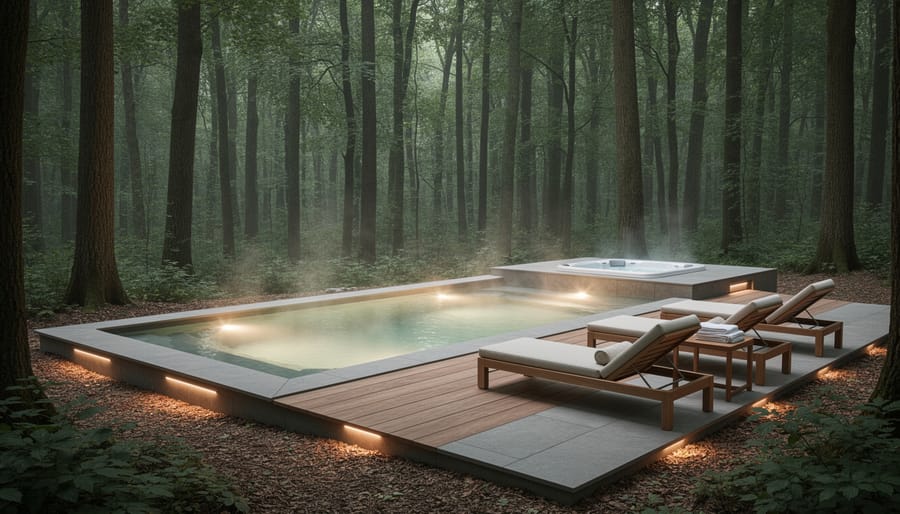
The two heated pools serve as recovery stations after a day navigating forest trails or paddling nearby waterways. One pool maintains a warmer temperature for muscle relaxation, while the other offers a cooler option for those who prefer a brisk swim after exertion. Unlike typical resort pools surrounded by concrete and loungers, these sit within sight of the forest canopy, letting you soak while still immersed in the woodland setting.
The spa and adjacent fitness room provide practical tools for adventurers preparing for or recovering from physical activities. Stretch tight muscles after carrying a kayak to the water, or warm up before heading out on a morning hike. The fitness equipment isn’t here to replace the workout you’ll get outdoors, but it serves those who want structured training between wilderness excursions.
The outdoor bar functions as an evening gathering point where campers swap trail stories and share wildlife sightings from the day. It’s positioned to maintain views into the forest rather than blocking them out, keeping the focus on the natural surroundings even during social hours. You’ll find it busiest after sunset, when the day’s adventurers return to their woodland sites and gather briefly before retreating to campfires under the trees.
These facilities work because they don’t compete with the forest for attention. They occupy discrete zones within the 60-acre woodland, leaving the majority of the campground devoted to mature trees and natural terrain. You use them when they serve a purpose, then return to your site among the woods.
Strategic Location: Montreal’s Gateway to Woodland Adventures
Location shapes every camping trip, and Camping Plein Bois occupies what might be Quebec’s most practical sweet spot for woodland adventurers. Thirty minutes from downtown Montreal means you can leave work Friday evening and be setting up camp in mature forest before sunset. No marathon drives, no vacation days burned on transit.
This proximity turns the campground into a true base camp rather than just a destination. The Rigaud-St-Lazare wilderness corridor sprawls out from here, offering hiking trails that wind through protected forests, paddling routes along quiet waterways, and terrain that shifts from gentle riverside paths to challenging upland routes. You can spend Saturday kayaking local lakes, return to camp for a pool session, then tackle a different trail network Sunday morning.
Weekend warriors especially benefit from this setup. When you have only 48 hours, every hour spent driving is an hour not spent exploring. The half-hour buffer lets you maximize actual adventure time while still sleeping under trees instead of streetlights.
Water Sports and Kayaking Opportunities Near Camping Plein Bois
The Rigaud, St-Lazare corridor positions Camping Plein Bois within reach of some of Quebec’s most rewarding paddling territory. From your woodland campsite, you can launch into calm rivers ideal for beginners or tackle sections of the Ottawa River that challenge experienced kayakers with Class II and III rapids.
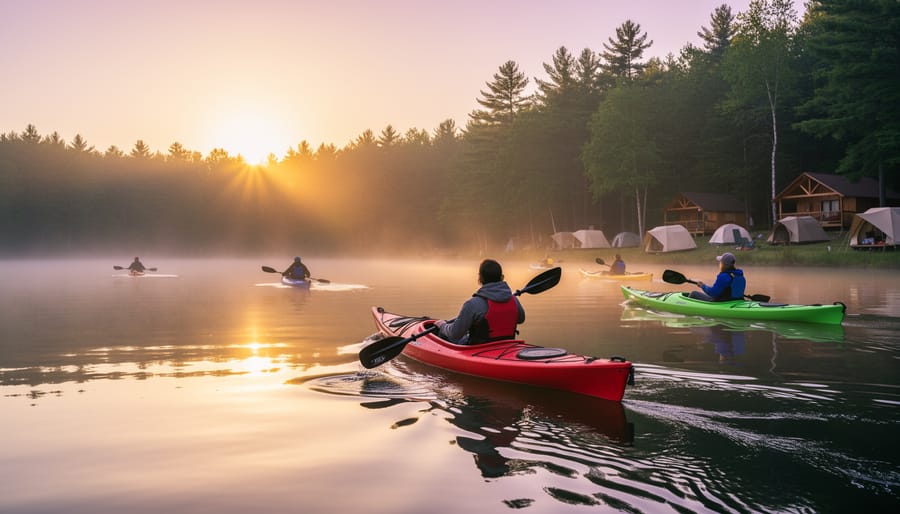
The Rigaud River flows through the immediate area, offering sheltered paddling through forested banks where you’ll spot herons and turtles basking on logs. Its gentle current suits guided kayaking tours and families launching their first adventure. For wider water and more ambitious routes, the Ottawa River lies 20 minutes north, with multiple access points serving paddlers of varying skill levels:
- Rigaud Bay launch (15 km west): flat water with island exploration for half-day trips
- Hudson village waterfront (18 km east): scenic shoreline paddling with lunch stop options
- Baie-de-Vaudreuil access (22 km southeast): connects to broader St. Lawrence network for multi-day expeditions
- Pointe-Fortune rapids section (30 km northwest): advanced whitewater for experienced kayakers
The campground’s proximity to these varied waterways transforms it into a genuine base camp rather than just a place to sleep between outings. You can paddle different rivers each day of a long weekend without repeating routes, then return to heated pools that ease shoulder fatigue and a spa that targets the lower back strain paddlers know too well.
For adventurers mapping a broader Quebec kayaking tour, Camping Plein Bois sits strategically between Montreal’s urban launch points and the wilder sections of the Outaouais region. Camping Lac des Pins lies further north for those continuing upriver, but Plein Bois offers the advantage of accessible waterways without requiring long shuttles or backcountry navigation. Pack your kayak in spring or fall when water levels run higher and wildlife activity peaks along the riverbanks.
Wildlife and Natural Features in the Plein Bois Environment
The 60 acres of mature woodland surrounding Camping Plein Bois supports a diverse ecosystem typical of Quebec’s southwestern forests. White-tailed deer are the most frequently spotted mammals, particularly at dawn and dusk when they move between feeding areas. Raccoons, red foxes, and eastern chipmunks inhabit the understory, while porcupines occasionally climb the larger trees. Overhead, you’ll hear pileated woodpeckers hammering on dead snags and see red-tailed hawks circling above the canopy.
Spring brings migratory songbirds, including warblers and thrushes that nest in the dense forest cover. Summer offers the best reptile sightings, with eastern garter snakes sunning on warm rocks and painted turtles near any water features. Fall transforms the hardwood sections into brilliant color as sugar maples, yellow birches, and red oaks shift through their seasonal palette.
For safe wildlife observation, carry binoculars rather than approaching animals closely. Never feed wildlife, which disrupts natural foraging behaviors and can make animals aggressive toward future campers. If photographing deer or smaller mammals, use a telephoto lens and stay at least 30 feet away. Black bears are uncommon in this region but not impossible; store all food in vehicles or bear-proof containers and never leave scented items in tents.
The best viewing times are the first two hours after sunrise and the hour before sunset when animals are most active. Move quietly and pause frequently to scan the forest floor and mid-canopy. Respect closed trails during nesting season, and remember that you’re a guest in their habitat, not the other way around.
Planning Your Plein Bois Camping Adventure for 2026
Woodland camping requires different preparation than open-field sites. Dense canopy means less direct sunlight for drying gear and cooler temperatures even in summer. Pack moisture-wicking layers you can add or remove throughout the day, and bring a headlamp with extra batteries since the forest floor darkens earlier than exposed campsites.
If you’re planning water activities from your base at Camping Plein Bois, adapt your kayak camping pack list for car camping convenience. You’ll have vehicle access to your site, so bring the full-size cooler and camp chairs you’d normally leave behind on paddling trips. The reservation process here differs from coastal sites, while some campers research how to book French Beach for oceanside camping, securing your woodland site typically involves contacting the campground directly through their booking system.
For first-time plein bois campers, follow this preparation sequence:
- Check the campground’s seasonal calendar to understand which amenities operate during your visit window
- Reserve your site early if visiting during peak summer months when demand for the 450+ woodland sites increases
- Pack insect repellent and long sleeves, forest environments host more mosquitoes than open fields
- Bring rope or paracord for hanging food and scented items away from your tent in bear country
- Download offline maps of nearby trails and water access points before arrival since cell coverage can be spotty under heavy canopy
Spring and fall offer fewer crowds and spectacular foliage, though nights turn cold quickly once the sun drops below the treeline. Summer gives you full access to both heated pools and the fitness room for active recovery between trail days. The 30-minute proximity to Montreal means you can easily resupply if you forget something, but packing right the first time lets you stay immersed in the 60-acre woodland without breaking the spell of forest camping.
The plein bois camping movement is redefining what outdoor adventure looks like in 2026, and Camping Plein Bois demonstrates why this evolution matters. By preserving the essence of woodland immersion while adding carefully chosen comforts, this approach removes the barriers that have kept many would-be adventurers from experiencing Quebec’s forests. The result is camping that doesn’t ask you to choose between authentic wilderness and post-hike recovery.
For first-time campers, the 60-acre woodland retreat between Rigaud and St-Lazare offers a forgiving introduction to outdoor living. You get the full forest experience without the intimidation factor, with heated pools and amenities nearby if nature feels overwhelming. Experienced adventurers, meanwhile, discover something equally valuable: a base camp that respects their need for genuine wilderness while acknowledging that a soak after a long day paddling or hiking enhances rather than diminishes the experience.
This isn’t about diluting outdoor recreation. It’s about expanding who gets to participate and how we define authentic adventure in the modern era. Whether you’re paddling the Ottawa River for the first time or returning from your hundredth backcountry excursion, that blend of forest solitude and thoughtful comfort is waiting just 30 minutes from Montreal.