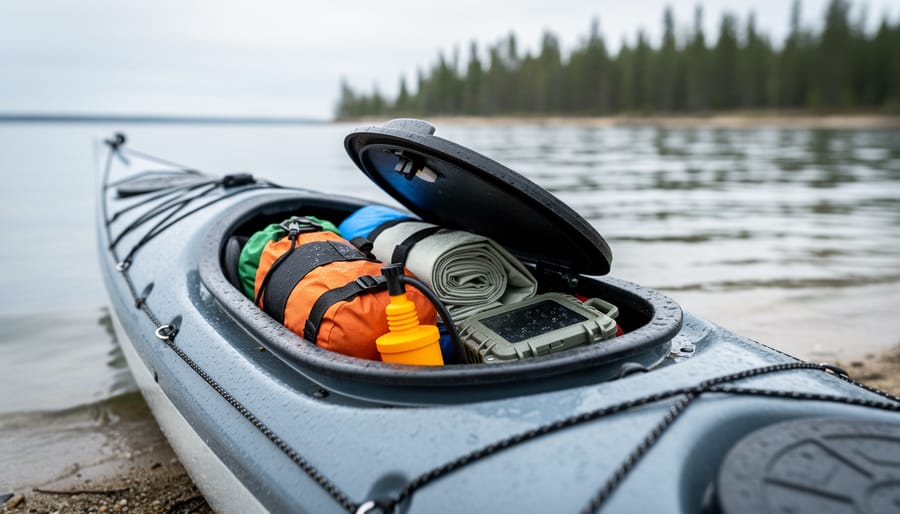
The Camping Pack List That Actually Fits in Your Kayak
Packing for a camping trip that involves kayaking creates a unique challenge most standard checklists completely miss. You’re not just hauling gear from your car to a designated campsite. You’re balancing waterproof requirements with weight distribution in your kayak, protecting electronics from splash zones, and ensuring your tent poles don’t puncture a dry bag mid-paddle.
The difference between a successful water-based camping adventure and a soggy disaster often comes down to categorization. Generic camping lists fail because they don’t account for the reality of limited space in kayak hatches, the physics of capsizing (yes, it happens), or the specialized equipment needed when your campsite requires navigating currents to reach.
Standard camping gear makes up only 60% of what you actually need for a kayaking-camping combination. The remaining 40% includes waterproofing solutions, navigation tools for water routes, and safety equipment that landlocked campers never consider. Forgetting a bilge pump or not properly sealing your sleeping bag can turn an exciting wilderness expedition into an uncomfortable night you’ll remember for all the wrong reasons.
Whether you’re planning to paddle past icebergs on Newfoundland’s coast or searching for wildlife encounters along quieter inland waterways, your packing strategy needs to reflect the dual nature of your adventure. This comprehensive guide breaks down essential items into four strategic categories: core camping necessities, water-specific equipment, safety and navigation gear, and personalized additions based on your skill level and destination climate.
Why Your Standard Camping Packing List Fails on the Water
Your car camping checklist works great when you can park next to your tent and make multiple trips to the vehicle. RV camping lists are comprehensive because you’re basically driving a small apartment to your campsite. But the moment you paddle away from shore in a kayak or canoe, those traditional pack lists become dangerously irrelevant.
The fundamental challenge is space constraint. A typical recreational kayak offers 30 to 40 liters of storage in hatches and dry compartments, compared to the limitless trunk space of a car or the massive cargo area of an RV. First-time campers often forget small but essential items even when packing a vehicle, and the consequences multiply when you’re paddling two hours into remote North American waters with no way to retrieve what you’ve left behind.
Weight distribution becomes critical on the water in ways car camping never demands. Load your kayak poorly and you’ll fight instability with every paddle stroke, turning what should be an exciting journey into an exhausting struggle. Heavier items need to sit low and centered, lighter gear fills the ends, and everything must be secured so it doesn’t shift when you navigate waves or rapids. kayak packing considerations extend beyond simple weight to include trim, balance, and accessibility while you’re actively paddling.
Waterproofing demands shift from “nice to have” to “absolutely critical.” Rain on a car camping trip means you get a bit wet. Water intrusion during a kayaking adventure means your sleeping bag becomes useless, your phone stops working, and your food supply gets contaminated. Every single item needs protection from splashing, rain, humidity, and the inevitable capsize that catches even experienced paddlers off guard.
The learning curve steepens without beginner kayaking guidance where instructors teach you what actually matters versus what seems important. Your instinct might say to bring the large cooler and full cookware set, but experienced water campers know that compact, multi-use gear wins every time. The standard camping checklist can’t account for these water-specific realities.
The Four-Category System for Waterside Camping
Setup Essentials: Shelter and Sleep Systems
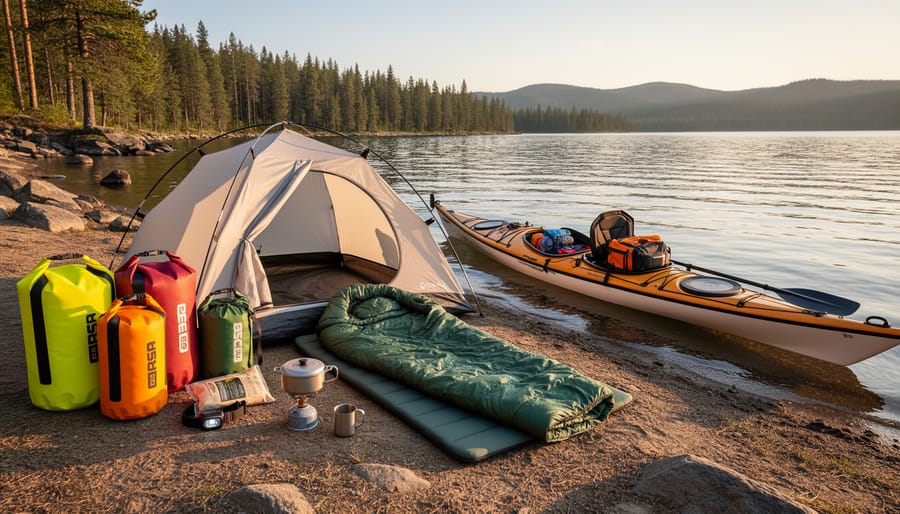
Your shelter and sleep system is the foundation of kayak camping comfort, but choosing the wrong gear here can sink your trip before it starts. Unlike car camping where you can toss a six-person tent and queen-sized air mattress in the trunk, every ounce and cubic inch matters when it’s strapped to your kayak deck.
Start with a tent designed for backpacking, not car camping. You’re looking for something under four pounds that packs down to the size of a Nalgene bottle. Freestanding designs work best on rocky shorelines where finding tent stakes won’t be easy. Double-wall tents offer better condensation management than single-wall options, which matters when you’re camping steps from water. The extra vestibule space also gives you a dry area to stash paddle gear and wet boots away from curious wildlife.
| Shelter Type | Weight | Pack Size | Best Use |
|---|---|---|---|
| Two-person backpacking tent | 3-4 lbs | 6×18 inches | Coastal camps, all conditions |
| Ultralight tarp setup | 1-2 lbs | 4×12 inches | Inland, calm weather only |
| Hammock with bug net | 2-3 lbs | 5×10 inches | Forested shorelines, bears present |
Sleeping bags and pads deserve equal attention on any camping essential checklist. Synthetic fill handles moisture better than down when you’re paddling in damp environments, though it’s bulkier. If you choose down, stuff it in a waterproof compression sack. Your sleeping pad serves double duty: insulation from cold ground and flotation backup if you capsize, so don’t skimp. Closed-cell foam pads are bombproof and float naturally, while inflatable pads pack smaller but puncture on sharp shoreline rocks.
Always pack a lightweight tarp. It’s your backup shelter if the tent fails, a dry staging area for unpacking gear, and a food prep surface that keeps you visible to wildlife instead of hunched over inside your tent where a curious bear can’t see what you’re doing.
Kitchen Supplies: Cooking on Remote Shores
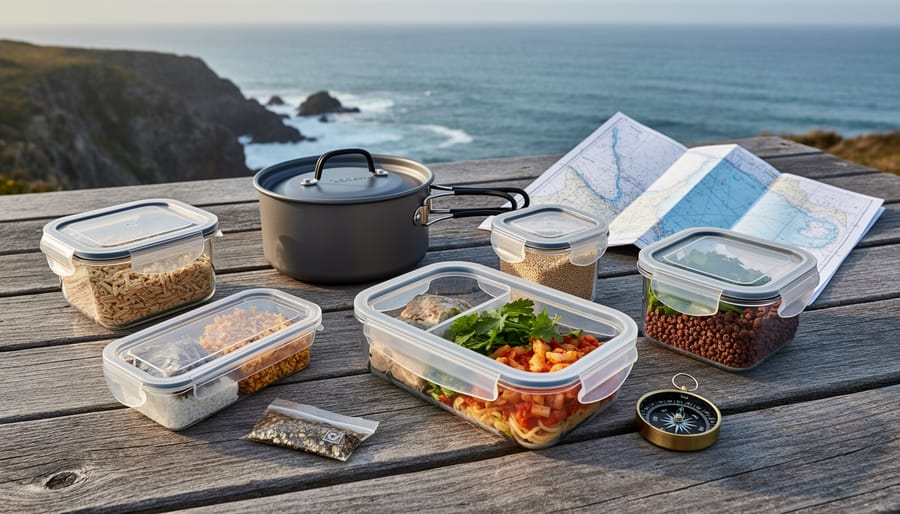
Cooking on remote shorelines demands a radical shift from typical car-camping kitchen setups. Your kayak’s limited cargo space means every pot, utensil, and food container needs to justify its weight and volume. A compact two-burner stove might work for RV trips, but water-based adventures call for a single lightweight canister stove that packs down to fist-size and weighs under a pound.
Start with nested cookware designed for backpackers: a single pot that doubles as your eating bowl, a lightweight pan that serves as a lid, and a titanium spoon that won’t corrode in saltwater environments. Skip the full cutlery set. One spork per person handles everything from stirring oatmeal to eating freeze-dried dinners. For multi-day trips, plan meals around dehydrated ingredients and pre-measured portions stored in waterproof bags, which compress far better than rigid containers and eliminate the risk of soggy supplies after an unexpected wave.
Food storage requires extra thought when you’re camping in wildlife territory. Bear-resistant containers aren’t optional in many North American paddling destinations, they’re required by regulations and essential for avoiding dangerous encounters with curious animals ranging from black bears in coastal British Columbia to raccoons along the Great Lakes. Hang a bear bag if containers won’t fit, positioning it at least 12 feet high and 6 feet from tree trunks. Even if you don’t see wildlife during daylight hours, scent travels far across water and shorelines act as natural corridors for animals moving between feeding areas.
The small items trip up even experienced paddlers. Waterproof matches stored in two separate dry bags, biodegradable soap for washing dishes away from shore, and a collapsible water container save the day when you’re camped on a rocky beach with no freshwater source nearby. Coffee lovers should bring instant packets rather than grounds and a French press, those extra ounces and bulk matter when you’re portaging or dealing with choppy conditions.
Safety Gear: Beyond the Standard Checklist
Safety on the water demands a different mindset than car camping. You can’t run back to your vehicle for that forgotten whistle, and a minor mishap in a remote shoreline camp can escalate quickly without the right gear. The good news? Adding water-specific items to your standard camping safety kit doesn’t require a complete overhaul, just some smart additions and prioritization.
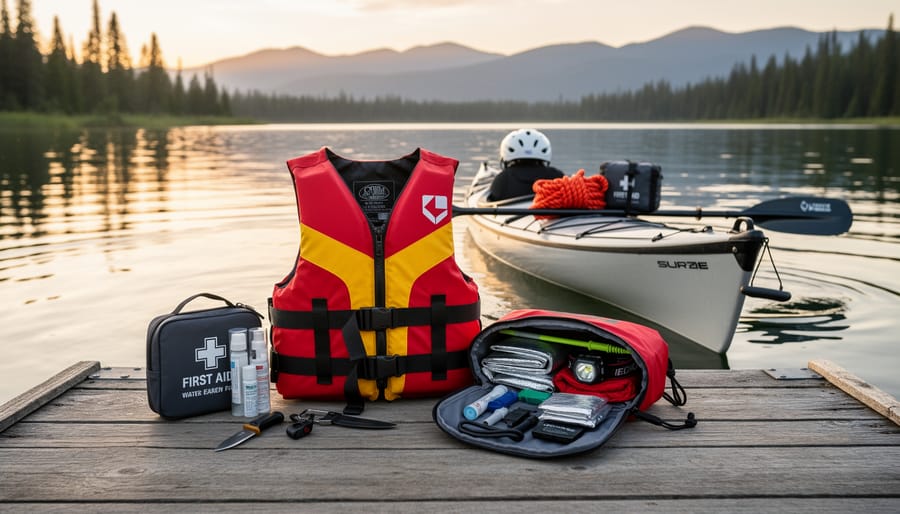
Start with the absolute non-negotiables. Every person needs a properly fitted personal flotation device (PFD) that stays accessible during paddling. Beyond that, your safety gear breaks down by how quickly you might need it:
- Immediate access: whistle attached to PFD, knife or multi-tool on your person, headlamp, and VHF radio or satellite communicator in a waterproof case
- Easy reach in day hatch: comprehensive first aid kit, emergency shelter (space blanket or bivy), fire-starting materials in waterproof container, and extra water purification tablets
- Can stay packed: repair kit for boat and gear, backup navigation tools, extra batteries, and bear spray or air horn depending on your region
First aid kits for kayak camping need special attention. Standard kits miss key water-related injuries: add blister treatment for wet feet, waterproof bandages that actually stick, antiseptic for cuts from barnacles or rocks, and medication for seasickness. A small dry bag dedicated to medical supplies beats a traditional hard case because it compresses when you’re tight on space and floats if it goes overboard.
Navigation merits redundancy. GPS devices fail, phones die, and fog can roll in fast across northern waters where visibility drops to nothing. Pack a waterproof chart of your route, a basic compass, and know how to use both before you launch. Weather monitoring apps are helpful when you have signal, but a simple barometer and understanding of cloud patterns have saved more paddlers than fancy electronics.
Wildlife deterrents vary by region. Coastal camps might need noise-makers for curious seals, while inland routes through bear country require proper food storage systems and deterrent spray within arm’s reach of your tent. The expert approach isn’t carrying every possible safety item but understanding which risks match your specific route and packing accordingly.
Comfort Items: What’s Worth the Weight
Every ounce counts when you’re balancing a loaded kayak, but that doesn’t mean you sacrifice all comfort. The trick is choosing items that earn their space by serving multiple purposes or dramatically improving your experience relative to their weight.
Start with a quality camp chair. Yes, it’s extra weight, but after a day of paddling and setting up camp on rocky shorelines, sitting on a log gets old fast. Lightweight options in 2026 weigh under a pound and pack smaller than a water bottle. For beginners especially, having that one familiar comfort item makes the whole adventure more enjoyable and sustainable for future trips.
Clothing layers deserve careful thought. Pack one complete dry outfit in a sealed bag as your “insurance policy” against falling in or unexpected weather. Beyond that, think versatility: a fleece that works as a jacket, pillow, or extra insulation layer. Quick-dry synthetics or merino wool beat cotton every time, especially in North America’s unpredictable climates where you might encounter cold nights even in summer.
Here’s what experienced paddlers often cut: bulky towels (a lightweight camp towel dries you and your gear), multiple pairs of shoes (water sandals that work on land and in the kayak), excessive clothing changes (you’ll rewear things). What they keep: a headlamp with fresh batteries, sunglasses with a retention strap, and a compact book or journal for evenings by the water.
The real luxury? A dry sleeping bag and warm coffee in the morning. Prioritize those, and you’re set.
Packing Strategy: Making Everything Fit and Stay Dry
The difference between a successful kayak-camping trip and a soggy disaster often comes down to a single decision: how you pack. When you’re paddling through North American waters where whales and icebergs might share your route, your packing strategy isn’t just about convenience, it’s about safety and enjoying your adventure instead of fighting with waterlogged gear.
Start with the heavy items. Your water containers, cooking gear, and food storage belong low and centered in your kayak, just behind or ahead of your seat depending on your vessel’s design. This keeps your center of gravity stable when waves pick up or you’re navigating choppy waters. Lighter items like your sleeping bag and clothing go toward the ends, but never so far forward or back that they throw off your boat’s trim.
Waterproofing requires a layered approach. Use compression dry bags as your primary defense, then pack those inside larger dry bags or waterproof hatches. Assume water will find a way in during extended trips. Your sleep system gets double protection, stuff sack inside a dry bag, because a wet sleeping bag can turn dangerous fast in cool northern climates.
Organize by accessibility, not just category. Your PFD stays on your body, but emergency gear like your first aid kit, signaling devices, and repair supplies should sit in a deck bag or day hatch you can reach without unpacking. Rain gear goes in an accessible outer pocket. Meanwhile, your tent, extra clothes, and backup food can stay buried in stern hatches until you reach camp.
For longer kayaks, balance weight between bow and stern compartments. Canoes demand different thinking, pack the heaviest gear amidships and secure everything with straps or bungees so nothing shifts when you portage. Solo paddlers in shorter boats face tighter constraints; every item earns its spot or stays home.
Test your load before launch day. Pack everything, load your kayak, and paddle around for twenty minutes. If the boat feels squirrelly or lopsided, redistribute before you’re three hours from the launch point with sore shoulders and regret.
Specialized Considerations for North American Adventures
North America’s diverse landscapes demand smart adjustments to your base pack list. What works on calm inland lakes will leave you unprepared for coastal swells, and the gear that keeps you comfortable in desert heat becomes dangerous dead weight in northern waters.
Cold-water paddlers heading to Newfoundland’s East Coast Trail or British Columbia’s North Coast Trail face unique challenges. Iceberg debris and frigid water temperatures require a wetsuit or drysuit, not just a change of clothes. Add chemical hand warmers to your safety kit and pack an emergency bivvy rated for sub-freezing temperatures. Your sleeping bag needs a 15-degree lower rating than the forecasted low because coastal wind chill is relentless.
| Environment | Key Gear Adjustments | Wildlife Considerations |
|---|---|---|
| Northern Waters (Iceberg Zones) | Wetsuit/drysuit, emergency bivvy, hand warmers, upgraded sleeping bag | Seals, polar bears (far north), seabirds |
| Desert Lakes | Extra water capacity (8L minimum), shade tarp, sun protection, electrolyte tablets | Rattlesnakes, scorpions, javelinas |
| Coastal Waters | Tide charts, marine radio, backup anchor, reef-safe sunscreen | Bears (BC/Alaska), raccoons, marine mammals |
| Inland Waters | Insect netting, water filter, bear canister, tick removal tool | Black bears, moose, beavers, mosquitoes |
Desert lake camping in places like Lake Powell or Lake Mead flips the script. You’ll carry at least 8 liters of water capacity per person, a lightweight shade tarp for midday refuge, and reef-safe sunscreen that won’t contaminate fragile desert ecosystems. Skip the heavy rain gear and add electrolyte tablets instead.
Wildlife dictates specific additions. Bear country (most of Canada, Alaska, and the Rockies) requires a bear canister or rope for hanging food 12 feet high and 6 feet from tree trunks. Coastal paddlers in British Columbia need to store all scented items the same way because black bears are strong swimmers. Northern moose territories call for a whistle and bright tent colors so you’re visible from a distance.
Seasonal shifts matter more than many paddlers expect. Spring runoff turns calm rivers into churning hazards and adds throwable rescue rope to your must-have list. Fall in northern regions means shorter days, so headlamps with fresh batteries and reflective tape on your kayak become safety essentials, not luxuries. Summer brings biting insects that can ruin a trip if you skimp on quality bug netting and permethrin-treated clothing.
Your Personalized Pack List: Templates for Every Skill Level
The beauty of a well-planned kayaking-camping trip is that no two adventures look the same. A weekend paddle to a quiet island demands different gear than a week-long Gros Morne adventure combining open water crossings with alpine hikes.
Start with trip length as your foundation. Weekend trips (two to three nights) let you pack a few comfort items without obsessing over every ounce. You’ll bring fresh food for most meals and can afford a slightly heavier sleep system. Week-long expeditions flip that equation, suddenly, dehydrated meals replace fresh ingredients, and you’re counting the weight of spare batteries.
Your skill level matters just as much. Beginners should embrace redundancy: extra fire starters, a backup headlamp, an additional dry bag for electronics. You’re still learning what you’ll actually use, so the printable camping checklists gaining popularity in 2026 become your safety net. Check items off as you pack, then review what stayed untouched when you return.
Intermediate paddlers can start customizing. You know your cooking style, how cold you sleep, which layers you actually wear. Strip the “just in case” items that never leave the bag.
Expert adventurers often run the leanest lists, but here’s the catch: they add specialized gear for specific environments. Navigating iceberg-studded waters off Newfoundland? You’re packing thermal layers a summer lake paddler would skip. Balancing kayaking with serious hiking miles means different footwear choices than a water-focused trip.
The framework stays consistent across all levels, setup essentials, kitchen supplies, safety gear, comfort items, but the specific contents shift with experience and ambition. Your perfect pack list evolves with every trip you complete.
With your four-category system in hand and a solid understanding of what your kayak can hold, you’re ready to experience some of the most rewarding adventures North America has to offer. The coastlines, inland lakes, and iceberg trails you’ll access from the water reveal landscapes and wildlife encounters that car campers never see.
Start with one of the templates from this guide, then adjust as you gain experience. Your first trip might feel like careful Tetris with dry bags, but you’ll quickly learn what you actually use, what stays packed, and what wasn’t worth the weight. That’s part of the journey.
Safety and preparation aren’t barriers to adventure, they’re what make the adventure possible. Whether you’re a beginner planning your first overnight paddle or an experienced kayaker ready to tackle week-long expeditions, the right pack list turns uncertainty into confidence. Check your gear twice, waterproof everything that matters, and give yourself permission to modify the list based on what works for you.
The water’s waiting. Pack smart, paddle safely, and discover what’s around the next bend.