Why Hiking Tremblant Should Be Your Next Adventure (And How to Make It Unforgettable)
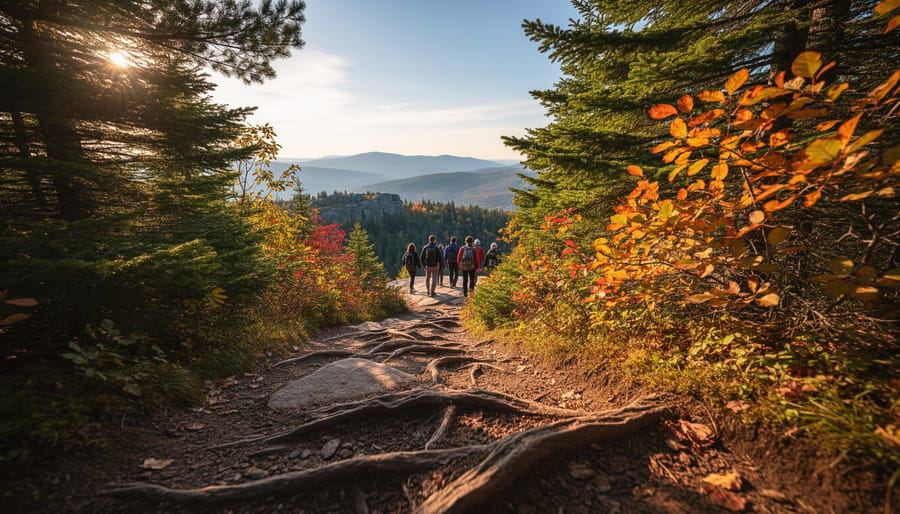
Mont-Tremblant delivers 11 hiking trails spanning 1 to 11 kilometers across terrain suited for every ability level, from families seeking gentle woodland walks to seasoned hikers chasing summit views. The region’s trail network winds through the Laurentian Mountains’ signature landscapes, where autumn transforms the forest canopy into a blazing tapestry of reds and golds, and summer trails reveal hidden lakes tucked between ancient rock formations.
Planning your hike here means choosing between self-guided exploration on well-marked paths or joining D-Tour’s guided experiences, which run from May 16 to October 25, 2026. These moderate-to-advanced outings cover 5 to 10 kilometers over three to five hours, starting from $84 per person with transport, park access, snacks, and trail photos included. The variety matters because Mont-Tremblant’s ecosystem shifts dramatically with elevation: lower trails meander through hardwood forests where white-tailed deer browse at dawn, while higher routes push into boreal zones where you might spot peregrine falcons riding thermal currents above exposed ridgelines.
Timing your visit shapes what you’ll encounter. Spring snowmelt swells the waterfalls that punctuate several routes, summer brings wildflower-studded meadows and the possibility of black bear sightings at respectful distances, and fall transforms navigation into a exercise in color-drunk wayfinding. Winter closes some trails but opens others to snowshoe adventures. Whatever season you choose, the terrain demands proper footwear, layered clothing, and enough water to sustain you through elevation gains that can surprise even experienced hikers.
What Makes Tremblant’s Trails Stand Out
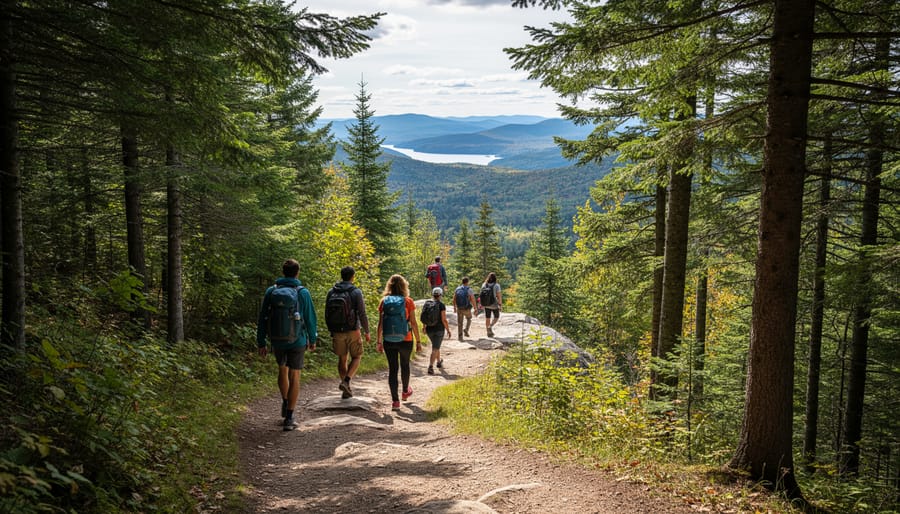
Mont-Tremblant isn’t your typical mountain park. Tucked into the Laurentian Mountains of Quebec, it delivers something most hiking destinations struggle to achieve: genuine variety packed into a manageable area. You’ll find 11 distinct trails here, spanning just 1 km to 11 km, which means you can tackle multiple routes in a single visit without repeating the same scenery or difficulty level.
The terrain shifts dramatically as you move between trails. One morning you might navigate exposed rocky ridges with sweeping views across forested valleys. By afternoon, you’re threading through dense hardwood forests where sugar maples and yellow birch create natural canopies. Some paths hug lakeshores, while others climb steadily toward summit viewpoints. This diversity lets you customize your experience based on energy, weather, or simply what kind of landscape you’re craving that day.
What really sets Tremblant apart is the Laurentian Shield geology beneath your boots. These ancient rock formations, among the oldest on Earth, create distinctive landscapes you won’t see in younger mountain ranges. The rounded peaks, sudden cliff faces, and countless glacial lakes tell a billion-year geological story that’s visible in every outcrop and vista.
Wildlife encounters add another dimension. Black bears roam these forests, along with white-tailed deer, beavers, and over 200 bird species. Spring brings breeding warblers and migrating waterfowl. Fall delivers spectacular foliage as the deciduous forest explodes in reds and golds, often coinciding with moose activity near wetlands. Even experienced hikers who’ve explored trails across North America note something different here: the proximity of wilderness to accessibility, wild enough for authentic animal sightings yet managed enough that you’re never truly remote.
Whether you’re testing your limits on advanced routes or introducing kids to hiking on gentler paths, Tremblant’s landscape delivers memorable moments without demanding extreme fitness or technical skills.
Choosing Your Trail: From Easy Strolls to Challenging Climbs
Beginner-Friendly Routes
Tremblant’s easier trails deliver maximum scenery with minimal strain, making them perfect entry points for families with young children or anyone new to mountain hiking. The shorter routes, typically 1 to 3 km, follow well-maintained paths through mixed forests and along lakeshores, with gentle elevation changes that won’t leave you gasping.
These beginner trails feature wide, clearly marked paths with minimal rocky sections. You’ll walk on packed earth and boardwalks designed to protect both hikers and the fragile wetland ecosystems. Expect gradual inclines rather than steep climbs, and lookout points that don’t require scrambling over boulders to enjoy.
What makes these routes especially family-friendly is their flexibility. Most loop back to trailheads within 45 minutes to an hour, so restless kids or tired legs don’t become a problem. The terrain is forgiving enough that standard athletic shoes work fine, though proper hiking boots give better ankle support on occasional root-crossed sections. Many of these trails also connect to picnic areas, letting you turn a short hike into a half-day outdoor experience without overcommitting to distance or difficulty.
Intermediate and Advanced Challenges
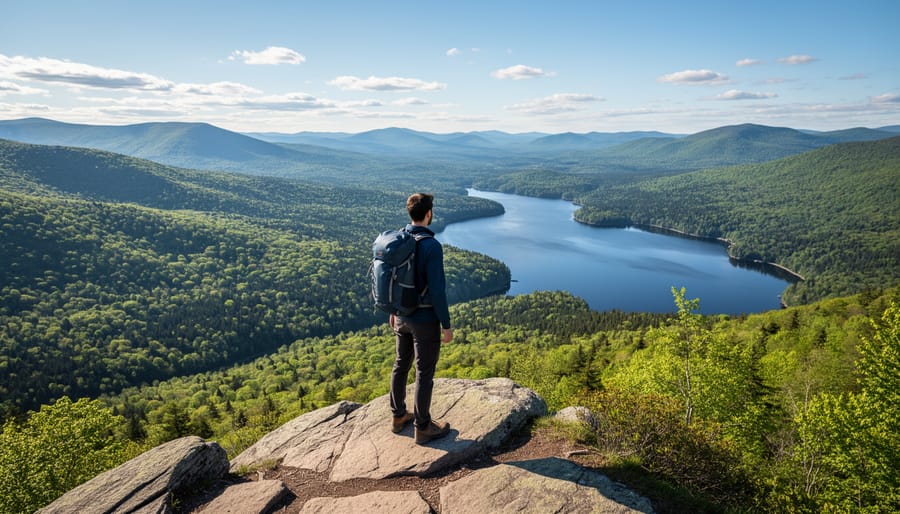
For hikers craving more challenge, Tremblant’s moderate to advanced trails deliver steep ascents, rugged terrain, and spectacular payoffs. These routes push beyond gentle forest paths into demanding climbs that test your endurance and reward it with panoramic views across the Laurentian landscape.
The longer trails, stretching up to 11 km, often feature significant elevation gain, rocky sections requiring careful footing, and sustained climbs that’ll get your heart rate up. You’ll navigate exposed ridgelines, cross streams on natural rock bridges, and climb through varied ecosystems as you ascend from dense forest to windswept summits. The technical aspects aren’t overwhelming, but they demand attention: watch for loose rocks on descents, use trekking poles for stability on steep grades, and pace yourself on extended uphill sections.
What makes these challenging routes worth the effort? Summit views that stretch for kilometres across forested valleys and distant peaks. The satisfaction of earning your vista through real physical effort. And the solitude, fewer hikers tackle these demanding trails, so you’ll often find yourself alone with the wilderness, listening to nothing but wind through pines and your own steady breathing.
Guided Hiking Tours: The D-Tour Experience
What’s Included in Your Tour
Your D-Tour guided hiking experience takes the stress out of exploring Mont-Tremblant National Park. The package handles logistics from start to finish: you’ll get picked up from your Mont-Tremblant accommodation and dropped back afterward, so there’s no worrying about directions or parking. Park access fees are covered, letting you focus entirely on the trail ahead.
During your 3 to 5 hour trek through 5 to 10 km of terrain, your expert guide leads the way, sharing insights about the landscape, wildlife patterns, and hidden viewpoints you’d likely miss on your own. They’re also there for safety and navigation, freeing you to soak in the experience rather than constantly checking maps.
The tour includes snacks to keep your energy up mid-hike, and you’ll receive photos capturing the highlights of your adventure. It’s a complete package designed for hikers who want expert guidance without sacrificing the sense of discovery that makes Tremblant’s trails special.
Timing and Booking Your Adventure
The D-Tour guided hiking season runs from May 16 to October 25, 2026, giving you a generous six-month window to experience the trails. Early season brings vibrant spring wildflowers and cooler temperatures, while fall hiking (late September through October) rewards you with spectacular foliage displays across the Laurentian landscape.
Booking is required and straightforward through D-Tour’s reservation system. Rates start at $84 per person for the full experience, which includes your return transportation from Mont-Tremblant accommodations, park access fees, trail snacks, and professional photos of your adventure. The 3 to 5-hour tours cover 5 to 10 km depending on your chosen route and group pace.
Reserve early if you’re planning a summer or fall foliage visit, as these peak periods fill quickly. Weekend slots tend to book faster than weekdays, so building flexibility into your travel dates gives you better options. Since tours require a minimum fitness level for the moderate to advanced terrain, check the specific requirements when booking to ensure the experience matches your capabilities and expectations.
Wildlife and Natural Wonders to Watch For

Mont-Tremblant’s trails offer wildlife encounters that transform an ordinary hike into something memorable. The Laurentian forest shelters black bears, white-tailed deer, beavers, and over 200 bird species, creating opportunities to witness these animals in their natural habitat throughout the hiking season.
Spring and early summer bring the most active wildlife period. Bears emerge from hibernation in April and May, foraging near trail edges during morning and evening hours. You’ll often spot deer grazing in meadow clearings at dawn, while beavers work industriously on their lodges in the park’s many wetland areas. Warblers, thrushes, and woodpeckers fill the forest canopy with calls during their May breeding season.
Late summer and fall shift the wildlife calendar. Moose become more visible as they move to lower elevations, and the September rutting season makes them particularly active. Chipmunks and red squirrels frantically gather food for winter, creating constant motion along the forest floor. Migration brings waves of raptors overhead, with hawks and eagles riding thermal currents above the ridgelines.
The key to safe wildlife viewing is maintaining distance and respecting animal space. Carry bear spray and make noise on blind corners to avoid surprising animals. Never approach wildlife for photos, even smaller species like porcupines or raccoons. If you encounter a bear, back away slowly while speaking calmly and avoid direct eye contact.
Watch for subtle signs beyond the animals themselves: fresh tracks in muddy sections, claw marks on tree bark, scattered feathers from a hawk’s meal, or beaver-gnawed stumps near water. These traces tell stories of the ecosystem working around you, adding depth to every trail you explore.
Essential Safety Tips for Tremblant Trails
Tremblant’s trails offer incredible scenery, but the Laurentian wilderness demands respect and preparation. Whether you’re tackling a 1 km beginner route or pushing through a challenging 11 km trail, following these safety practices keeps your adventure enjoyable and secure.
Pre-Hike Preparation Checklist
Before you set foot on any trail, run through this essential safety sequence:
- Check the detailed weather forecast for Mont-Tremblant National Park, not just the village, conditions can differ significantly at higher elevations.
- Download offline trail maps to your phone and carry a physical park map as backup, since cell service becomes unreliable in remote sections.
- Pack the ten essentials: navigation tools, sun protection, insulation layer, illumination, first-aid supplies, fire starter, repair kit, nutrition, hydration, and emergency shelter.
- Tell someone your planned route, expected return time, and emergency contact information, never assume you’ll have signal to call for help.
- Wear sturdy, broken-in hiking boots with ankle support and bring blister treatment even on shorter trails.
The weather in the Laurentians shifts quickly, particularly during shoulder seasons in May and October when guided tours operate. Morning sunshine can turn into afternoon thunderstorms, so always carry a waterproof jacket and extra layers regardless of the forecast. Temperature drops noticeably as you gain elevation, especially on the longer 10-11 km routes.
Wildlife Safety on the Trail
Black bears, moose, and smaller wildlife inhabit these forests year-round. Make noise as you hike, conversation works, but you might also choose bear bells for added acoustic presence on quieter trails. Store all food and scented items in sealed bags, and if you encounter wildlife, maintain distance and never attempt to feed or approach animals. Bears typically avoid humans but can be defensive if surprised, so alertness matters more than fear.
Travel with a companion whenever possible. Solo hiking increases risk if you’re injured or disoriented, and groups naturally make more noise that alerts wildlife to your presence. If you’re joining a guided tour, the leaders handle navigation and wildlife protocols, but personal preparation still matters.
Planning Your Multi-Day Adventure
Spreading your Tremblant exploration across several days lets you tackle a range of trails without rushing, and gives you time to discover what makes this region special beyond the hiking. Base yourself at one of the camping Mont Tremblant sites for an immersive experience, or choose village lodging if you prefer a hot shower and a proper bed between treks.
Your gear list shifts when you’re hiking multiple days. Invest in quality footwear that can handle varied terrain, bring layers for shifting mountain weather, and pack light but smart. Check our sleeping pad tips if you’re camping, because a good night’s rest makes or breaks your next day on the trail. Don’t overlook nutrition either, your body needs fuel for consecutive days of climbing. Our trail food ideas will keep you energized without weighing down your pack.
Mix activities to keep the adventure fresh. Alternate tough hiking days with easier trails, or swap an afternoon hike for kayaking on Lac Tremblant. This variety prevents burnout and lets you experience the region’s full outdoor range. Plan at least one rest day if you’re staying four or more nights, your knees will thank you, and you’ll return home energized rather than exhausted.
Whether you’re taking your first steps on a 1 km family trail or pushing yourself through an 11 km advanced route, Tremblant offers exactly what you’re looking for. The beauty of this destination lies in its refusal to gatekeep the adventure. You don’t need years of hiking experience to stand at a stunning lookout point or spot a white-tailed deer browsing near the trail. You just need to show up.
The Laurentian landscape rewards every skill level with something memorable. Beginners discover confidence on gentle paths through mixed forests. Experienced hikers find technical challenges that test their limits. And everyone gets the same breathtaking payoff when the treeline opens to reveal the wilderness stretching endlessly ahead.
Your Tremblant adventure starts with a simple decision to explore what’s possible beyond your comfort zone. Pick a trail that matches where you are today, not where you think you should be. Book that guided tour if you want expertise alongside you. Pack your water, lace up your boots, and go see what this place has been waiting to show you. The trails are ready whenever you are.