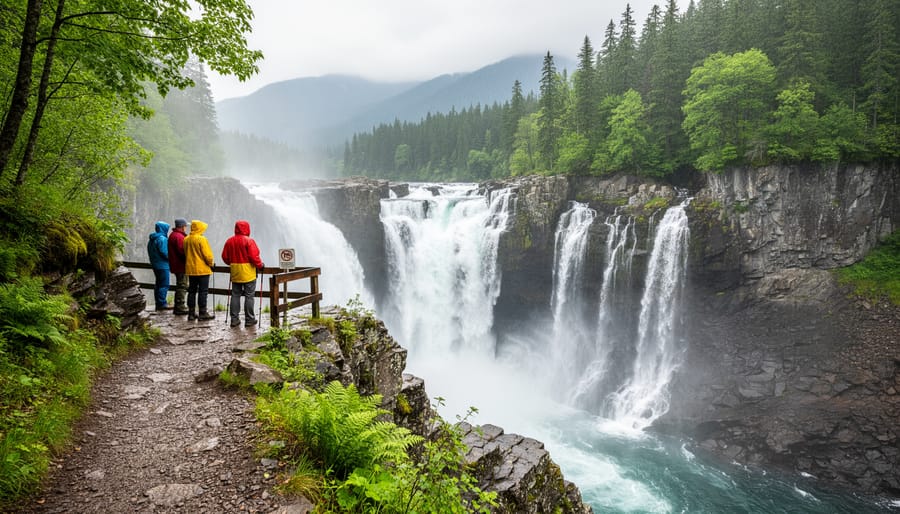
Hiking Near Me With Waterfalls: 9 Best Trails Across North America
The best waterfall hikes combine moderate trail difficulty with dramatic cascades within a half-day round trip, and North America delivers dozens of these experiences across every region. Whether you’re planning a weekend escape or a spontaneous afternoon adventure, this guide ranks standout trails from coast to coast based on waterfall volume, trail accessibility, and current 2026 conditions.
Right now, thousands of hikers are typing “hiking near me with waterfalls” into search bars, phones in hand, ready to hit the trail within hours. That urgency demands current, reliable information. Parks Canada recommends checking the latest trail conditions before heading out, and conditions shift weekly with snowmelt, rainfall, and maintenance schedules. In Yoho National Park, for example, both Wapta Falls Trail and the Yoho Valley Road to Takakkaw Falls are currently open and marked in good condition, while Third Vault Falls in Gros Morne National Park continues to showcase the park’s highest single-drop waterfall at 16 meters, crashing into a rocky ravine below.
This ranked list prioritizes trails that deliver maximum reward with manageable effort. You’ll find everything from roadside cascades perfect for families to backcountry routes where you might spot black bears fishing below the falls. Each recommendation includes real-time access notes, safety callouts for slippery rocks and wildlife encounters, and packing essentials so you can move from planning to trailhead in under an hour.
How We Chose These Waterfall Trails
We handpicked these nine trails by balancing drama with accessibility, ensuring every hiker finds their perfect waterfall adventure. Our selection process weighed several critical factors to deliver trails that combine breathtaking scenery with safe, reliable access across North America.
- Waterfall impact: Height, volume, and visual drama of the cascades
- Trail accessibility: Range of difficulty levels from roadside viewpoints to backcountry challenges
- Current conditions: Verified 2026 trail status and seasonal reliability
- Scenic diversity: Unique features including wildlife corridors, coastal landscapes, and opportunities to spot icebergs in certain regions
- Safety considerations: Well-maintained paths, clear signage, and manageable hazards
We prioritized trails spanning multiple skill levels, from families seeking easy walks to experienced hikers chasing remote backcountry rewards. Geographic diversity matters too, these selections represent the best waterfall hikes from the Canadian Rockies to Atlantic shores, ensuring you’ll find options near major regions. Before you head out, always check Parks Canada’s latest trail conditions for national park destinations, as seasonal factors affect access and safety year-round.
1. Third Vault Falls Trail, Gros Morne National Park, Newfoundland’s Hidden Gem
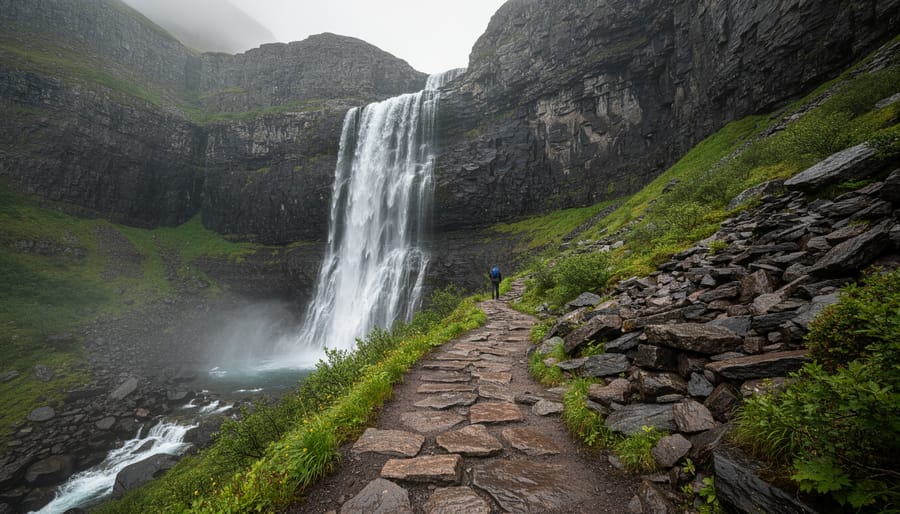
Tucked into Gros Morne National Park’s rugged western edge, Third Vault Falls plunges 16 meters into a dramatic rocky ravine, earning its reputation as the park’s highest waterfall. This trail delivers a remote, less-traveled experience that contrasts sharply with the park’s busier boardwalks and coastal routes.
The hike spans roughly 11 kilometers round trip with steady elevation gain through boreal forest and exposed alpine terrain. Expect uneven footing, stream crossings, and sections of loose rock requiring solid boots and attention. Moderate fitness is essential, but the payoff is a waterfall that thunders with serious power during spring and early summer runoff.
What sets Third Vault Falls apart among Gros Morne’s 100-plus kilometers of trails is the striking blend of coastal-mountain landscape. You’ll climb through dense spruce, break into windswept barrens dotted with tuckamore, and glimpse the Gulf of St. Lawrence in the distance before the ravine opens below. The falls themselves crash over layered sedimentary cliffs, carving deep into rock formed millions of years ago.
Wildlife sightings are common: watch for moose browsing trailside willows, ptarmigan exploding from undergrowth, and the occasional caribou on higher ground. Black bears inhabit the area, so carry bear spray and make noise. For a fuller Gros Morne Adventure combine this hike with the park’s coastal trails or fjord kayaking.
Check Parks Canada for current trail conditions before heading out, as weather and maintenance can shift access rapidly in this exposed Atlantic environment.
2. Wapta Falls Trail, Yoho National Park, Wide, Powerful, and Accessible
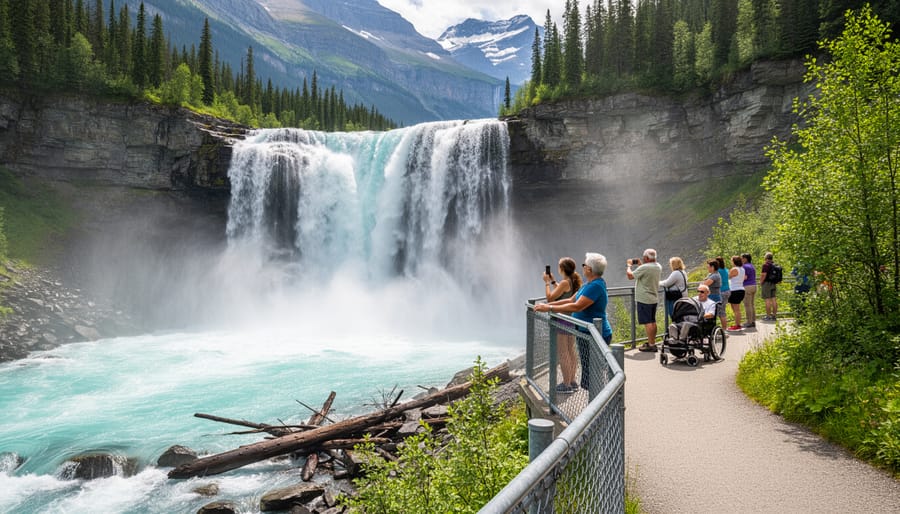
Wapta Falls packs serious drama with minimal effort, making it one of the Rockies’ most rewarding waterfall hikes for families and first-timers. The falls themselves span an impressive width, sending the Kicking Horse River thundering over a limestone ledge in a powerful, foaming cascade that you’ll hear long before you see it. At roughly 2.3 kilometers one-way along a well-maintained, mostly flat trail through Douglas fir forest, this hike delivers big scenery without demanding technical skills or grueling elevation gain.
Access couldn’t be easier. The Wapta Falls Road is currently open, bringing you right to the trailhead with ample parking and vault toilets. The trail itself is rated Good in Yoho National Park’s current conditions, meaning you can expect clear tread and reliable signage. Kids handle this walk comfortably, and the gentle grade suits anyone building hiking confidence or traveling with varied fitness levels.
The payoff unfolds at the viewpoint, where mist rises from the churning plunge pool and rainbow light plays across the spray on sunny afternoons. Surrounding peaks frame the scene in classic Rocky Mountain style, with layered ridges and remnant snowfields visible even in summer. Bring a rain jacket for the mist zone near the falls, and check Parks Canada’s latest trail conditions before heading out to confirm access and any seasonal updates. This trail proves that accessible doesn’t mean ordinary.
3. Takakkaw Falls, Yoho National Park, One of Canada’s Tallest
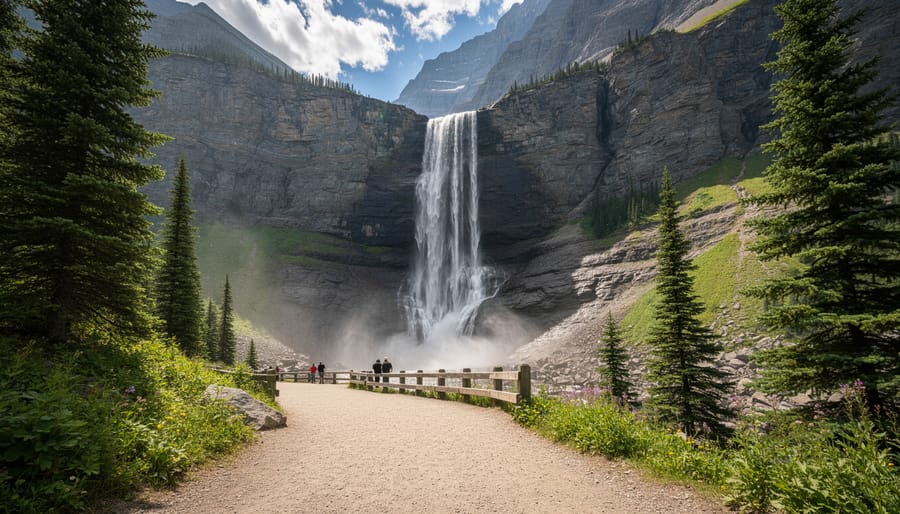
Takakkaw Falls crashes 373 meters down a sheer rock face, making it one of Canada’s highest waterfalls and an absolute must-see on any waterfall hiking itinerary. The thundering cascade, fed by the Daly Glacier high above, sends a constant mist into the air that you’ll feel hundreds of meters away, and the roar is genuinely humbling.
Getting there requires a drive up Yoho Valley Road, which is currently open, but the actual walk from the parking area to the main viewpoint takes only 5 to 10 minutes along a flat, paved path. This accessibility makes Takakkaw perfect for families, first-time hikers, or anyone wanting maximum waterfall drama with minimum effort. The base viewpoint puts you close enough to feel the spray on your face and capture stunning photos, especially in late morning when sunlight hits the falls.
For those craving more, Takakkaw serves as the trailhead for several longer routes. The Yoho Valley Trail continues past the falls into alpine meadows and connects to backcountry destinations like Twin Falls and the Iceline Trail, turning a quick stop into a full-day or multi-day adventure. Even if you stick to the short walk, arrive early in summer, this spot draws crowds for good reason, and parking fills fast by mid-morning. The combination of jaw-dropping height, easy access, and connections to deeper wilderness makes Takakkaw a cornerstone of any waterfall hiking trip in the Rockies.
4. Johnston Canyon to Inkpots, Banff National Park, Classic Catwalks and Cascades
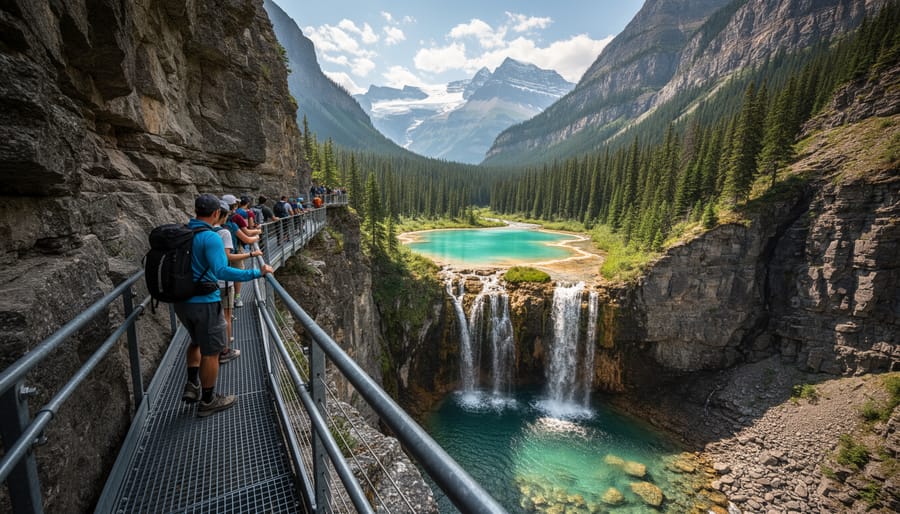
Johnston Canyon to Inkpots stands as one of Banff’s most photographed trails, and for good reason. Steel catwalks cling to the canyon walls, suspending you above the rushing creek as you wind through the narrow limestone gorge. The trail delivers waterfalls at multiple points: Lower Falls at 1.1 km showcases a powerful 10-meter cascade you can walk behind through a short tunnel, while Upper Falls at 2.7 km thunders 30 meters down into a turquoise pool. Most visitors turn around here, but pushing on another 2.4 km rewards you with the Inkpots, six vivid blue-green spring-fed pools bubbling up through sandy meadows, their colour shifting with the light and minerals.
The full return trip to the Inkpots covers 11.6 km with 335 meters of elevation gain, making it a moderate half-day hike. Expect crowds, especially summer weekends when the catwalks feel like a slow-moving parade. Early morning starts (before 7 AM) or late afternoon hikes dodge the worst congestion. Winter transforms the canyon into an ice-sculpture gallery, though you’ll need microspikes for the frozen walkways.
Before you go, check Parks Canada’s trail conditions page for Banff National Park, seasonal closures for wildlife activity or catwalk maintenance happen periodically. The trailhead lies seven kilometres east of Banff townsite along the Bow Valley Parkway, with a large parking lot that fills quickly in peak season. Pack layers; the canyon stays cool and misty even on warm days.
5. Dickson Falls, Fundy National Park, Atlantic Forest Beauty
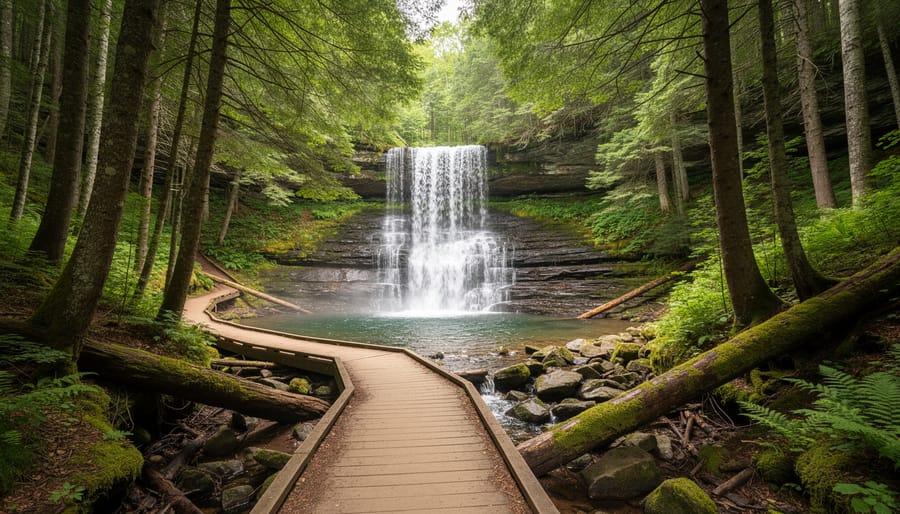
Tucked into New Brunswick’s Fundy National Park, the Dickson Falls trail delivers maximum reward for minimal effort. This 1.5-kilometer loop is one of the region’s most family-friendly waterfall hikes, threading through dense Acadian forest before revealing a delicate cascade spilling over moss-draped rocks into a cool gorge.
The trail follows a boardwalk and staircase system that keeps you dry while winding through towering yellow birch, sugar maple, and balsam fir. Interpretive panels along the route explain the coastal forest ecosystem and the geological forces that shaped the falls, making this more than just a photo stop. Kids love the wooden bridges and the chance to spot salamanders in the damp understory.
The waterfall itself isn’t the tallest on this list, but it’s among the most photogenic. Water tumbles in stages through a narrow chasm lined with ferns and hemlock, creating a scene that feels straight out of a storybook. The mist keeps the surrounding rock gardens perpetually green, even in late summer.
Expect the loop to take 30 to 45 minutes at a relaxed pace. The trail is well-maintained and accessible for most fitness levels, though the stairs may challenge very young children or those with mobility concerns. Visit in spring for peak flow, or enjoy the quieter forest ambiance during fall foliage season. Check Parks Canada for current trail conditions before you go.
6. Athabasca Falls, Jasper National Park, Raw Power and Easy Access
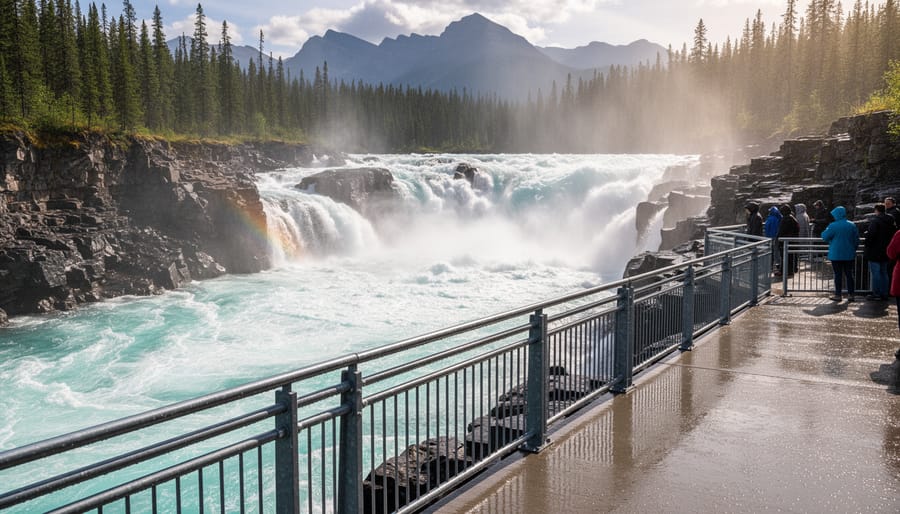
If you want raw waterfall power without the backcountry commitment, Athabasca Falls delivers. Located just off the Icefields Parkway in Jasper National Park, this roaring cascade is one of the most accessible waterfall experiences in the Canadian Rockies. The falls aren’t the tallest in the park, but what they lack in height they make up for in sheer force. The Athabasca River funnels through a narrow gorge of ancient quartzite, and the water hammers through the rock with a violence you can feel in your chest.
Short paved trails and multiple viewing platforms make this trail suitable for everyone, including families with strollers and visitors with mobility limitations. You can hear the thunder of the water from the parking lot. The upper viewpoints offer safe, barrier-protected perspectives on the churning whitewater, while lower platforms bring you close enough to feel the mist on your face.
The quartzite canyon walls show dramatic evidence of erosion, smoothed and carved by millennia of powerful water. You’ll notice potholes and channels sculpted into the rock, a visible reminder of nature’s patient force. Before you visit, check Parks Canada’s latest trail conditions for any seasonal updates or closures. This is a quick stop that rewards you with massive visual and sensory impact, no technical hiking required.
7. Laughing Falls, Yoho National Park, Backcountry Reward
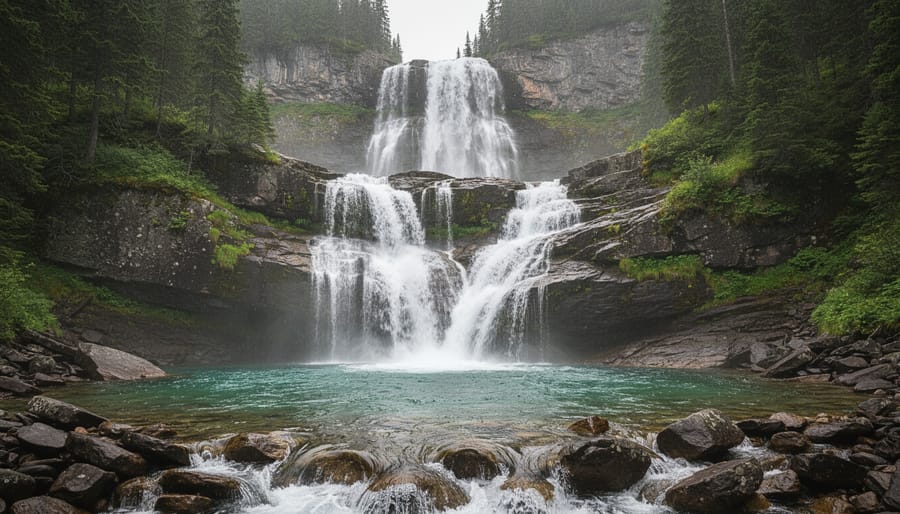
If you’re ready to leave the roadside crowds behind and earn your waterfall, Laughing Falls delivers one of Yoho’s most rewarding backcountry experiences. This multi-tiered cascade tumbles through old-growth forest roughly 11 km from the trailhead, making it a full-day commitment best suited to hikers comfortable with distance, elevation gain, and minimal company.
The trail winds through dense cedar and hemlock forest, crossing streams and climbing steadily into subalpine terrain. You’ll share the route with very few people compared to the park’s roadside attractions, which means a higher chance of wildlife encounters. Black bears forage along the trail corridor in summer, and marmots whistle from rock piles near the falls. Carry bear spray, make noise, and stay alert, this is their home.
The falls themselves justify the effort: a powerful, foaming curtain dropping in stages over moss-covered rock, the spray catching light in late afternoon. The roar echoes through the narrow canyon, and you can feel the mist from the viewing area. Plan for six to eight hours round-trip, including time to rest and take in the scene.
Check Parks Canada trail conditions before you go, as snowmelt and weather can affect creek crossings and trail stability well into summer. Pack extra layers, rain gear for the mist zone, plenty of water, and snacks for sustained energy. This is backcountry hiking with a spectacular payoff.
8. King Creek Falls, Kananaskis Country, Alberta’s Best-Kept Secret
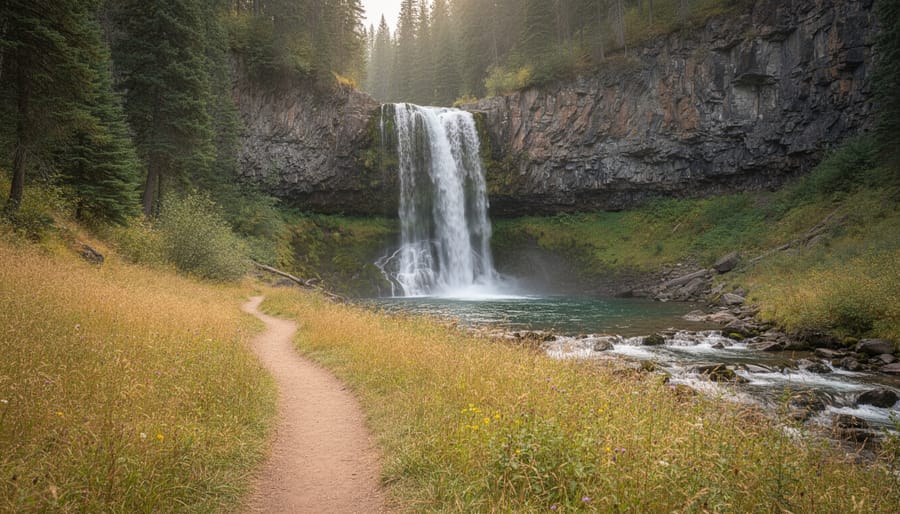
Tucked away in Kananaskis Country, King Creek Falls offers a refreshing alternative to the shoulder-to-shoulder trails of Banff and Jasper. This moderate 7.6-kilometer out-and-back route delivers a rewarding waterfall experience without the tour buses, and the seasonal nature of the cascade makes timing your visit part of the adventure.
The falls shine brightest during late May through early July, when snowmelt swells King Creek into a thundering multi-tiered plunge. By August, the flow typically diminishes to a trickle, though the trail remains worthwhile for the wildflower meadows that explode with color throughout summer. Indian paintbrush, alpine forget-me-nots, and arnica blanket the higher elevations, creating photo opportunities that rival the waterfall itself.
The trail gains roughly 200 meters through mixed forest and subalpine meadow, making it accessible for moderately fit hikers but challenging enough to filter out casual visitors. Rocky sections near the falls can be slippery even when dry, so sturdy footwear with good tread is essential. The route crosses several creek tributaries, and spring runoff can make these crossings tricky, test the depth with a trekking pole before committing.
Grizzly and black bear sightings are common here, particularly in berry season. Travel in groups, make noise, and carry bear spray. The relative solitude that makes King Creek special also means you’re genuinely in wildlife territory, so treat it with respect.
9. Brandywine Falls, Sea-to-Sky Corridor, British Columbia, Pacific Northwest Drama
Brandywine Falls drops 70 meters into a dramatic volcanic canyon just off the Sea-to-Sky Highway between Squamish and Whistler. The short, well-maintained trail makes this one of British Columbia’s most accessible waterfall experiences, you’ll reach the main viewpoint in under 10 minutes from the parking lot.
What sets Brandywine apart is the geology. The falls plunge over ancient lava rock into a narrow chasm carved through layers of volcanic basalt. Multiple viewing platforms let you appreciate the power of the water hammering into the canyon below, surrounded by towering old-growth Douglas fir and western red cedar that somehow cling to the steep walls.
The loop trail extends beyond the main falls viewpoint, winding through coastal rainforest where moss drapes every surface and the air stays cool even on hot summer days. It’s an easy 15-minute walk total, but the scenery delivers Pacific Northwest drama without the effort required at more remote destinations.
Brandywine’s location makes it perfect for a quick waterfall fix between other adventures. Whistler sits 15 minutes north, while Squamish climbing and mountain biking areas are 20 minutes south. If you’re planning an overnight trip in the corridor, check your sleeping pad and pack solid camping food ideas for nearby provincial campgrounds like Alice Lake or Garibaldi.
What to Pack for Waterfall Hikes
Waterfall trails demand specialized gear beyond your typical day hike. Mist from cascades can soak you just as thoroughly as rain, so pack a lightweight rain jacket and waterproof pants even on sunny days. Wet rocks near falls turn into skating rinks, invest in boots with aggressive tread patterns and consider microspikes if you’re hiking early season when ice lingers on shaded ledges.
Here’s what belongs in your pack:
- Waterproof shell and pants to handle constant spray near viewing areas
- Boots with deep lugs and ankle support for slippery, uneven terrain
- Bear spray and bear bells for backcountry routes where wildlife encounters are common
- Dry bag or waterproof case to protect your phone and camera from mist
- Two liters of water minimum, plus electrolyte mix for longer trails
Layer strategically. Temperatures drop near water, especially in shaded canyons, then spike when you climb out into open sun. A merino base layer and a fleece mid-layer give you flexibility without bulk. Stash extra socks in a ziplock, dry feet transform a miserable slog into a rewarding adventure, and that second pair pays off when you’re standing in the spray zone capturing the perfect shot.
Safety Tips for Hiking Near Waterfalls
Wet rocks near waterfalls are deceptively dangerous, mist creates a constant film of moisture that turns boulders and viewing platforms into skating rinks. Wear boots with aggressive tread, move slowly, and treat every surface near cascading water as potentially slippery, even if it looks dry. Barriers and fencing exist for a reason: the edges near waterfall drops are often unstable, undercut by erosion, and far more dangerous than they appear from a distance.
Current trail conditions change rapidly with weather, snowmelt, and seasonal maintenance, what was passable last week may be closed or hazardous today. Before you drive to any trailhead, visit the Parks Canada website for real-time updates on closures, wildlife warnings, and water levels. High-flow periods make waterfall hikes spectacular but also raise the stakes: swollen creeks erase trail crossings, mist obscures footing, and the roar of the falls can mask warning shouts.
Wildlife awareness matters year-round, especially on backcountry routes like Laughing Falls where bear encounters are common. Carry bear spray, hike in groups, and make noise on blind corners. Weather shifts fast in mountain terrain, pack rain layers and extra insulation even on sunny mornings, since waterfalls create their own microclimates with sudden temperature drops and soaking spray.
Frequently Asked Questions
When is the best time of year to see waterfalls?
Late spring through early summer offers the most dramatic waterfall flow thanks to snowmelt runoff from higher elevations. You’ll see maximum volume and power during May and June, though trails can be muddy and cold.
Do I need a park pass for these waterfall hikes?
Yes, all trails in national parks like Banff, Jasper, Yoho, Fundy, and Gros Morne require a valid Parks Canada pass. You can purchase day passes at park gates or buy an annual Discovery Pass if you plan multiple visits.
Are waterfall trails suitable for kids?
It depends on the trail. Dickson Falls, Athabasca Falls, and Brandywine Falls offer short, accessible routes perfect for families with young children. Longer backcountry hikes like Laughing Falls or the full Johnston Canyon to Inkpots trek work better for older kids with hiking experience.
How do I find current trail conditions before I go?
Parks Canada recommends checking their website for the latest trail conditions before heading out, with updates listed by specific park location. Local visitor centers also provide real-time information on closures, hazards, and seasonal access restrictions.
Can I swim near these waterfalls?
Swimming is generally not recommended and often prohibited near waterfalls due to strong currents, cold water temperatures, and submerged rocks. Respect all posted signs and barriers, as the mist-slicked rocks and powerful hydraulics create serious drowning hazards even in shallow water.
These answers cover the practical questions most hikers ask when planning waterfall adventures, but conditions change with weather and season. Always double-check current information rather than relying solely on online resources from previous visits, and don’t hesitate to ask rangers for local insight when you arrive at the trailhead.
Your Next Waterfall Adventure Awaits
From the thundering 16-meter cascade of Third Vault Falls in Newfoundland to the accessible boardwalks of Johnston Canyon in Banff, these nine trails prove that waterfall hikes come in every flavour. Whether you’re after a quick roadside stop at Athabasca Falls or ready to earn your view with a backcountry push to Laughing Falls, the combination of trail challenge and cascading water delivers something no photo can fully capture.
Before you lace up, take five minutes to verify current access and conditions. Trails change with seasons, snowmelt, and weather events, and that quick check could save your trip. Pack the essentials we covered, respect the power of moving water, and give yourself time to simply stand and watch the falls do their work. The mist on your face, the roar in your ears, the knowledge that you walked here under your own power, that’s the magic we’re chasing. Your next waterfall adventure is out there waiting.