Old MacDonald Camping: Where Farm-Themed Family Adventures Meet the Great Outdoors
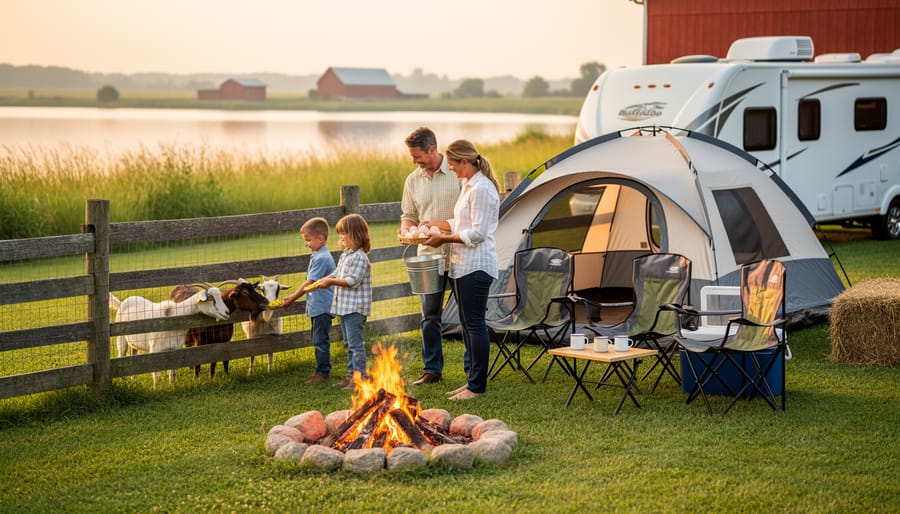
Old MacDonald camping brings together the joy of farm-themed outdoor adventures with traditional camping activities, creating a family-friendly experience where children can meet barnyard animals, participate in agricultural activities, and sleep under the stars. This concept transforms standard campgrounds into interactive learning environments where kids engage with livestock, explore working farms, and develop outdoor skills in a supervised, approachable setting.
The appeal is straightforward: families who love the outdoors but want something beyond backcountry hiking or challenging paddling routes can introduce young children to camping through familiar farm imagery and activities. Picture waking up to collect fresh eggs, spending afternoons feeding goats and sheep, then gathering around an evening campfire. The experience removes some of the intimidation first-time camping families face while delivering genuine wilderness connection.
Old MacDonald’s Resort on Buffalo Lake’s south shore between Edmonton and Calgary has pioneered this model in Western Canada, offering waterfront camping combined with petting zoos, pony rides, and seasonal farm programming. Similar operations across North America blend agricultural tourism with RV sites, tent platforms, and cabins, making the transition to outdoor recreation smooth for families accustomed to more structured environments.
Beyond dedicated farm campgrounds, the concept extends to DIY approaches. Families visiting working farms with camping provisions or joining agritourism stays that include outdoor sleeping arrangements create their own versions. The key is balancing animal encounters and farm chores with core camping fundamentals: fire safety, wildlife awareness beyond domestic animals, and respect for natural spaces. For adventurous families ready to expand beyond the barnyard, these experiences build confidence for future trips to wilder settings where moose and bears replace cows and chickens.
What Makes Old MacDonald Camping Different from Traditional Family Camping
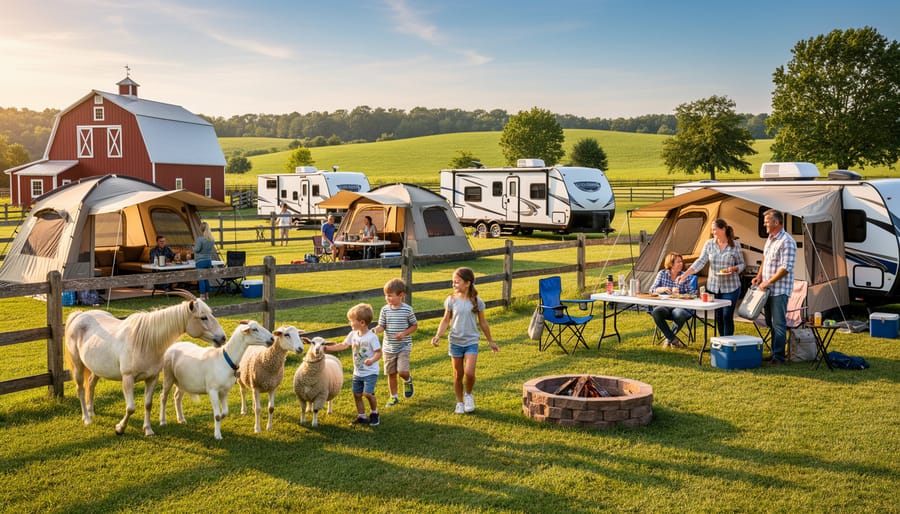
Traditional family camping often throws parents into the deep end, pitching tents in unfamiliar wilderness, managing anxious children in completely new environments, and balancing safety concerns with the desire for authentic outdoor experiences. Farm-themed camping flips this script by anchoring the adventure in something children already understand and love: animals, songs, and the comforting rhythms of farm life.
The animal encounters form the backbone of what makes this approach distinct. Instead of hoping to glimpse wildlife from a distance, families interact with friendly goats, chickens, and ponies throughout their stay. Children learn to feed animals, collect eggs, and observe farm routines, experiences that build confidence and create natural conversation starters around responsibility and animal care. These structured interactions provide predictable touchpoints during the day, reducing the uncertainty that can overwhelm camping newcomers.
Agricultural education elements weave seamlessly into the outdoor experience. Kids discover where food comes from, how gardens grow in different conditions, and the relationship between weather patterns and farm work. These lessons happen organically, planting seeds before a morning hike, comparing wild plants to cultivated crops, understanding why farmers watch the same weather systems that affect camping conditions. The farm context transforms abstract outdoor concepts into tangible, relatable experiences.
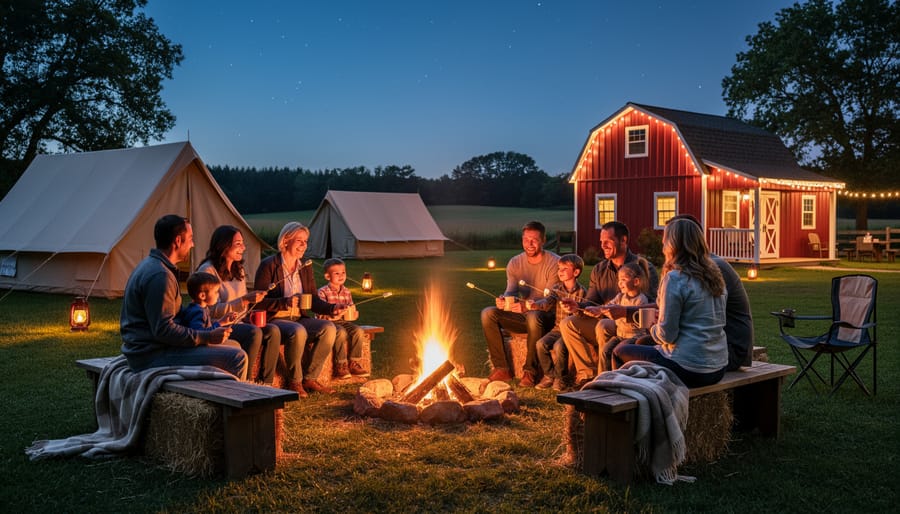
The sing-along tradition, rooted in the familiar “Old MacDonald” song, creates evening rituals that feel less daunting than sitting around a campfire in silent wilderness. Families gather for musical storytelling that celebrates the animals they’ve met during the day, building community among campers while maintaining the outdoor atmosphere.
This hybrid model bridges the gap between heavily programmed recreation and unstructured wilderness time. The farm activities provide a comfortable home base, familiar reference points that make venturing into trails, exploring nearby waterways, or simply sitting under stars feel like natural extensions rather than intimidating leaps. Families gain camping skills without the all-or-nothing pressure of pure backcountry experiences.
The 2026 Old MacDonald Camping Movement: Real Events Bringing Families Together
Community organizations are stepping up in 2026 to make farm-themed camping accessible to families who might never have considered outdoor recreation. The Beaumont-Banning Nepali Society’s Overnight Family Camping event on June 17 and 18, 2026, exemplifies how grassroots groups are using the Old MacDonald camping concept to welcome diverse communities into nature. These community-led initiatives matter because they remove the intimidation factor that keeps many families from taking that first camping trip.
When cultural organizations host farm-themed camping experiences, they create bridges between traditions. Families who grew up in urban environments or who recently immigrated find common ground through universally recognizable farm imagery and songs. The agricultural element provides structure and familiarity, while the overnight camping component introduces essential outdoor skills in a supported environment.
Community-organized events also build networks that outlast the weekend. Parents connect with other families facing similar questions about camping gear, child safety in nature, and how to balance cultural comfort with new experiences. First-time campers gain confidence from shared challenges, whether learning to pitch a tent or managing a campfire. These events prove that outdoor recreation belongs to everyone, not just those who grew up hiking and fishing.
The real value lies in how these gatherings transform abstract interest into concrete action. Families leave with actual camping experience, a network of fellow adventurers, and the realization that nature exploration fits their lives. Many participants go on to plan independent camping trips, having discovered that the outdoors welcomes them.
Planning Your Own Old MacDonald-Style Camping Adventure
Choosing the Right Setting: Farm Campgrounds vs. Traditional Sites
Dedicated farm campgrounds offer built-in agricultural experiences but aren’t essential for creating an Old MacDonald-style adventure. Your choice depends on how much structure your family needs versus how adventurous you want to be with DIY farm elements.
Agritourism camping facilities provide convenience, on-site animals, scheduled feeding times, hayrides, and educational programs designed for children. These properties handle the logistics of animal care and safety protocols, letting you focus on enjoying the experience rather than coordinating it. The trade-off is less flexibility in your schedule and typically higher costs than traditional campgrounds.
Traditional campgrounds near working farms offer more independence. Research sites within a short drive of pick-your-own farms, agricultural education centers, or petting zoos that welcome day visitors. This approach lets you spend mornings fishing or hiking, then visit a dairy farm for afternoon milking demonstrations. You control the pace and choose which agricultural elements to include.
Consider proximity carefully. A campground fifteen minutes from a working farm gives you authentic agricultural access without being surrounded by early-morning rooster calls or manure smells that some families find overwhelming. Look for sites near rural landscapes where farm visits complement rather than dominate your outdoor experience.
State parks in agricultural regions often provide the best balance, established camping infrastructure with nearby agritourism operations. Check whether your chosen campground is near seasonal operations like corn mazes, berry farms, or educational ranches that align with your trip dates.
Packing Essentials for Farm-Themed Family Camping
Farm-themed camping demands gear that transitions smoothly between muddy barnyard visits and evening campfire comfort. Closed-toe boots with good tread protect feet during animal encounters while remaining comfortable for trail walks, rubber barn boots work well but lack hiking support, so pack trail shoes separately. For children, waterproof hiking boots handle both environments without constant changes.
Open agricultural landscapes offer little shade, making sun protection critical. Wide-brimmed hats shield faces during daytime farm activities, while lightweight long-sleeve shirts prevent sunburn without overheating. Pack reef-safe sunscreen for frequent reapplication, especially before transitioning from shaded barn areas to exposed fields.
Layer your clothing system to handle temperature swings between sunny pastures and cool evenings. Quick-dry fabrics manage sweat during active farm chores, then layer under fleece when temperatures drop. Bring designated “barn clothes” separate from sleeping attire to maintain camp hygiene after animal contact.
Standard camping gear applies, tent, sleeping bags, cooking equipment, but add hand sanitizer stations, wet wipes for immediate cleanup after farm visits, and sealed containers to protect food from curious farm animals that wander near campsites. A small daypack keeps essentials accessible during structured farm activities without returning to your tent repeatedly.
Safety Considerations for Farm and Outdoor Hybrid Experiences
Farm-themed camping brings together two environments with distinct safety challenges. While children might approach barnyard animals with the same familiarity they have for stuffed toys, real livestock demands respect and clear boundaries. Always supervise young campers during animal interactions, keeping hands away from mouths and eyes during visits. Teaching kids to let animals approach them rather than chasing or cornering creatures prevents both scratches and genuine fear responses from the animals.
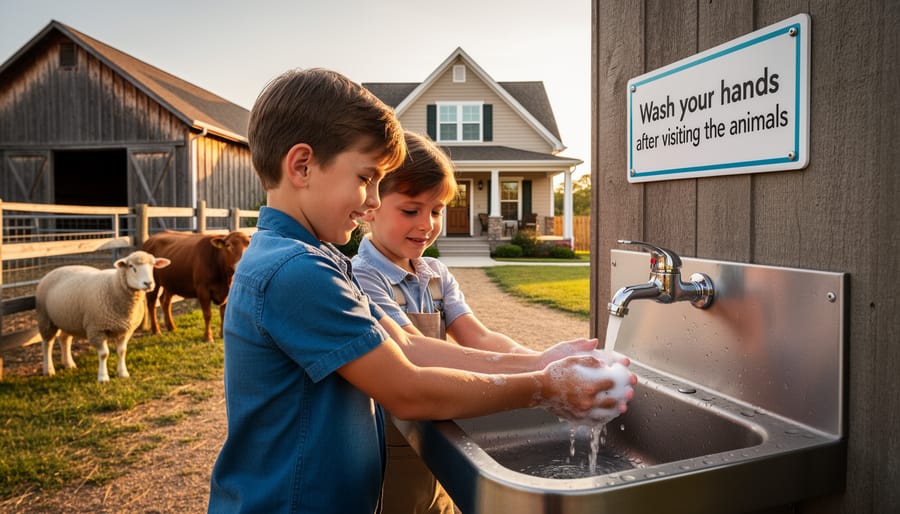
The transition between farm areas and camping spaces requires deliberate hygiene protocols. Designate specific footwear for barnyard visits that never enters your tent, and establish a cleaning station at the boundary between agricultural and sleeping areas. Pack antibacterial wipes as backup when water sources aren’t immediately accessible, though soap and water remains the gold standard for removing pathogens picked up from animal contact.
Open agricultural landscapes present weather exposure that differs from forested campsites. Without tree cover to break wind or absorb lightning strikes, farm settings demand heightened awareness of approaching storms. Check forecasts before your trip and understand lightning safety outdoors protocols. Have a solid-structure shelter plan identified before you need it, because barns and equipment sheds beat tents but may not always be accessible.
Food storage takes on dual importance when camping near farms. Your easy camping food must stay secured from both wild animals drawn to agricultural areas and curious livestock that will investigate anything new in their territory. Use hard-sided coolers with latches rather than soft bags, and never assume that domesticated animals nearby means an absence of raccoons, bears, or coyotes.
Farm-themed camping isn’t wilderness-lite. It simply adds agricultural hazards to traditional camping risks rather than replacing them. Maintain the same vigilance about fire safety, first aid readiness, and navigation awareness you’d apply anywhere outdoors. The farm elements provide structure and familiarity, but they don’t eliminate the need for fundamental outdoor safety practices.
Adding Water Sports and Active Adventures to Your Farm Camping Trip
Farm camping’s strategic rural location naturally opens doors to waterways and trails most urban families rarely encounter. Many agricultural areas nestle beside quiet lakes, rivers, and conservation lands perfect for extending your visit beyond barnyard boundaries.
Kayaking transforms quickly from exotic adventure to accessible family activity when you start from calmer rural waters. Farm campgrounds near slow-moving rivers or protected lake inlets provide ideal launching points for first-time paddlers. The gentle current and minimal boat traffic let kids develop confidence without overwhelming them. Pack waterproof bags for snacks and first aid kits plan for afternoon sessions when waters warm up, and choose routes where you can easily turn back if younger paddlers tire.
Hiking through agricultural landscapes offers distinctly different lessons than mountain trails. Rural paths wind through changing environments, pasture edges give way to woodlots, creek crossings reveal beaver activity, and open fields let you spot hawks hunting. These transitions teach kids to notice landscape variety and understand how wild spaces connect. Morning farm chores followed by afternoon hikes create natural rhythm, giving energetic children productive outlets while teaching them that outdoor recreation takes many forms.
Wildlife observation gains extra dimensions when you compare domestic and wild species. Watching chickens scratch for insects prepares kids to spot wild turkeys doing the same thing in wooded clearings. The dairy cows grazing peacefully make an excellent contrast to white-tailed deer browsing at dawn. This comparison sharpens observation skills and helps children understand animal behaviour patterns that cross the domestic-wild divide.
Build itineraries that alternate between guided farm activities and self-directed exploration. Schedule structured morning programs, then leave afternoons open for spontaneous creek wading or trail following. This balance prevents overscheduling while ensuring everyone gets both comfort and challenge.
Making Old MacDonald Camping Work for All Skill Levels
Farm-themed camping creates natural scaffolding for every experience level. First-time campers appreciate the predictable structure, meals happen near the barn, bathrooms are clearly marked, and friendly animals provide comforting distractions when kids feel uncertain about sleeping outdoors. Meanwhile, seasoned outdoor enthusiasts discover new dimensions: teaching their children animal husbandry basics, photographing wildlife in mixed agricultural-natural settings, or planning multi-day trips that weave farm stops into backcountry routes.
Age-appropriate activities span the entire developmental spectrum:
- Toddlers (18 months, 3 years)
- Supervised petting of gentle animals like rabbits and chickens in enclosed areas, with constant adult presence for safety and hygiene. Daytime-only visits work best, with naps taken in familiar camping trailers rather than tents.
- Preschoolers (4-5 years)
- Feeding smaller livestock under supervision, short nature walks between barnyard and campsite, and participating in group sing-alongs. These children need structured rest periods and clear boundaries between farm and camping zones.
- Elementary Age (6-11 years)
- Collecting eggs, learning basic camping skills like fire safety around controlled cooking areas, and exploring farther trails independently with check-in schedules. This age thrives on responsibility, caring for animals, helping younger campers, and documenting experiences through journals or photos.
- Teens (12+ years)
- Advanced camping techniques, longer hikes to nearby waterways for kayaking, and leadership roles in group activities. Farm settings provide service-learning opportunities like trail maintenance or assisting with evening programs.
Families anxious about pure wilderness can rent camping trailers positioned near farm facilities, creating a gradual transition from car camping to tent experiences. The visible farmhouse lights, accessible staff, and proximity to help demystify outdoor nights for nervous parents and children alike, building confidence before attempting more remote sites.
Old MacDonald camping bridges the gap between the familiar and the wild, transforming what might feel intimidating into something welcoming for families taking their first steps into outdoor recreation. By wrapping camping traditions in playful farm themes, this approach removes barriers without sacrificing authentic nature experiences. The Beaumont-Banning Nepali Society’s June 17 & 18, 2026 event shows how communities are embracing this model to bring diverse families together outdoors.
Whether you join organized events or create your own farm-themed adventure at a rural campground, the framework remains powerful: interactive elements that engage children, educational opportunities disguised as fun, and the gradual transition from structured comfort to wilderness confidence. Pack thoughtfully, starting with our sleeping pad guide for comfortable nights under the stars, and prioritize safety through proper preparation and supervision around both animals and natural landscapes.
View farm-themed camping as your launching point, not your destination. The skills families develop, setting up shelter, reading weather, respecting wildlife, translate directly to backcountry hiking, kayaking expeditions, and deeper wilderness exploration. Start with the songs and the barnyard, then let curiosity lead you further into North America’s remarkable outdoor spaces.