Easy Camping Food Ideas That Actually Taste Good on the Trail
The best camping meals come together in under 20 minutes and require nothing more than a single pot or skillet. After years of navigating everything from multi-day iceberg trail paddling expeditions to weekend wilderness getaways, I’ve learned that elaborate cooking has no place at the campsite when you’re exhausted from a full day outdoors.
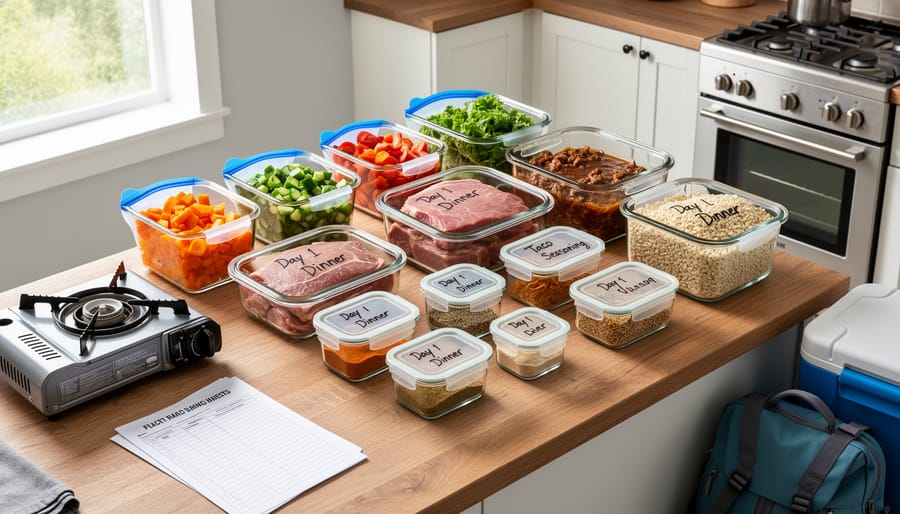
Smart campers prep ingredients at home. Chop vegetables, pre-mix spice blends, marinate proteins, and pack everything in labeled containers before you leave your driveway. This single strategy cuts cooking time in half and keeps you from dealing with messy prep work when all you want is hot food and a campfire.
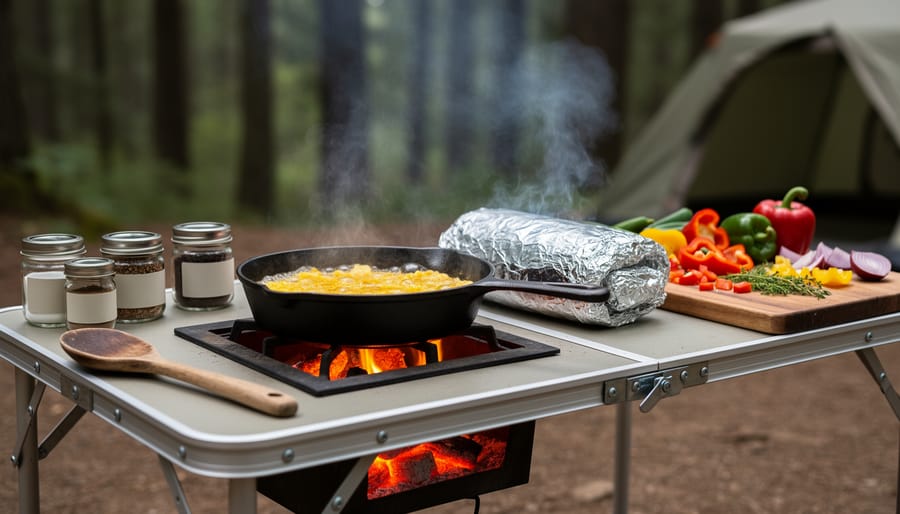
Foil packet meals solve the eternal camping dilemma of limited cookware and tedious cleanup. Wrap seasoned chicken with potatoes and peppers, seal it tight, and toss it directly onto hot coals for 15 minutes. You get a complete dinner with zero dishes to scrub in the dark.
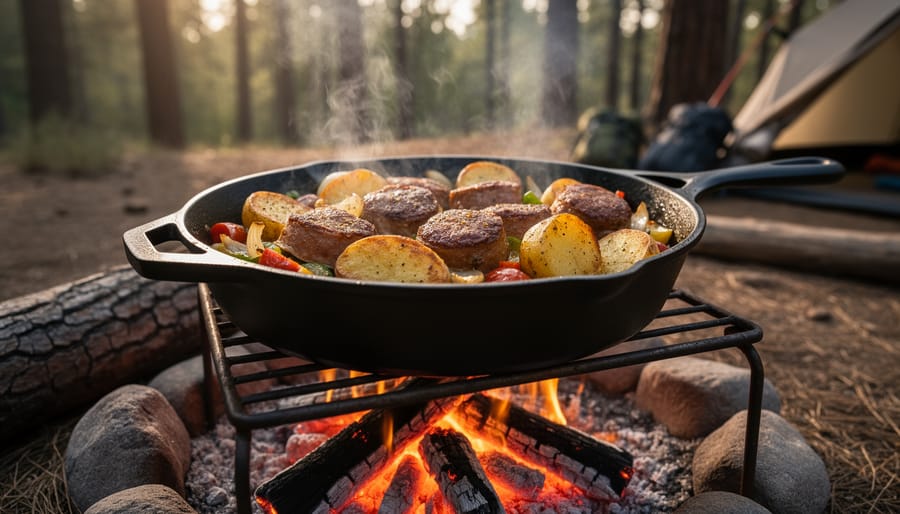
One-pot breakfasts like skillet scrambles or overnight oats give you fuel without fuss. Combine eggs, pre-cooked sausage, and cheese in a cast iron pan, or let oats soak overnight in a mason jar with dried fruit and nuts. Both options leave you more time to hit the trails instead of babysitting a camp stove.
The camping meals that work best are the ones you’ll actually make when you’re tired, hungry, and surrounded by curious wildlife. Forget Instagram-worthy spreads. Focus on food that tastes great, comes together fast, and uses ingredients that won’t spoil in your cooler.
Why Easy Camping Food Matters for Outdoor Adventures
You’ll burn thousands of calories on a full day of paddling or hiking, and your body needs real fuel to keep going. The difference between a satisfying meal and mediocre trail food isn’t just taste, it’s your energy level at mile seven, your recovery overnight, and whether you’re excited to get back out there the next morning or dragging yourself from the tent.
Smart camping food planning directly impacts how much adventure you fit into your day. When breakfast takes five minutes instead of thirty, you’re on the water catching sunrise light across iceberg trails. When dinner doesn’t require constant stirring or monitoring, you spend that time exploring the shoreline or watching wildlife instead of hunched over a camp stove. The right meals deliver proper carbohydrate for exercise without weighing down your pack or killing your momentum.
Weight matters when you’re portaging a kayak or climbing elevation. Every ounce you carry affects your pace and endurance. Strategic food choices let you pack lighter while eating better, pancake mix in a sealed pitcher weighs far less than individual packages, pre-cracked eggs in a bottle eliminate fragile cartons, and smart ingredient selection means fewer items taking up precious pack space.
Active outdoor enthusiasts need more than survival rations. You’re not just feeding yourself; you’re fueling serious physical output in conditions that demand reliable energy. Proper meal planning transforms camping from an endurance test into something you genuinely look forward to, where good food becomes part of the adventure rather than an afterthought between paddles.
Smart Prep-Ahead Strategies for Camp Cooking
The difference between fumbling with ingredients at your campsite and enjoying a smooth cooking experience comes down to what you do at home before you leave. Smart prep work transforms camping meals from frustrating chores into quick wins that let you spend more time on the water or trails.
Start with your protein. If scrambled eggs are on your breakfast menu, crack them at home and pour them into a sealed bottle or shaker container. This eliminates the nightmare of carrying fragile egg cartons through rugged terrain and gives you pour-ready eggs that cook faster. A good squeeze bottle works perfectly and takes up less space in your cooler than a dozen-egg carton.
Pre-mixing dry ingredients saves significant time and mess at camp. You can store pancake mix in a pitcher with a tight-sealing lid, keeping the powder ready until you add water at your campsite. This approach works for any dry mix you’d normally prepare from scratch. Just label your containers clearly so you’re not guessing what’s inside when you’re hungry after a morning paddle.
Fruit prep deserves attention too. Pre-cut all your produce at home except bananas, which brown too quickly when sliced early. Watermelon, cantaloupe, pineapple, grapes, and berries all travel well when washed, chopped, and stored in sealed containers. You’ll thank yourself when you can grab a handful of ready-to-eat fruit instead of wrestling with a knife on an uneven camp table.
For multi-day trail prep portion your meals into individual servings before leaving home. Pre-measure spices, sauces, and condiments into small containers or bags rather than hauling full bottles. Consider marinating meat before freezing it in zip-top bags, the frozen blocks act as extra cooler ice while they thaw, and your protein arrives pre-seasoned.
The prep-ahead approach extends to creative solutions like bringing tubes of crescent rolls for versatile meal options. These refrigerated doughs need cool storage but reward you with fresh-baked taste that elevates camp cooking beyond typical trail fare.
Easy Breakfast Ideas to Fuel Your Morning Paddle
Pancakes Made Simple
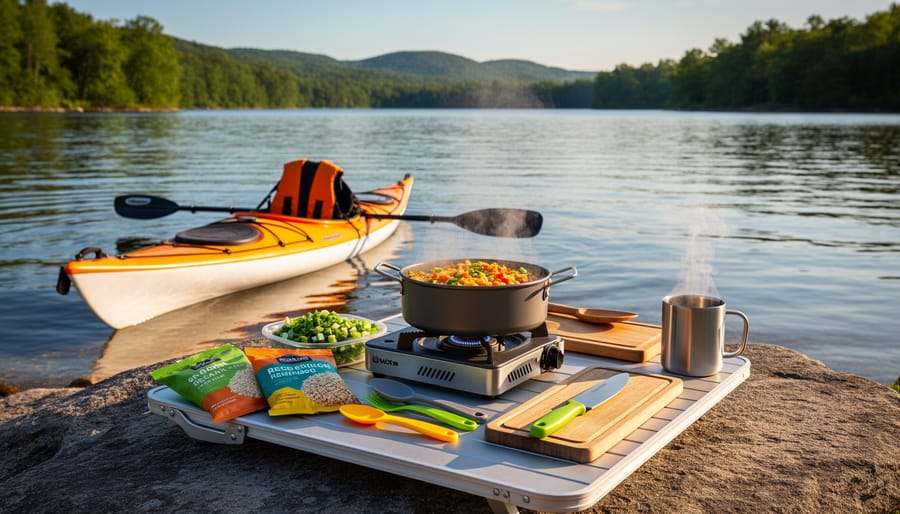
The humble pitcher transforms pancake mornings from frustrating measuring sessions into pour-and-cook simplicity. At home, measure your dry pancake mix and transfer it directly into a sturdy pitcher with a tight-sealing lid. This pre-portioning eliminates the need to haul bulky boxes or fumble with measuring cups at the campsite while keeping the powder completely dry during transport.
When breakfast time arrives, add the required water directly to the pitcher, secure the lid, and shake vigorously until the batter reaches your preferred consistency. The spout design gives you precise control over portion sizes as you pour onto your camp griddle or skillet, preventing the messy drips and spills that come with scooping batter from bowls or bags. This method works equally well whether you’re cooking over a propane camp stove or balancing a pan on grate bars above your campfire.
Choose a pitcher with measurement markings on the side so you can accurately gauge water amounts without additional tools. The container pulls double duty too, after breakfast cleanup, it stores leftover batter for the next morning or serves as a general-purpose camp pitcher for mixing drinks or storing water.
Egg-Based Morning Fuel
Forget the hassle of babying a cardboard carton through your gear, eggs make the trip much better when you crack them at home and pour them into a sealed water bottle or camping-friendly container. This simple trick eliminates the worry of crushed shells in your backpack and gives you ready-to-cook scrambled eggs that just need a quick shake before hitting the pan.
A standard 16-ounce bottle holds about six to eight eggs, perfect for feeding a small group after a morning paddle. Add a pinch of salt and pepper before sealing if you want, or keep it plain and season at camp. The sealed bottle protects your food from the bumps of trail hiking and keeps everything contained if you’re storing it in a cooler with ice packs.
When you’re ready to cook, give the bottle a vigorous shake to mix the yolks and whites thoroughly. Pour straight into your heated skillet over the campfire or portable stove, scrambling as usual. Clean the bottle afterward and you’ve got a container ready for the next adventure, no fragile packaging required.
Quick Grab-and-Go Options
Pre-cut fruit salads save precious morning minutes when you’re eager to launch your kayak at sunrise. Package strawberries, melon chunks, grapes, and apple slices in sealed containers the night before (skip bananas until morning to prevent browning). Hard-boiled eggs peeled at home, individual nut butter packets, and whole-grain muffins wrapped in foil become substantial day hike meals that require zero campsite prep. Granola mixed with dried cranberries and almonds in resealable bags offers crunchy energy you can eat straight from the container while breaking down your tent, keeping you fueled for whatever wilderness adventures await.
Satisfying Dinner Solutions After a Day on the Water
After spending the day paddling through cold waters or navigating rocky terrain, your body craves real food that delivers warmth and substance. Dinner is your chance to refuel completely, and the right approach means satisfying meals without turning your campsite into a complicated outdoor kitchen.
One-pot meals are the foundation of smart camp cooking because they minimize cleanup while maximizing flavor. A simple chili starts with browning ground beef or turkey in your camp pot, then adding canned beans, diced tomatoes, and a packet of seasoning, everything cooks together in under 30 minutes. Pasta dishes work equally well: boil your noodles, drain most of the water, then stir in jarred sauce and pre-cooked sausage you sliced at home. The key is choosing ingredients that don’t require refrigeration and can handle being transported in your pack or dry bag.
Those crescent roll tubes mentioned for breakfast pull double duty at dinner. Wrap the dough around hot dogs for pigs in a blanket, stuff them with pre-cooked ground meat and cheese for makeshift empanadas, or roll them into spirals around a skewer for campfire breadsticks. The dough stays stable for a couple days in cool weather and cooks perfectly over coals or on a camp stove griddle.
Consider organizing your trail dinner ideas by cooking method to match your setup each night:
- Campfire options: foil packet meals with chicken, potatoes, and vegetables; skewered kebabs with pre-marinated meat; Dutch oven cornbread
- Portable stove meals: ramen upgraded with dehydrated vegetables and an egg; instant rice with canned chicken and seasoning packets; mac and cheese with added tuna
- No-cook backup dinners: tortilla wraps with peanut butter and honey; bagels with cream cheese and smoked salmon; trail mix combined with dried fruit for calorie-dense grazing
The meals that work best after wildlife encounters or long paddling days are the ones you can prepare mostly on autopilot. Pre-measure spices into small bags at home, portion out ingredients into daily bundles, and choose recipes where “cooking” means mostly just heating and combining. You’ll spend less time hovering over a stove and more time enjoying the fact that you’re eating hot food under open sky, which somehow tastes better than anything you’d make in a full kitchen anyway.
Fast Snacks and Quickie Lunches for Trail Days
When you’re mid-paddle or halfway up a trail and hunger hits, you need food that doesn’t slow you down. The best trail snacks and lunches work without refrigeration, require zero preparation, and can be eaten with one hand while you’re perched on a rock watching for wildlife.
Trail mix remains unbeatable because you can customize it before you leave home. Toss together nuts, dried cranberries, chocolate chips, and whatever else sounds good, then portion it into resealable bags. Jerky works the same way, it’s protein-dense, doesn’t spoil, and fits anywhere in your pack. Pair either with whole apples or oranges, which handle bumps better than softer fruit and don’t need cutting.
Peanut butter is your secret weapon for midday energy. Spread it on tortillas, crackers, or sturdy bread, then roll or stack them in wax paper. These keep for hours and deliver fat and protein when you’re starting to fade. If you’re feeling fancy, add honey or banana slices before wrapping. String cheese and summer sausage round out the protein options, both travel well without ice if you’ll eat them within a day or two.
For something more substantial, build simple wraps the morning you’ll eat them. Spread cream cheese on a tortilla, layer deli meat and pre-cut veggies, roll tight, and slice into pinwheels. Wrap them in foil and they’ll stay together in your dry bag until lunch. Crackers and hummus packets make another solid combination, the single-serve pouches eliminate the mess of transporting an open container.
Granola bars and energy bars seem obvious, but they’re obvious for good reason. They don’t melt (usually), don’t crumble easily, and you can eat them while kayaking without creating a situation. Stock a variety because you’ll get sick of the same flavor by day three of any backcountry trip.
Campfire Treats Worth the Effort
After mastering breakfast and dinner, it’s time for the reward that makes everyone gather around the fire. Campfire cones deliver that nostalgic sweet fix with way more excitement than standard s’mores, and they’re ridiculously simple to pull off after a long day paddling or hiking.
Grab waffle cones before your trip and stuff them with whatever sounds good: chocolate chips, mini marshmallows, peanut butter, and chopped fruit like bananas create a melted, gooey treat that beats stale graham crackers every time. The cone acts as both bowl and wrapper, which means zero cleanup and maximum fun.
- Fill each waffle cone about two-thirds full with your chosen mix of chocolate chips, marshmallows, peanut butter, and fruit.
- Wrap the stuffed cone completely in aluminum foil, crimping the edges to seal it tight.
- Place the wrapped cone at the edge of your campfire coals, not directly in flames, for about five minutes.
- Rotate the cone once or twice with tongs to heat evenly without burning.
- Carefully unwrap the foil (it’ll be hot), and let the cone cool for a minute before eating straight from the crispy shell.
Banana boats offer another foolproof option. Slice a banana lengthwise without cutting all the way through, stuff the gap with chocolate chips and marshmallows, wrap in foil, and warm over coals for about five minutes. The banana turns soft and warm, creating a natural bowl for melted toppings.
For groups with adventurous eaters, try cinnamon sugar tortillas. Spread butter on a flour tortilla, sprinkle with cinnamon and sugar, roll it up, wrap in foil, and warm by the fire until the sugar caramelizes slightly. Simple, portable, and satisfying after watching wildlife or navigating iceberg trails all day.
Packing and Storage Tips for Wilderness Trips
Organizing your food properly makes the difference between a smooth wilderness adventure and a frustrating scramble through soggy bags at dinnertime. Whether you’re paddling past icebergs or setting up camp after a full day on the trails, smart packing keeps your meals accessible and your energy high.
Start with rigid containers for fragile items. That pitcher you’re using for pancake mix doubles as protective storage during transport, and sealed bottles for pre-cracked eggs prevent the mess of broken shells in your pack. Hard-sided containers protect items like fruit salads and pre-cut produce from getting crushed under sleeping bags and gear. Place these containers in the center of your pack or dry bag, surrounded by softer items like clothing that cushion impacts.
Weight distribution matters more on multi-day trips. Pack heavier food items closer to your back and centered between your shoulder blades for hiking comfort. In kayak dry bags, position denser foods low and toward the center of the bag to maintain proper balance on the water. Keep the first day’s meals and snacks near the top for easy access, saving freeze-dried or lighter options for later in the trip when you’ve consumed the heavier fresh ingredients.
Wildlife protection requires serious attention in North American wilderness areas. Bear canisters are mandatory in many backcountry zones and worth carrying even where optional. If you’re exploring areas like Camping Chenal Du Moine check specific wildlife protocols before departure. Never store food in your tent or leave it unsecured at camp. Hang food bags at least 12 feet high and 6 feet from tree trunks when bear canisters aren’t available, or use designated food lockers where provided.
Separate your cooking items from your sleeping area by at least 100 yards. Store anything with a scent, including toothpaste and sunscreen, alongside your food supplies rather than near where you sleep.
The difference between a memorable wilderness adventure and one you’re counting down to finish often comes down to the meals. When you’re paddling past towering icebergs or settling into camp after miles on the trail, satisfying food transforms the experience from endurance test to genuine enjoyment. These easy camping food ideas aren’t about gourmet complexity, they’re about fueling your body properly so you can focus on what matters: spotting wildlife, exploring hidden waterways, and soaking in North American landscapes that few people ever see.
The prep-ahead strategies, simple breakfast solutions, and creative campfire treats covered here work because they respect your time and energy. You didn’t travel to remote wilderness areas to spend hours cooking over a camp stove. You came to paddle, hike, and explore. Smart food planning means more sunrises on the water and fewer nights wondering why you bothered hauling ingredients you never used.
Start small on your next trip. Try the pancake pitcher method or crack those eggs into a sealed bottle before you leave home. Experiment with campfire cones after a long day on the trail. Each small improvement compounds, turning camping meals from something you tolerate into something you actually look forward to. The wilderness tastes better when you’re eating well, and these straightforward approaches prove you don’t need to sacrifice flavor for simplicity. Your next adventure deserves better than soggy sandwiches and survival rations, pack smarter, eat better, and make every moment count.