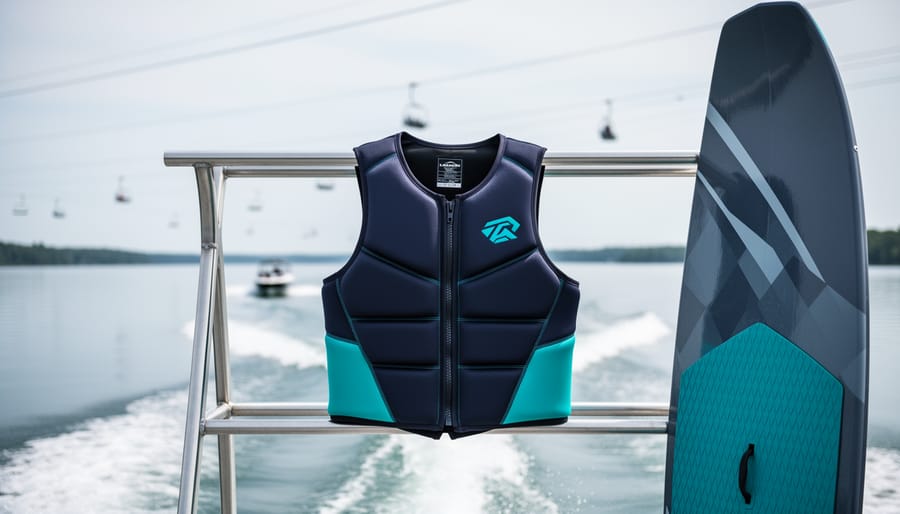
How to Choose a Wakeboarding Vest: A Buying Guide for 2026
The right wakeboarding vest needs to meet Transport Canada safety certification standards while fitting snugly enough to stay secure during high-speed falls and mobile enough to let you carve, spin, and ride without restriction. For 2026, you’re choosing between Coast Guard approved impact vests with ANSI/CAN/UL 12402 certification and neoprene performance vests that prioritize flexibility, and your decision hinges on whether you’re riding recreationally on calm lakes or pushing your limits in competitive wake parks.
Most riders shopping for a vest make the mistake of prioritizing style over proper sizing. A vest that rides up during a fall or restricts your shoulder rotation will ruin your session faster than any other gear failure. The wake sports community has seen a welcome shift toward more comfortable, innovative PFD designs that riders actually want to wear all day, addressing the old problem of vests sitting unused in boat storage compartments.
Life jackets remain mandatory for wakeboarding and wake sports across Canada, but modern options bear little resemblance to the bulky orange foam blocks of previous decades. Today’s vests use segmented foam panels, stretch neoprene construction, and strategic impact zones that move with your body whether you’re cutting through boat wake or sliding rails at the cable park. With Canada-approved vests starting around $70 and premium models like the newly released 2026 Ronix CGA series offering advanced features, you can find proper protection at nearly any budget.
This guide walks you through the certification requirements you can’t skip, the fit principles that separate comfortable vests from shoulder-binding disasters, and the specific features that matter for different riding styles and skill levels.
Why Your Wakeboarding Vest Matters
Your wakeboarding vest isn’t just another piece of gear you toss in your boat, it’s the single most important safety decision you make on the water. Life jackets are mandatory for wakeboarding and wake sports, but the right vest does far more than keep you afloat after a fall. It protects your torso during high-speed wipeouts, cushions impacts when you’re learning new tricks, and stays secure through aggressive maneuvers without restricting the shoulder rotation and core flexibility you need for inverts and spins.
The difference between a generic life jacket and a purpose-built wake vest becomes obvious the moment you drop into the water. Traditional flotation devices bunch up around your neck, ride up when you’re being towed, and turn simple tricks into wrestling matches with foam panels. A well-fitted vest enhances comfort, mobility, and safety on the water by using segmented construction and strategic foam placement that moves with your body rather than against it.
Recent updates to safety standards have transformed what’s available to riders in 2026. Transport Canada now recognizes devices certified to updated standards that provide increased choices of more comfortable and innovative personal flotation devices, promoting constant wear instead of the “I’ll put it on later” mentality that gets people hurt. Modern materials like neoprene create form-fitting vests that provide impact protection while feeling more like a second skin than traditional bulky life jackets. This shift means you can meet legal requirements and stay safe without sacrificing the performance features that make wake sports exciting.
What to Look for in a Wakeboarding Vest
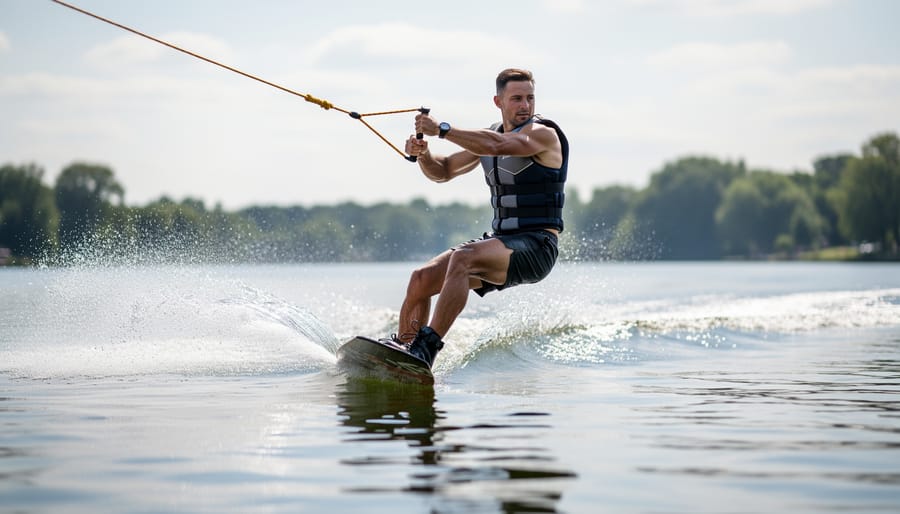
Safety Certifications and Standards
Before you even step into the water, you need to know whether your wake vest will keep you legal and, more importantly, alive. Not all vests meet the safety standards required for Canadian waters, and choosing one without proper certification can leave you both unprotected and facing fines.
Transport Canada recognizes devices tested and certified according to ANSI/CAN/UL 12402 substitutes specifically ANSI/CAN/UL-12402-4, 12402-5, 12402-6, and 12402-9 standards. These certifications indicate that your vest has been rigorously tested for buoyancy performance, meaning it provides sufficient flotation to keep an unconscious person’s face above water. A vest carrying one of these certifications qualifies as a legal substitute for lifejackets and PFDs under Canadian regulations.
The certification level determines how much buoyancy you get. Level 50 vests (12402-5) provide 50 newtons of buoyancy, suitable for competent swimmers in calm waters where rescue is nearby, exactly the scenario for most wake sports. Level 70 (12402-4) offers more flotation for rougher conditions. You’ll find these certification marks on a label inside the vest or stamped on the back panel.
Why does this matter beyond avoiding tickets? Certified vests undergo drop tests, buoyancy measurements, and durability trials that uncertified “impact vests” skip entirely. The updated standards also promote constant wear by allowing manufacturers to design more comfortable, innovative vests that riders actually want to keep on. A vest you leave in the boat because it’s uncomfortable won’t save you when you need it.
Fit and Size Guidance
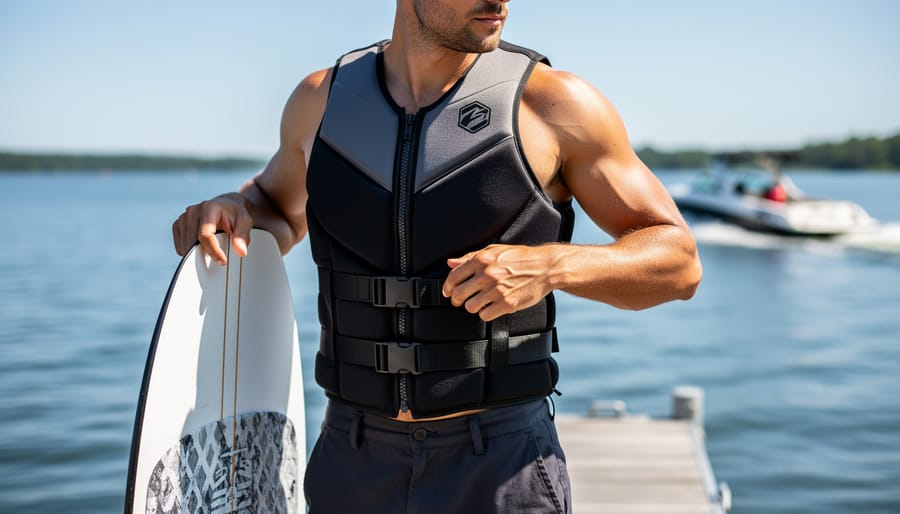
A vest that doesn’t fit properly won’t protect you when it matters most. When you hit the water during a fall, a loose vest can ride up over your head or slip off entirely, leaving you without the buoyancy you’re counting on. Too tight, and you’ll restrict your breathing and movement, making every trick harder than it needs to be.
Start by measuring your chest at its widest point, typically just under your arms. Compare this measurement to the manufacturer’s size chart, never assume you’re the same size across all brands, since sizing varies significantly. Most vests come in standard chest ranges (small, medium, large) with specific inch measurements listed. A well-fitted vest enhances comfort, mobility, and safety on the water, so take the time to get this right.
When you try on a vest, it should feel snug against your torso without restricting your ability to take deep breaths or raise your arms overhead. Zip or buckle it closed, then reach your arms straight up as if grabbing a wakeboard handle. The vest shouldn’t ride up more than an inch or two. Jump a few times, if the vest shifts significantly or feels like it’s choking you, try a different size.
Look for multiple adjustment points. Quality vests feature side straps, waist cinches, or shoulder adjustments that let you dial in the perfect fit. Just like fit matters in other outdoor gear, these adjustment features transform a good vest into one that feels custom-made. Segmented panel construction adds flexibility around your core, letting you bend and twist without fighting the vest.
Test the fit with a friend pulling up on the shoulders while the vest is fastened. Minimal movement means you’ve found the right size.
Materials and Construction
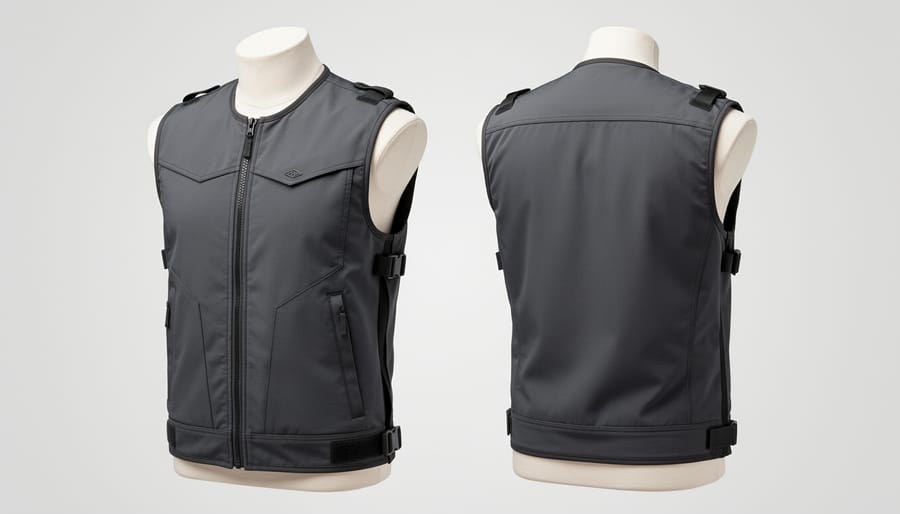
The material composition of your wakeboarding vest directly impacts how it performs when you’re carving wakes or pushing your limits on the water. Most wake vests use neoprene, foam, or a combination of both, and understanding the differences helps you match the vest to your riding style.
Neoprene remains the top choice for serious wakeboarders. This synthetic rubber creates a form-fitting second skin that moves with your body during tricks and hard landings. Neoprene vests provide impact protection when you hit the water at speed, cushioning your ribs and torso during falls. The material also offers thermal insulation for cooler water conditions in early season Canadian lakes or coastal riding. However, neoprene costs more than foam alternatives and can feel restrictive if sized incorrectly.
Foam vests use buoyant foam blocks sewn into fabric panels. They’re lighter, more affordable, and work well for recreational riders who prioritize safety over performance features. Traditional foam vests can feel bulkier and restrict shoulder movement during aggressive riding, though 2026 designs have improved flexibility through segmented panel construction.
Panel construction matters as much as material choice. Look for vests with multiple smaller foam segments rather than large single blocks. Segmented designs flex with your torso movements, preventing the stiffness that limits your range when grabbing your board or rotating through spins. Strategic panel placement also affects drainage, keeping water from pooling in the vest after a fall.
For varying conditions, consider how you’ll ride most often. Neoprene suits aggressive wakeboarders and cooler water. Foam vests handle warm weather recreational riding and provide excellent buoyancy at lower price points. Hybrid designs combine neoprene exteriors with foam cores, balancing flexibility with cost-effectiveness for advancing riders.
Features That Enhance Performance
Beyond basic flotation, modern wakeboarding vests incorporate design elements that directly impact how well you ride. A YKK front zipper provides smoother operation and longer durability than generic options, while some 2026 models feature dual-zipper systems that let you customize compression around your torso. Look for quick-drain mesh panels along the sides and back, these prevent water from pooling inside the vest, reducing weight and maintaining flexibility during aerial maneuvers.
Buckle placement matters more than most riders realize. Side-entry buckles keep the chest clear for better board contact during pressed-out tricks, whereas front buckles offer easier on-water adjustments. Segmented foam panels, particularly around the shoulders and ribs, allow your upper body to rotate freely without the vest riding up or binding.
Rider-specific features add practical value: grab handles sewn into the shoulders help with boat re-entry after falls, while reinforced padding at the lower back and kidney zones absorbs impact from hard landings. Many vests now use articulated panel construction that moves with your body rather than against it. Competition-focused designs strip away bulk for maximum mobility, while recreational models add extra flotation and padding. Choose features that match how aggressively you ride and where you need protection most.
Types of Wakeboarding Vests Compared
The market offers four main vest categories, each designed for specific wake sports applications and rider priorities.
CGA-Approved Competition Vests deliver certified safety while maintaining the thin profile advanced riders demand. These vests meet Transport Canada’s recognized ANSI/CAN/UL standards, qualifying them as legal substitutes for traditional lifejackets under Canadian regulations. Competition-focused designs use segmented foam panels that flex with your torso during inverts and spins, yet they still provide the required buoyancy. Expect to pay more for this combination of certification and performance-oriented construction.
Recreational PFDs prioritize comfort and versatility for riders who split time between wakeboarding, wakesurfing, and kneeboarding. These typically feature thicker foam padding and simpler zipper closures, making them easy to get on and off between riders. A quality wakeboarding life jacket in this category starts around $69.99 and works well for families or beginners building confidence. The added buoyancy helps less experienced riders stay afloat after falls, though the bulkier profile limits aggressive maneuvers.
Impact Vests focus on torso protection rather than flotation. These neoprene designs absorb slams during hard landings and provide warmth in cooler water, but they don’t meet safety certification standards because they lack sufficient buoyancy. Experienced riders sometimes layer impact vests under certified PFDs in cold conditions, though this combination reduces flexibility. You’ll find impact vests popular among wakesurfers who ride close to the boat in calmer water.
| Vest Type | Certification Level | Best Use Case | Mobility |
|---|---|---|---|
| CGA Competition | Transport Canada Approved | Advanced wakeboarding, competitions | Excellent |
| Recreational PFD | Certified (ANSI/CAN/UL standards) | Multi-sport, beginners, family use | Good |
| Impact Vest | Not certified for flotation | Cold water protection, wakesurfing | Excellent |
| Hybrid Design | Varies by model | Riders wanting protection plus certification | Very Good |
Hybrid Designs blend certified buoyancy with impact-absorbing materials, giving you legal compliance and crash protection in one vest. These combine neoprene panels in high-impact zones with foam sections that meet certification requirements. The 2026 Ronix CGA Vests represent this category’s evolution, balancing safety standards with rider-friendly features. Hybrids suit intermediate riders progressing from basic skills to more aggressive riding.
Your riding style determines the right category. Beginners benefit from recreational PFDs that provide reassurance and legal compliance. Advancing riders who launch off the wake need competition vests that move with their bodies. Remember that just as trail safety tips emphasize matching gear to terrain difficulty, wake vest selection should align with your current skill level and the challenges you’re tackling on the water.
Wakeboarding Vest Recommendations for 2026
Matching the right vest to your skill level and budget ensures you get features that enhance your riding without paying for capabilities you won’t use. Entry-level options deliver essential safety certifications and comfort for beginners, while premium vests pack in advanced materials and construction that serious riders notice on the water.
For new wakeboarders, certified vests starting around $69.99 provide the safety and mobility needed to build skills with confidence. Look for Transport Canada approved models with straightforward zipper closures, ample adjustment straps for dialing in fit, and flexible foam panels that won’t restrict your learning curve. Basic neoprene construction at this price point offers form-fitting comfort and some impact protection when you’re still mastering board control and falls happen frequently.
Mid-range vests between roughly $100 and $180 suit advancing riders who’ve moved beyond fundamentals and want features that support progression. These typically include segmented panel designs for better flexibility during aerial tricks, quick-drain systems that reduce water weight, and impact-rated padding in chest and side zones. The 2026 Ronix CGA Vests represent current quality options in this category, combining performance-oriented construction with required safety certifications.
Premium vests above $180 cater to experienced wakeboarders who demand competition-grade construction and materials. Expect multi-zone neoprene with varied thicknesses for optimized mobility, low-profile buckles that won’t interfere with handle passes, and anatomical cuts refined for aggressive riding positions.
Quick recommendations by rider type:
- Beginners: Prioritize certified vests with secure fit and comfortable foam, focusing on value and ease of adjustment rather than advanced features
- Intermediate riders: Target mid-range options with segmented panels and drainage systems that support trick progression without premium pricing
- Advanced riders: Invest in competition-grade vests with anatomical cuts, impact-rated zones, and materials proven at higher performance levels
Consider the water conditions you’ll face most often when selecting materials. If you ride in colder northern lakes where hypothermia risk runs higher, thicker neoprene construction justifies the added cost even for recreational use.
Common Mistakes to Avoid When Buying a Wake Vest
The biggest mistake I see first-time buyers make is grabbing whatever looks sleek without checking if it carries proper safety certification. A vest might appear high-end with bold graphics and premium stitching, but if it doesn’t meet Transport Canada recognized standards like ANSI/CAN/UL 12402-9 or the 12402-4 through -6 series, you’re wearing nothing more than expensive foam that won’t legally count as required flotation. Always verify certification labels before considering aesthetics.
Price-driven shopping trips you up fast. Budget vests exist, with Canada Approved options starting around $69.99, but selecting purely on cost ignores whether the vest actually fits your torso and riding style. A cheap vest that rides up during a fall or restricts your backroll rotation becomes dangerous regardless of what you saved. Test the fit in-store if possible, checking that buckles hold snug without digging in and panels flex with your movements.
Size errors plague half the vests I encounter on the water. Riders assume their shirt size translates directly to vest sizing, then end up with loose straps or compressed ribs. Measure your chest circumference and weight against the manufacturer’s specific chart for each model, not generic sizing. A properly fitted vest stays put during impact while allowing full mobility for tricks.
Material choice matters more than most realize. Neoprene works beautifully in cooler northern waters where form-fitting warmth helps, but in warmer regions or for riders who overheat easily, lighter foam construction with better drainage prevents discomfort that leads to removing your vest mid-session.
Finally, don’t skip regional compliance checks. What works in one province might not satisfy requirements in another, especially if you travel to different waterways across North America.
Caring for Your Wakeboarding Vest
Your vest’s longevity depends on proper care after each water adventure. Rinse thoroughly with fresh water immediately after use, especially following saltwater sessions, to prevent salt crystals from degrading foam and fabric. Saltwater accelerates deterioration of buoyancy materials and stitching, reducing safety performance over time.
Hang your vest to air-dry in a shaded, well-ventilated area, never in direct sunlight, which breaks down neoprene and foam. Avoid machine drying or radiators, as heat damages the materials that provide both buoyancy and impact protection. Once completely dry, store the vest flat or hanging loosely in a cool, dry place away from heavy objects that could compress the foam and reduce flotation capacity.
Inspect your vest regularly for signs of wear: tears in fabric, separated seams, compressed foam that doesn’t spring back, broken zippers, or frayed straps. If buoyancy feels reduced, if you spot mold growth that won’t clean off, or if the vest no longer fits snugly due to stretched material, it’s time to replace it. A compromised vest won’t provide adequate protection when you need it most, so treat replacement as a safety investment rather than an expense.
Frequently Asked Questions
Do I need a Coast Guard approved vest for wakeboarding?
In Canada, you need a vest certified to Transport Canada standards (ANSI/CAN/UL 12402 series) to meet legal requirements on the water. These certified vests count as substitutes for lifejackets and PFDs under Canadian regulations, so look for Canada Approved or CGA certification labels.
Can I use a regular life jacket for wakeboarding?
While a standard life jacket provides buoyancy, it’s bulky and restricts the arm and torso movement you need for wakeboarding tricks and maneuvers. A wake-specific vest offers the same safety certification with segmented panels and form-fitting design that let you ride without fighting the gear.
How tight should a wake vest fit?
Your vest should fit snug against your torso without gaps, but you should still breathe comfortably and move freely through your full range of motion. Test it by raising your arms overhead and twisting at the waist; the vest shouldn’t ride up or shift position during these movements.
What’s the difference between a wake vest and a life jacket?
Both provide flotation and safety certification, but wake vests are designed with flexibility and impact protection in mind. They use segmented construction and materials like neoprene that hug your body, allow unrestricted movement for tricks, and provide some cushioning during falls, whereas traditional life jackets prioritize maximum buoyancy with bulkier foam.
How long do wakeboarding vests last?
With proper care, a quality wake vest typically lasts three to five seasons of regular use. Replace your vest sooner if you notice frayed seams, compressed foam that doesn’t spring back, damaged buckles or zippers, or any tears in the material, as these compromise both safety and performance.
These questions come up constantly because the right vest directly affects both your safety and your progression on the water. The certification piece trips up many riders who assume any flotation device works, but compliance matters for legal riding and genuine protection. Fit confusion runs a close second, since wake vests feel different from the bulky jackets most people remember from childhood boating trips.
The lifespan question deserves attention because many riders hang onto vests well past their useful life. Sun exposure, saltwater, and repeated impacts all degrade materials over time, even when the vest looks fine on the surface. Inspect your vest at the start of each season and trust your judgment if something feels off or worn.
Choosing the right wakeboarding vest isn’t about settling for just any flotation device, it’s about finding the perfect balance between certified safety, comfortable fit, and performance features that match how you ride. A vest you’ll actually wear consistently is one that meets Transport Canada standards, fits snugly without restricting your movement, and includes the features that matter for your skill level and preferred wake sports. Whether you’re exploring calm lakes or tackling challenging wakes, the right vest becomes an extension of your riding style rather than a burden.
At Stanley Kayaking, we believe the best water adventures happen when safety and enjoyment work together. From navigating iceberg trails to encountering wildlife along North America’s stunning waterways, proper gear lets you focus on the experience rather than worry about what could go wrong. Your wakeboarding vest is no different. Invest the time to find a certified option that fits well and supports your riding goals, and you’ll spend more time enjoying the water and less time thinking about your gear. That’s when the real adventure begins.