What Are Switchbacks in Hiking (and Why Do They Matter)?
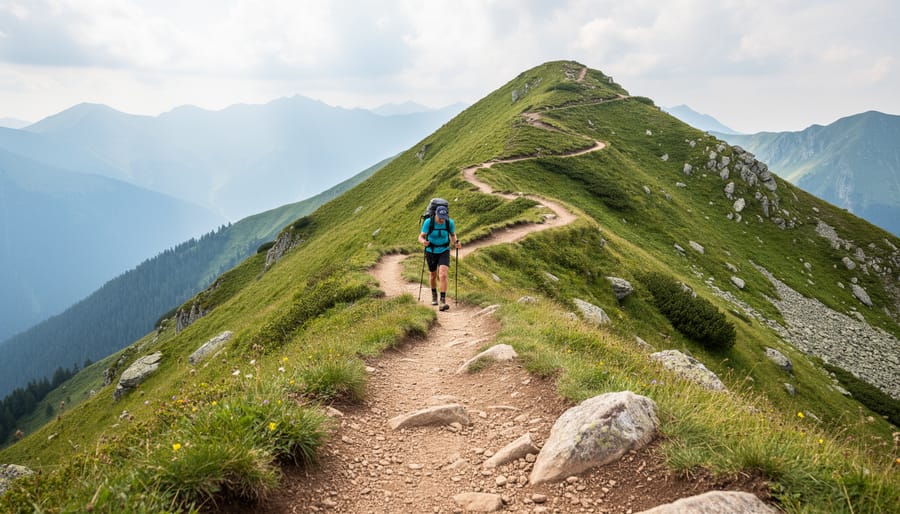
A switchback is a reversal in direction built into a hiking trail with a relatively level constructed landing, typically used on terrain steeper than 15 percent to help you gain elevation without climbing straight up a slope. If you’ve ever wondered why mountain trails zigzag back and forth instead of taking the most direct route to the summit, you’ve encountered one of the most essential features of trail design.
Switchbacks serve two critical purposes that matter every time you hit the trail. First, they make steep ascents physically manageable by reducing the grade you’re actually climbing at any given moment. Instead of scrambling up a punishing 30-percent incline that would leave most hikers gasping, switchbacks break that climb into manageable segments at gentler angles. Second, and just as important, they protect the landscape you’re exploring. When trails follow a thoughtful zigzag pattern up a mountainside, they channel foot traffic in ways that prevent erosion, protect sensitive vegetation, and keep the ecosystems you came to enjoy healthy for years to come.
Understanding how switchbacks work and why cutting across them damages trails will make you a more skilled, more responsible hiker. Whether you’re planning your first mountain adventure or you’ve logged countless miles on North American trails, knowing the mechanics behind this simple design feature connects you more deeply to the landscapes you explore and the wildlife that calls them home.
What Switchbacks Mean for Hikers
When you’re hiking up a steep mountain trail and suddenly notice the path makes a sharp turn and starts heading in the opposite direction, you’ve encountered a switchback. It’s that zigzag pattern you see snaking up hillsides, a deliberate design feature where the trail reverses direction rather than climbing straight up the slope.
A true switchback isn’t just any curve or bend in the trail. It’s a specific engineering technique featuring a relatively level constructed landing where the trail makes its reversal. This landing creates a stable platform where you can pause, catch your breath, and turn to head back in the opposite direction while continuing your ascent. The constructed nature of this landing is what separates a proper switchback from a naturally occurring curve in the path.
- Landing
- The relatively level, constructed platform where the trail reverses direction in a switchback, providing a stable surface for the turn.
- Grade Reversal
- The change in direction that defines a switchback, allowing hikers to gain elevation by traveling back and forth across a slope rather than straight up it.
- Climbing Turn
- Another term for switchbacks, referring specifically to turns designed to reverse direction and gain elevation quickly on steep terrain.
- Social Trail
- Unauthorized paths created when hikers cut across switchbacks or wander off the official trail, causing environmental damage and erosion.
What you’re looking at when you spot those distinctive zigzags isn’t random, it’s intentional trail design that serves multiple purposes. While it might seem longer to walk the zigzag pattern instead of heading straight up, that’s exactly the point. The switchback transforms an impossibly steep grade into manageable sections that work with the landscape rather than fighting against it.
How Switchbacks Work on the Trail
The Engineering Behind the Zigzag
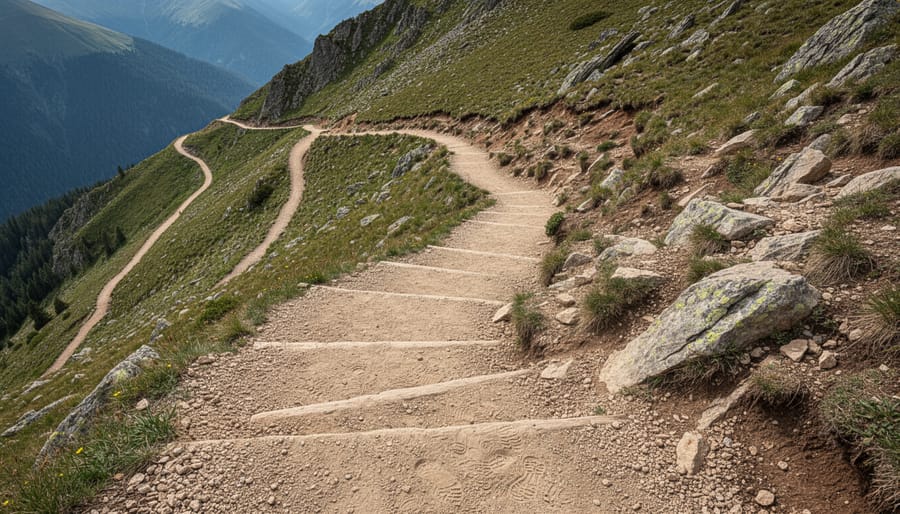
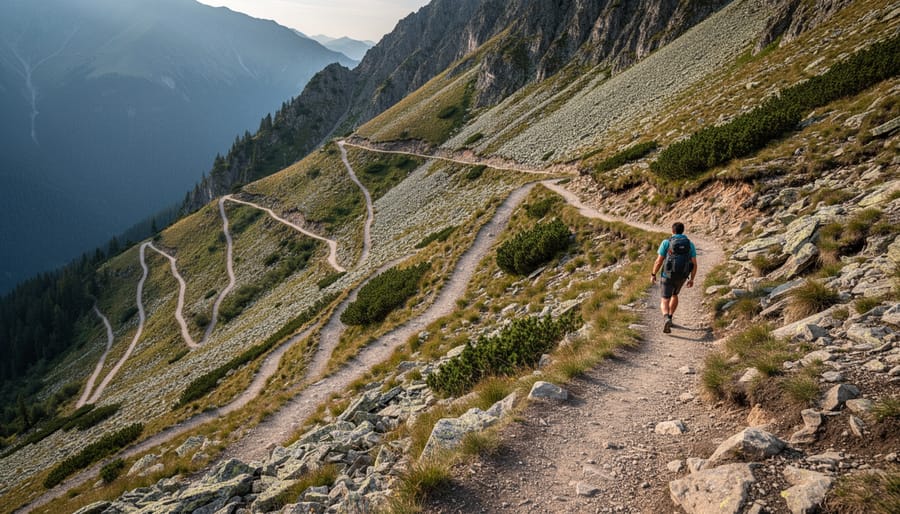
Trail builders face a geometry problem: when the slope climbs above 15 percent, walking straight up becomes punishing for hikers and devastating for the trail bed. That’s where the switchback’s zigzag pattern comes in. By reversing direction on a constructed landing, the trail spreads the same elevation gain across a longer horizontal distance, keeping the grade manageable. Think of it like climbing stairs instead of scaling a ladder, you cover more ground, but each step stays within your comfort zone.
The engineering gets more precise when you look at slope percentages. On switchbacks on steeper terrain exceeding 15 percent, builders create distinct reversals with level platforms where the trail doubles back. These sharp turns gain elevation quickly while maintaining a climbing angle your legs and lungs can sustain over miles. The tighter the zigzag, the steeper the underlying slope.
But not every curve counts as a true switchback. On gentler side slopes below 20 percent, trail designers can use long-radius curves on gentler slopes instead, treating the turn like any other sweeping bend. These flowing curves don’t need the constructed landing or dramatic reversal because the terrain itself isn’t forcing that compromise. The difference matters: a sharp switchback signals challenging terrain ahead, while a gentle arc means you’re working with friendlier geography.
Understanding this distinction helps you read the trail. When you hit a tight zigzag, you know the slope just got serious, and the trail builder chose this pattern specifically to get you up safely without destroying the hillside beneath your boots.
Why Trails Are Built This Way
Trail builders don’t place switchbacks randomly across a mountainside. Every reversal represents a calculated decision that balances two critical goals: keeping hikers safe and protecting the surrounding environment from degradation.
The safety consideration comes first. A trail climbing straight up a steep slope forces hikers to navigate grades that quickly become exhausting and treacherous. Loose footing, muscle fatigue, and increased fall risk all multiply on direct ascents. Switchbacks transform a potentially dangerous climb into a manageable series of moderate-grade segments that hikers can tackle without overexertion or compromised stability.
Environmental protection drives the second major design choice. Trails concentrate foot traffic into controlled corridors, preventing the widespread trampling that occurs when hikers scatter across fragile terrain. On steep slopes, unmanaged trail routes accelerate erosion, washing away topsoil and creating gullies that scar the landscape for years. Switchbacks channel hikers along engineered paths designed to shed water properly and maintain stable tread surfaces.
This intentional routing also shields sensitive vegetation from destruction. Alpine plants and hillside ecosystems often grow slowly, taking years to recover from trampling. By directing traffic through switchbacks rather than allowing shortcuts, trail designers preserve these vulnerable communities while still providing access to spectacular high-country destinations.
Different Types of Switchback Turns
Not every switchback looks the same. The design and shape of these trail reversals vary considerably depending on the steepness of the terrain, the elevation gain needed, and the construction challenges presented by the landscape.
The three main types you’ll encounter include:
- Gentle slope switchbacks, long, sweeping curves on terrain under 20% grade that feel more like gradual bends than sharp reversals
- Standard steep-terrain switchbacks, pronounced zigzags on slopes of 15% or steeper, with clear direction changes and constructed landings
- Alpine and mountain switchbacks, tight, hairpin-style reversals on extremely steep terrain where space is limited and elevation gain is aggressive
On gentler slopes below 20 percent grade, trail builders construct what look more like extended curves than true switchbacks. These wide-radius turns blend naturally into the trail’s flow, maintaining a steady climbing angle without abrupt direction changes. You might not even realize you’re on a switchback section because the reversal happens so gradually.
When slopes exceed 15 percent, you get the classic switchback most hikers picture: a distinct reversal with a relatively flat landing where the trail doubles back on itself. These require more intentional engineering, with compacted soil or stone work creating a stable platform for the turn. The steeper the hillside, the sharper these reversals become.
On the most severe alpine terrain, switchbacks tighten into near-hairpin turns. These tight reversals pack maximum elevation gain into minimal horizontal distance, allowing trails to ascend cliff faces and ridge lines that would otherwise be inaccessible. The landings here are often reinforced with rock work or timber to prevent erosion on slopes that can approach 40 percent or more. While these tight turns demand more effort and concentration from hikers, they’re the only practical way to reach high-elevation destinations safely.
Where You’ll Find Switchbacks on North American Trails
Switchbacks appear on steep terrain across North America wherever trails need to climb rapidly while maintaining safe grades. You’ll encounter them most frequently in mountain ranges, the Rockies, Cascades, Sierra Nevada, and Appalachians all feature extensive switchback systems on their ascent routes. But mountains aren’t the only place these reversing turns prove essential.
Coastal trails often rely heavily on switchbacks to navigate dramatic elevation changes between beach level and clifftop viewpoints. The rugged North Coast Trail along British Columbia’s Vancouver Island demonstrates this perfectly, with switchbacks carved into coastal bluffs that allow hikers to transition between wave-swept beaches and forested headlands while managing slopes that would otherwise be dangerously steep.
Eastern Canada’s tablelands and fjord country showcase switchbacks in unique geological settings. Gros Morne hikes like the Gros Morne Mountain trail use extensive switchback sections to tackle the steep ascent through boreal forest before breaking onto the barren plateau above. These carefully constructed reversals make it possible for hikers of varying abilities to reach spectacular viewpoints overlooking fjords and witness wildlife like caribou and arctic hare in their natural habitat.
Canyon country in the Southwest features some of North America’s most dramatic switchback systems, carved into sandstone walls to provide access to canyon floors and rim-top vistas. Desert environments showcase why switchbacks matter, the combination of steep terrain and fragile desert soils means staying on constructed trail prevents erosion damage that would take decades to heal.
Anywhere terrain exceeds 15 percent grade and hikers need reliable access, switchbacks transform potentially hazardous scrambles into manageable ascents that protect both people and landscapes.
Why You Should Never Cut Switchbacks
Trail Damage and Safety Hazards
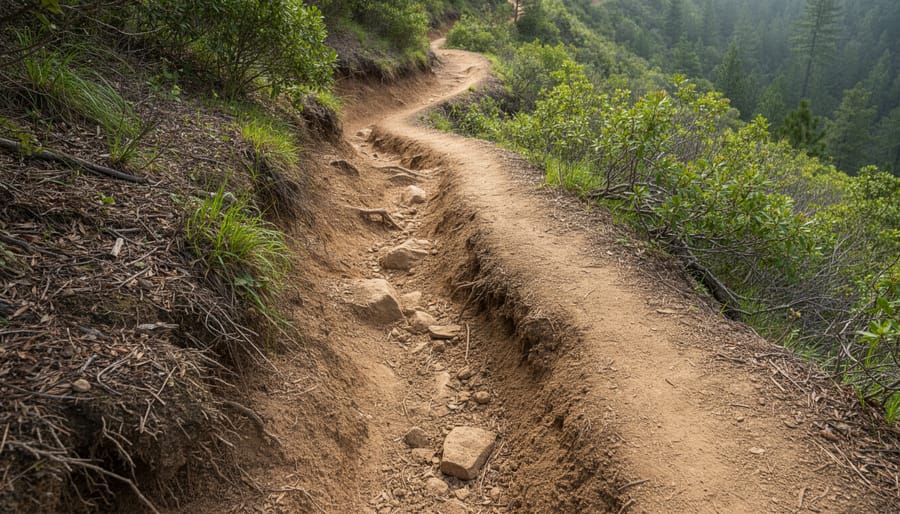
When hikers abandon the designed trail path to take a shortcut straight down the slope, they create steep, unsustainable routes that quickly erode into gullies. Each footfall on these improvised paths dislodges soil that has nothing to hold it in place, no constructed tread, no drainage features, no reinforcement. Rain funnels down these cuts, carving deeper channels with every storm and washing sediment into streams below. What starts as a barely visible shortcut becomes a scar of loose rock and exposed roots within a season.
The resulting damage doesn’t just degrade the landscape. These eroded shortcuts become hazardous obstacles that force future hikers onto even wider detours, spreading the destruction across a broader area. The steep grades that switchbacks were specifically designed to avoid, anything over 15 percent, become unavoidable on cut trails, turning descents into slippery, ankle-twisting gauntlets where loose soil offers no stable footing. Hikers attempting these shortcuts face dramatically higher injury risk from falls on unstable terrain, and the degraded conditions make rescue access more difficult if someone does get hurt on these unauthorized routes.
Environmental Impact on Ecosystems
When you step off the maintained trail to cut a switchback, you’re not just walking on dirt, you’re crushing a delicate network of plant life that took years or even decades to establish. Alpine wildflowers, moss beds, and ground-cover plants that stabilize soil have shallow root systems easily destroyed by a single footstep. In mountain environments and coastal ecosystems where Stanley Kayaking leads adventures, these plants grow slowly in harsh conditions. A patch of vegetation trampled today might not recover for five to ten years, if ever.
The damage multiplies quickly. Once one hiker creates a visible shortcut, others follow the bare patch, widening it into what trail managers call a social trail. These unofficial paths spread across hillsides like scars, fragmenting wildlife habitat and creating corridors where invasive species can take hold. Native plants that provide food and shelter for birds, insects, and small mammals disappear, disrupting the ecosystem balance that makes these landscapes worth protecting.
Cutting switchbacks also exposes bare soil that lacks the root networks holding it together. Rain washes this loose soil downhill, smothering plants below and clouding streams where fish spawn. The erosion doesn’t stop at the shortcut, it radiates outward, destabilizing larger sections of hillside and requiring expensive restoration work that could have been avoided by simply staying on the constructed trail.
How Switchbacks Prevent Erosion
Water poses one of the biggest threats to trail sustainability on steep terrain. When rain hits a hillside, it naturally flows straight downhill, picking up speed and carrying soil with it. A trail that runs directly up a slope essentially becomes a water channel during storms, funneling runoff and creating deep erosion gullies that can wash away years of trail construction in a single season.
Switchbacks break this destructive pattern. By angling across the slope rather than climbing straight up it, each segment of trail diverts water at a gentle grade, slowing its velocity and giving it multiple opportunities to disperse into the surrounding landscape before it gains erosive power. The relatively level constructed landings at each reversal point act as natural catch basins, further interrupting the downhill flow and preventing the concentrated streams that carve out trails.
The zigzag design also distributes the impact of foot traffic across a wider area of hillside. Instead of thousands of boots pounding the same vertical line and compacting soil into an impermeable surface where water cannot soak in, switchbacks spread that wear across multiple traverses. This maintains the soil’s ability to absorb rainfall rather than shedding it like pavement.
Trail builders reinforce this erosion control with strategic features like water bars and grade reversals at key points along switchback segments. These subtle dips and drainage structures ensure that any water that does collect on the tread quickly diverts off the trail before it can accelerate and cause damage, protecting both the constructed path and the vegetation-stabilized slopes around it.
Common Questions About Hiking Switchbacks
Hikers encounter switchbacks on trails across North America, but questions about their purpose and proper use come up constantly. Here are the answers to what you need to know when navigating these zigzagging sections.
What is a switchback in hiking?
A switchback is a reversal in direction on a trail that includes a relatively level constructed landing, creating a zigzag pattern up steep slopes. These deliberate turns allow trails to gain elevation quickly while maintaining manageable grades for hikers.
Why are switchbacks used on trails?
Trail builders use switchbacks on terrain steeper than 15 percent to create safer climbing routes while minimizing damage to ecosystems. They’re designed intentionally to protect both hikers and the natural environment.
Why shouldn’t you cut switchbacks?
Cutting switchbacks creates erosion, tramples vegetation that may take years to recover, and damages trail integrity for everyone who follows. These shortcuts also create dangerous steep sections that increase your injury risk.
Are switchbacks harder than straight climbs?
Switchbacks are actually easier because they distribute the elevation gain over a longer distance with a gentler grade. While they take more time, they reduce the physical strain on your legs and lungs compared to climbing straight up a steep slope.
The etiquette on narrow switchback sections matters too. When you encounter other hikers, the person heading uphill typically has the right of way since they’ve got momentum and a limited sight line. Step to the outside edge of the trail when yielding, never the inside where you might trigger loose soil or rocks.
Wildlife encounters happen more frequently on switchback sections because these areas concentrate foot traffic through natural animal corridors. Carrying bear bells for hiking helps alert animals to your presence as you round blind corners, which switchbacks create by design. The sharp turns limit visibility, so making noise becomes extra important for everyone’s safety.
Switchback spacing varies based on the slope steepness and the trail’s intended use. You’ll notice tighter, more frequent reversals on very steep terrain, while gentler slopes feature long-radius curves that feel almost like natural trail flow. Both serve the same purpose of getting you safely to higher elevations while protecting the landscape you came to enjoy.
Understanding switchbacks transforms them from frustrating obstacles into clever design features that make incredible trails accessible. Every zigzag protects both you and the landscape, managing steep terrain while preventing the erosion and ecosystem damage that shortcuts create. When you encounter switchbacks on your next adventure, recognize them as engineered solutions that preserve trails for decades and safeguard fragile vegetation that can take years to recover from a single shortcut.
The best trails in North America, from mountain ascents to coastal pathways, rely on thoughtful switchback design to balance adventure with conservation. Whether you’re hiking Tremblant or exploring iceberg trails where wildlife roams, staying on designated switchbacks keeps these remarkable places accessible and pristine. At Stanley Kayaking, we believe responsible exploration makes every adventure richer, combining expert guidance with respect for the landscapes we traverse.
Ready to experience trails designed to protect both hikers and nature? Embrace the switchbacks, trust the engineering, and discover how properly constructed paths unlock North America’s most spectacular viewpoints while keeping our wild places wild.