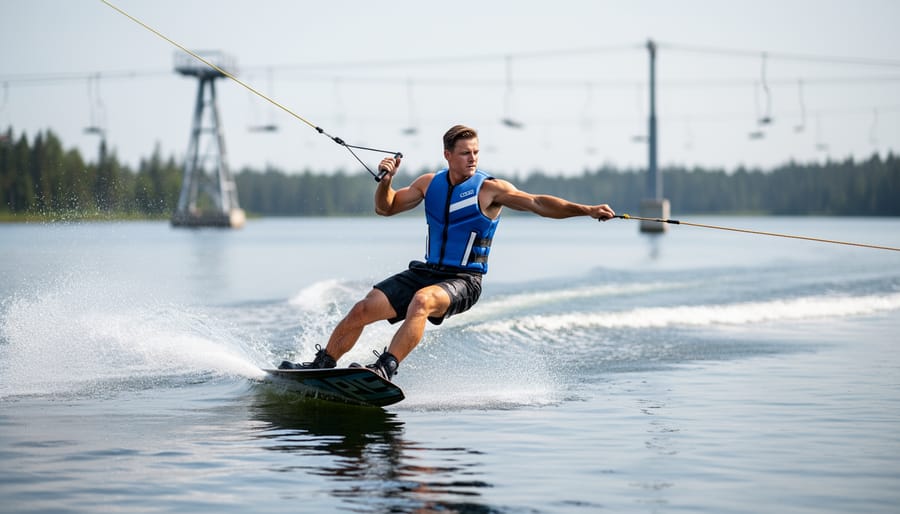
How to Choose a Wakeboarding Life Jacket: A Buying Guide for 2026
The right wakeboard life jacket balances Coast Guard or Transport Canada approval with enough mobility to let you carve, jump, and land without restriction. For 2026, most wakeboarders choose between fully approved PFDs that meet legal requirements on Canadian and U.S. waters, and low-profile impact vests that offer maximum range of motion but don’t satisfy boating regulations on their own. Your decision hinges on where you ride: if you’re launching from a boat on public waterways, you need an approved device on board, though many riders wear a thin Coast Guard-approved vest during their set and keep a backup readily accessible.
Wakeboarding creates unique flotation challenges you won’t face at Canadian kayaking destinations or while paddling calm lakes. Hard falls from cable parks and boat wakes demand impact protection across your ribs and spine, yet bulky foam restricts your ability to twist and grab. The sport’s learning curve means beginners benefit from extra buoyancy to surface quickly after crashes, while advanced riders prioritize thinner profiles that disappear under their movements.
Transport Canada recognizes three approved categories: SOLAS lifejackets, Standard Type lifejackets, and Small Vessel lifejackets. Each carries bilingual Department of Transport labels confirming legal compliance. Meanwhile, impact vests sold at wakeboard shops offer segmented foam panels and stretchy neoprene construction but lack official approval. Retail prices span from under $50 for basic approved vests to $150-$200 for premium competition models with hybrid certification and articulated panels. Understanding which features matter for your skill level and riding environment will keep you both safe and unrestricted on the water.
Understanding Wakeboarding Life Jackets vs. Standard PFDs
When you’re gearing up for wakeboarding across the countless lakes and rivers perfect for North America water adventures understanding the difference between standard personal flotation devices and wakeboarding-specific gear can be confusing. The distinction matters because it affects both your safety and your performance on the water.
Transport Canada recognizes three approved categories: SOLAS lifejackets (designed for offshore commercial vessels), Standard Type lifejackets (offering robust flotation for general recreational boating), and Small Vessel lifejackets (tailored for smaller watercraft). Each type meets specific safety standards but differs in buoyancy, bulk, and intended use. SOLAS devices provide the highest flotation and are built for extreme conditions, while Standard Type and Small Vessel options offer varying levels of protection suitable for recreational activities.
Impact vests, which many wakeboarders prefer for their sleek profile and unrestricted movement, fall outside these approved categories. These vests prioritize flexibility for tricks and reduce bulk around the torso, but they lack official safety certification. You can use an impact vest for comfort and performance, but you still need an approved flotation device on your boat to meet legal requirements.
The approved options also include inflatable styles that activate automatically, manually, or orally. These compact designs offer serious comfort advantages, especially during long sessions, though they require careful maintenance and aren’t ideal for high-impact water sports where puncture risk increases.
Understanding these categories helps you make an informed choice that balances legal compliance, safety needs, and the freedom of movement that makes wakeboarding thrilling.
Key Factors When Choosing a Wakeboarding Life Jacket
Choosing the right flotation device for wakeboarding means weighing safety requirements against the physical demands of the sport. The equipment that keeps you legal on the water needs to work with your body during aerial tricks, hard landings, and high-speed runs across North American lakes and rivers.
Coast Guard approval sits at the top of your consideration list. Canadian law requires an approved lifejacket or PFD on board for each person, and that approval comes with a specific label in English and French showing Department of Transport certification. The three approved categories, SOLAS lifejackets, Standard Type lifejackets, and Small Vessel lifejackets, all meet legal requirements, though they vary in design and bulk. This approval matters beyond avoiding fines; it ensures the device has been tested for actual flotation performance when you hit the water unexpectedly.
Mobility directly affects your performance. Wakeboarding demands full shoulder rotation for grabs, unrestricted torso flex for spins, and freedom at the waist for inverted tricks. A vest that rides up during a fall or restricts your backside 180 costs you progression on the water. Look for designs with segmented foam panels, stretchy side panels, or strategic cutaways that balance buoyancy with range of motion. The stiffest, bulkiest approved vests keep you safest in an emergency but may limit advanced maneuvers.
Buoyancy level connects to both your weight and riding conditions. Manufacturers design vests with specific flotation ratings measured in Newtons or pounds of buoyancy. You need enough lift to keep your head above water if you’re unconscious, but excess buoyancy adds bulk that hampers movement. Match the vest’s rating to your actual weight, not your aspirations, and consider whether you typically ride in calm lakes or choppier conditions where extra flotation helps.
Sizing and fit determine whether the vest performs as designed. A loose vest rides up over your face during impact; a tight one restricts breathing and movement. Check manufacturer sizing charts based on chest measurement and weight, then test the fit by raising your arms overhead and having someone pull up on the shoulders. The vest should stay put with minimal movement. Adjustable straps at the waist and sides let you fine-tune the fit.
Durability matters when you’re taking repeated impacts against the water at speed. Quality vests use closed-cell foam that resists compression over time, reinforced stitching at stress points, and abrasion-resistant outer materials. Cheaper construction breaks down after a season of hard riding, losing both protective value and buoyancy.
Drainage features prevent the vest from becoming waterlogged and heavy. Small drain holes or mesh panels allow water to escape quickly after you surface, keeping the vest lighter and more comfortable during consecutive runs. This becomes crucial during long sessions when you’re in and out of the water repeatedly.
Price ranges from under $50 to over $200, generally reflecting the balance between certification, construction quality, and performance features. Budget vests prioritize basic approved flotation. Mid-range options add better materials and mobility features. Premium vests incorporate advanced segmented designs, high-end fabrics, and refined fit systems. Your skill level and time on the water should guide how much you invest, but never sacrifice approval status to save money.
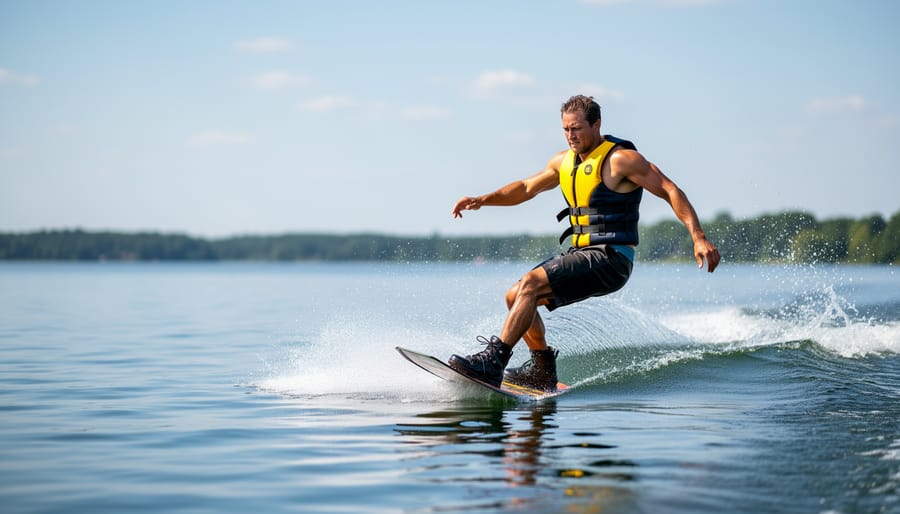
Types of Flotation Devices for Wakeboarding
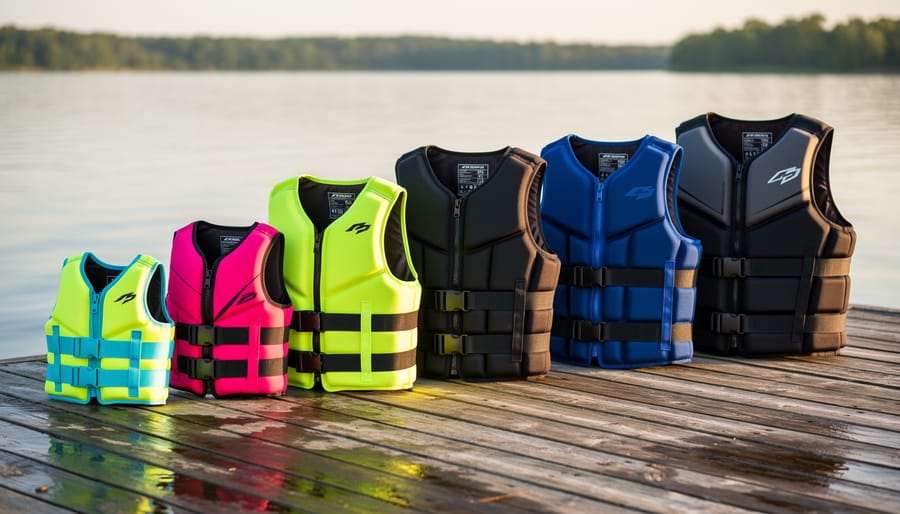
Coast Guard-Approved PFDs for Wakeboarding
Coast Guard-approved PFDs balance legal compliance with wakeboarding performance better than many riders expect. Standard Type lifejackets deliver reliable buoyancy and meet Transport Canada requirements while allowing reasonable arm mobility for basic tricks and board control. They’re bulkier than impact vests but won’t land you in legal trouble during spot checks on North American lakes.
Small Vessel lifejackets offer a more streamlined profile, making them popular among wakeboarders who want approved flotation without excessive bulk. These devices still provide the buoyancy needed for safety while reducing restriction during rotations and grabs. Both Standard Type and Small Vessel options carry the bilingual Transport Canada approval label, your confirmation they meet federal regulations.
Look for designs with segmented foam panels rather than solid blocks. This construction flexes with your torso during aggressive movements while maintaining flotation. Mesh drainage panels speed water release after falls, and adjustable side straps let you dial in the fit for both safety and comfort. Coast Guard-approved vests won’t feel as invisible as non-approved impact vests, but they deliver peace of mind alongside performance that’s good enough for most wakeboarding sessions.
Impact Vests: Performance vs. Compliance
Impact vests have become increasingly popular among advanced wakeboarders who want maximum mobility for aerial tricks and board grabs. These low-profile designs eliminate bulk around the torso and shoulders, allowing unrestricted arm movement that higher-flotation jackets can’t match. However, here’s the critical distinction: impact vests sold for wakeboarding typically aren’t Transport Canada-approved flotation devices.
While impact vests provide some padding during hard falls and minimal flotation, they don’t meet the buoyancy standards required for legal compliance. You still need an approved lifejacket or PFD on your watercraft for each person, even if you’re wearing an impact vest. Some experienced wakeboarders use impact vests during their sessions but keep approved devices readily accessible on the boat.
This approach only works if you’re confident in your swimming ability and staying close to the boat in calm conditions. It’s not suitable for beginners, weaker swimmers, or anyone venturing far from the watercraft. The vest should supplement, never replace, proper safety equipment. Check that any impact vest you consider is clearly labeled regarding its approval status, retailers typically distinguish between Coast Guard-approved PFDs and non-approved performance vests in their product descriptions.
Inflatable Options for Comfort
Inflatable lifejackets bring a different approach to flotation for wakeboarders who value minimal bulk and unrestricted movement before activation. These compact devices remain slim and comfortable during riding, then provide buoyancy when inflated. Canada recognizes three inflation methods: automatic (triggered by water immersion), manual (pull-cord activated), and oral (blown up by mouth).
For wakeboarding scenarios, manual inflation suits the sport best. Automatic models can deploy during normal falls and splashes, leaving you with a bulky inflated jacket mid-session when you’re trying to get back on the board. Manual versions let you control deployment, inflating only when truly needed for emergency flotation. Oral inflation serves as a backup method but isn’t practical as the primary option when you’re in the water after a fall.
The trade-off? Inflatable lifejackets require careful maintenance and regular inspection of CO2 cartridges. They can be punctured by impact, which matters in a sport where you’re hitting the water repeatedly at speed. They also cost more than foam alternatives and need cartridge replacement after each use. Despite these considerations, experienced wakeboarders drawn to their minimal profile often keep them as approved on-board safety devices while wearing separate impact protection during active riding.
Recommended Life Jackets Across Price Ranges
Price plays a significant role in determining feature quality and durability, but the right investment depends on how often you wakeboard and your skill progression goals. Understanding what each tier delivers helps you balance budget constraints against performance needs on the water.
Under $50: Entry-Level Coast Guard-Approved Options
Budget-friendly vests in this range typically meet Transport Canada approval standards but use basic foam construction with minimal adjustment features. You’ll find Standard Type or Small Vessel lifejackets with simple buckle closures and limited flexibility. These work for occasional recreational wakeboarding and fulfill legal requirements, though mobility may feel restricted during tricks. Expect thicker foam panels and fewer drainage points, which can feel bulky when wet.
$50-$100: Improved Comfort and Flexibility
This mid-range tier introduces better segmented foam designs that move with your body, multiple adjustment straps for a customized fit, and improved drainage systems. Vests here often feature mesh panels, reinforced stitching at stress points, and more comfortable neoprene lining. The increase in mobility makes this range suitable for riders progressing beyond basic wakeboarding and attempting surface tricks. You’ll still find Coast Guard-approved options that balance safety compliance with reasonable performance.
$100-$150: Performance-Oriented Features
Higher-end vests incorporate advanced materials like flexible EVA foam, strategic panel placement for unrestricted arm movement, and low-profile designs. Many include quick-dry fabrics, premium buckle systems, and enhanced impact protection zones. This range appeals to frequent wakeboarders who prioritize both safety certification and the freedom to execute aerial maneuvers. Durability improves significantly, with double-stitched seams and abrasion-resistant outer shells that withstand repeated falls and board contact.
$150-$200: Premium Construction and Innovation
Top-tier vests offer the most refined balance of safety and performance, featuring ultralight materials, ergonomic shaping, maximum flexibility zones, and premium comfort fabrics. You’ll find the most secure yet least restrictive fit systems, along with advanced drainage technology that prevents water retention. These represent the best investment for dedicated wakeboarders who spend multiple days per week on the water and need equipment that keeps pace with advanced riding.
Regardless of price point, look for these quality markers:
- Transport Canada approval labels in both English and French confirming Department of Transport certification
- Multiple adjustable straps (shoulder, waist, side) for a secure personalized fit
- Drainage grommets positioned at the bottom to release trapped water quickly
- Reinforced double or triple stitching at all stress points and closure areas
- Segmented or flexible foam panels that allow natural torso rotation and arm movement
Beginners wakeboarding a few times each season can find adequate safety and function in the $50-$100 range, while riders progressing to intermediate tricks benefit from the $100-$150 tier’s mobility improvements. Save the premium range for serious commitment to the sport, where the performance gains justify the investment across dozens of outings each season.
Common Mistakes to Avoid When Buying
Buying the wrong wakeboarding life jacket can compromise your safety and performance on the water. The most serious mistake is prioritizing appearance over certification. Many wakeboarders gravitate toward sleek, minimal impact vests without realizing these stylish options often lack Transport Canada approval. If you’re caught in an emergency without an approved flotation device on board, you’re both legally non-compliant and potentially at greater risk.
Selecting the wrong size creates dual problems. A jacket that’s too large can slip off during a hard fall, leaving you without flotation when you need it most. One that’s too tight restricts your range of motion, making tricks awkward and paddling back to the boat exhausting. Check the manufacturer’s weight and chest measurement charts rather than assuming your usual clothing size translates directly.
Another common pitfall involves misunderstanding what “approved” actually means. Not all flotation devices marketed for watersports meet Transport Canada requirements. The approval label must appear in both English and French and explicitly state Department of Transport certification. Impact vests designed purely for cushioning against board impacts don’t count as the required safety equipment, even if they provide some buoyancy.
Price-driven decisions often backfire. A bargain vest might save money initially but fail after one season of UV exposure and repeated lake dunks. Conversely, expensive doesn’t guarantee the right fit for wakeboarding if it’s designed primarily for sailing or kayaking.
The biggest mistake is skipping the try-on. Ordering online without testing how a jacket moves with your body means discovering fit issues only after you’ve already hit the water. Test arm mobility, bend at the waist, and simulate grabbing the rope before committing to any purchase.
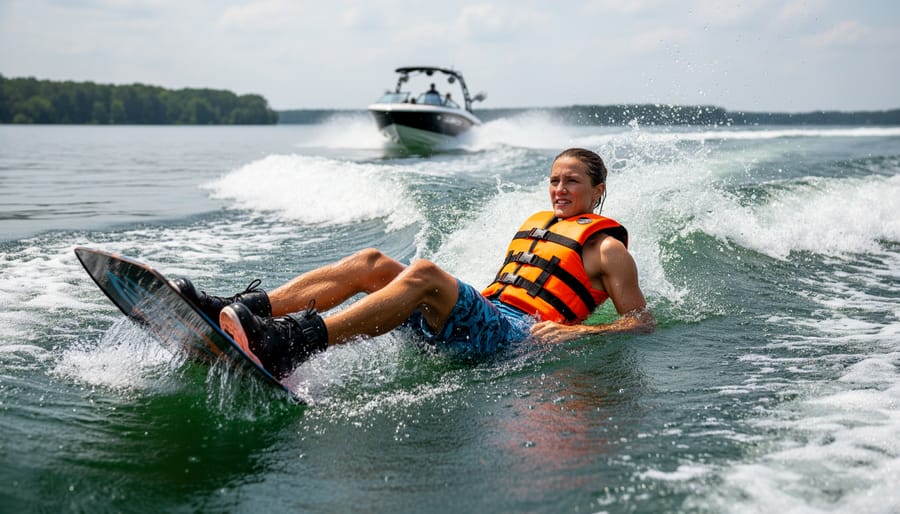
Fitting and Sizing Your Wakeboarding Life Jacket
Sizing a wakeboarding life jacket properly ensures it stays secure during falls while allowing full mobility for tricks and maneuvers. Most manufacturers base sizing on weight ranges and chest measurements, so check both specifications before purchasing. Weight matters more than chest size for buoyancy requirements, but chest fit determines comfort and range of motion during riding.
Start with a size chart that matches your weight, then test the fit. Put on the jacket, fasten all straps and zippers, then lift your arms overhead. The jacket shouldn’t ride up past your chin or restrict shoulder movement. Next, have someone pull upward on the shoulders while you relax your arms at your sides. If the jacket slides more than a few inches, it’s too loose and could come off in a fall. A proper fit helps keep you afloat and prevents the device from shifting during impact.
Adjust all straps snugly but not constrictingly. You should be able to breathe deeply and twist your torso without restriction. Test the right fit matters approach by simulating wakeboarding movements on land: reach forward, twist side to side, and bend at the waist. If the jacket bunches, gaps, or limits these motions, try adjusting straps or sizing differently.
Before heading out on North American lakes, do a final water test in shallow areas. Wade in chest-deep and verify the jacket keeps you buoyant without riding up uncomfortably.
Frequently Asked Questions
Can I use a kayaking PFD for wakeboarding?
Yes, any Coast Guard-approved PFD that meets Transport Canada requirements works legally for wakeboarding, whether it’s designed for kayaking, paddleboarding, or general boating. However, kayaking vests often have more bulk and higher backs that can restrict the shoulder mobility you need for wakeboarding tricks, so a lower-profile design typically performs better for the sport’s range of motion demands.
Do I need an approved vest if I’m an experienced wakeboarder?
Yes. Transport Canada law requires an approved lifejacket or PFD on board for each person on a watercraft, regardless of skill level. Even if you’re comfortable using a lower-profile impact vest for performance, you must have an approved device available on the boat to comply with safety regulations.
How do I know if my vest is Transport Canada approved?
Check for a bilingual label in English and French that shows approval by the Department of Transport. All Canadian-approved lifejackets and PFDs display this label, which identifies them as meeting one of the three approved categories: SOLAS lifejackets, Standard Type lifejackets, or Small Vessel lifejackets.
What’s the difference between types and sizes of PFDs?
Types refer to approval categories and design purposes, while sizes are based on weight and chest measurements to ensure proper buoyancy and fit. The three Canadian-approved types serve different use cases, and within each type, PFDs come in various sizes and colors to match individual body dimensions.
How should I care for my wakeboarding life jacket?
Rinse it with fresh water after each outing to remove lake or river residue, then air-dry it completely before storage. Never machine-wash or use harsh detergents, and inspect straps, buckles, and flotation material regularly for wear or damage that could compromise safety performance.
Proper maintenance extends the life of your vest and ensures it performs when you need it. Store your jacket in a cool, dry place away from direct sunlight, which can degrade foam and fabric over time. If you use an inflatable style, check the CO2 cartridge before each season and replace it after any inflation. For foam-based vests, squeeze the flotation panels occasionally to confirm they haven’t compressed or developed hard spots that indicate the foam is breaking down. A well-maintained life jacket stays reliable across multiple seasons of wakeboarding adventures on North American waters.
Main Options Compared
When choosing flotation for wakeboarding, you’re weighing three main approaches, each with distinct trade-offs between legal compliance, mobility, and comfort.
Coast Guard-Approved PFDs remain the safest legal choice. Standard Type and Small Vessel lifejackets both meet Transport Canada requirements, look for the bilingual Department of Transport approval label. Standard Type models offer higher buoyancy and turn unconscious wearers face-up, making them ideal for beginners or anyone prioritizing maximum safety. Small Vessel lifejackets provide adequate flotation with a lower profile that allows better mobility for tricks and spins. Both keep you legal on Canadian waters while protecting you during falls.
Lower-Profile Impact Vests appeal to experienced riders who want unrestricted movement. These thin, flexible vests absorb impact well but aren’t approved flotation devices. You’ll still need an approved PFD on board to meet legal requirements, even if you wear the impact vest while riding. Many seasoned wakeboarders keep an approved vest in the boat and wear the impact vest for performance.
Compact Inflatable Lifejackets split the difference, they’re approved, comfortable, and less bulky than foam models. Available in automatic, manual, or oral inflation styles, they let you move freely until activated. However, they require more maintenance than foam vests and cost more upfront.
Think of your choice like packing trail-ready essentials for any outdoor adventure: the right gear balances safety with performance for the conditions you’ll face.
Recommendations by Use Case
For beginners exploring wakeboarding on calm lakes, prioritize a Coast Guard-approved Standard Type lifejacket in the $50-$100 range. These provide reliable buoyancy and legal compliance while you develop your skills. The added flotation helps build confidence during early falls, and the certification ensures you’re covered for safety requirements across all North American waters.
Intermediate riders progressing to tricks should consider approved Small Vessel lifejackets in the $100-$150 tier. These offer better mobility than Standard Type options while maintaining Transport Canada certification, striking a practical balance for riders advancing their technique without compromising legal requirements.
Experienced wakeboarders on private lakes might layer a lower-profile impact vest over a minimalist approved PFD for maximum range of motion during advanced maneuvers. Keep the certified device accessible since the impact vest alone won’t satisfy legal requirements if checked by authorities.
Budget-conscious families can find adequate Coast Guard-approved options under $50 per person. Focus on proper fit over features, a well-adjusted basic approved vest outperforms an expensive model worn incorrectly. Test adjustments at the dock before anyone enters the water to ensure each jacket stays secure during falls.
Finding the right life jacket for wakeboarding comes down to balancing legal requirements with the freedom of movement you need on the water. Throughout this guide, we’ve explored how Coast Guard-approved PFDs, including SOLAS, Standard Type, and Small Vessel lifejackets, meet Transport Canada’s legal requirements while offering varying levels of mobility for your riding style. Whether you’re carving across calm lake surfaces or pushing your limits with aerial tricks, the jacket you choose should keep you both compliant and confident.
Before every session on North American waters, take a moment to verify your device shows Transport Canada approval labels in English and French, and confirm the fit allows full range of motion without riding up during falls. The thrill of wakeboarding is most rewarding when you’re properly equipped to handle unexpected spills and make it unforgettable adventures across lakes and rivers safe ones. Your life jacket is more than gear, it’s your safety net for exploring the water with freedom and peace of mind.